Arkansas bill would let insureds sue over claim-handling; sponsor to refine language after committee feedback
March 07, 2023 | INSURANCE & COMMERCE - SENATE, Senate, Committees, Legislative, Arkansas
This article was created by AI summarizing key points discussed. AI makes mistakes, so for full details and context, please refer to the video of the full meeting. Please report any errors so we can fix them. Report an error »
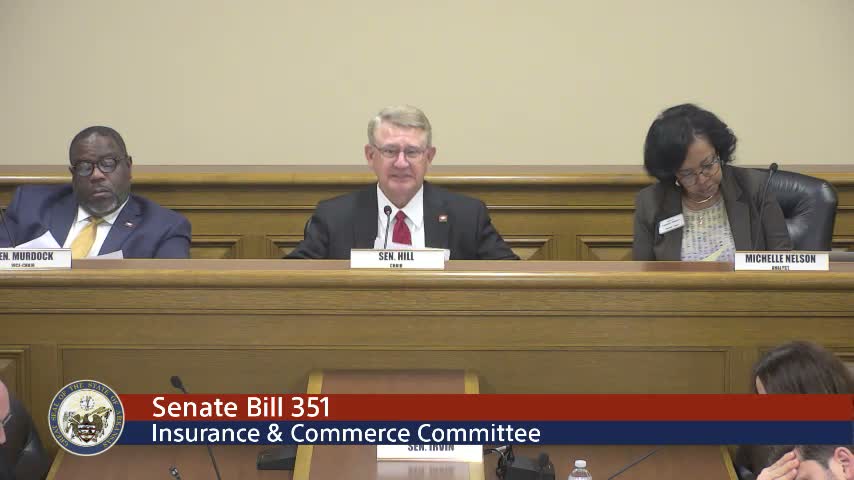
Sen. Bryant told the Senate Insurance & Commerce Committee that a bill he brought at the request of constituents would allow Arkansans harmed by abusive claim handling to seek relief in court instead of relying solely on regulatory action.
“[T]his bill, as narrowly as I can figure out how to write it, is a constituent led issue,” Bryant said, describing examples he and his constituent witnesses brought to the committee.
Jim Brown, a commercial property owner who testified for the sponsor, told senators that after a May 2020 hail loss his insurer’s adjuster wrote "an estimate for about 20% of what it would cost" to make repairs and that pursuing a fair result left portions of his building vacant for more than a year. Brown said the appraisal process was the only contract term that gave him leverage and that when one policy declined appraisal he was forced into litigation.
Austin Easley, a Forest City attorney supporting the bill, said the proposal would provide clearer rules that reduce uncertainty and speed settlements. "Insurance should not be an adversarial process," Easley said, adding that clearer statutory guidance can reduce costly, prolonged litigation and help consumers recover consequential damages when insurers delay or mismanage claims.
Insurance Department counsel Booth Ran told the committee the department already enforces trade‑practice rules and that Rule 43 and the Trade Practices Act give the agency jurisdiction to investigate and penalize many claim‑handling problems. "What this bill does is it allows private individuals to sue insurance companies for violations of an act that we regulate," he said, urging caution about shifting enforcement to courts.
Industry witnesses, including Kevin Kress representing Shelter Insurance and trade groups, urged rejection or substantial revision. Kress said existing remedies — contract claims, a statutory 12% penalty plus attorney fees, and common‑law bad‑faith actions — provide effective tools and warned the bill’s language could broaden punitive damages and legal exposure in unpredictable ways.
Committee members pressed both sides on specific mechanics: whether the measure would duplicate regulatory enforcement, how appraisal provisions interact with policy elections, and whether raising penalties would simply become a cost of doing business that affects premiums. Several senators suggested regulators could amend Rule 43 to address appraisal and timeline concerns short of creating a new private cause of action.
After extended questioning and offers to work with stakeholders, Sen. Bryant said he would pull the bill to continue negotiations. "If you bring it back and they don't work with you, I'll make a motion for you," the chair told Bryant; Bryant replied he would pull the bill and would seek further discussion with the insurance department and industry before reintroducing it.
Next steps: the sponsor will meet with the Insurance Department and industry representatives to refine the draft and will not press the measure to the Senate floor until stakeholders and committee members receive updated language and supplementary materials.
“[T]his bill, as narrowly as I can figure out how to write it, is a constituent led issue,” Bryant said, describing examples he and his constituent witnesses brought to the committee.
Jim Brown, a commercial property owner who testified for the sponsor, told senators that after a May 2020 hail loss his insurer’s adjuster wrote "an estimate for about 20% of what it would cost" to make repairs and that pursuing a fair result left portions of his building vacant for more than a year. Brown said the appraisal process was the only contract term that gave him leverage and that when one policy declined appraisal he was forced into litigation.
Austin Easley, a Forest City attorney supporting the bill, said the proposal would provide clearer rules that reduce uncertainty and speed settlements. "Insurance should not be an adversarial process," Easley said, adding that clearer statutory guidance can reduce costly, prolonged litigation and help consumers recover consequential damages when insurers delay or mismanage claims.
Insurance Department counsel Booth Ran told the committee the department already enforces trade‑practice rules and that Rule 43 and the Trade Practices Act give the agency jurisdiction to investigate and penalize many claim‑handling problems. "What this bill does is it allows private individuals to sue insurance companies for violations of an act that we regulate," he said, urging caution about shifting enforcement to courts.
Industry witnesses, including Kevin Kress representing Shelter Insurance and trade groups, urged rejection or substantial revision. Kress said existing remedies — contract claims, a statutory 12% penalty plus attorney fees, and common‑law bad‑faith actions — provide effective tools and warned the bill’s language could broaden punitive damages and legal exposure in unpredictable ways.
Committee members pressed both sides on specific mechanics: whether the measure would duplicate regulatory enforcement, how appraisal provisions interact with policy elections, and whether raising penalties would simply become a cost of doing business that affects premiums. Several senators suggested regulators could amend Rule 43 to address appraisal and timeline concerns short of creating a new private cause of action.
After extended questioning and offers to work with stakeholders, Sen. Bryant said he would pull the bill to continue negotiations. "If you bring it back and they don't work with you, I'll make a motion for you," the chair told Bryant; Bryant replied he would pull the bill and would seek further discussion with the insurance department and industry before reintroducing it.
Next steps: the sponsor will meet with the Insurance Department and industry representatives to refine the draft and will not press the measure to the Senate floor until stakeholders and committee members receive updated language and supplementary materials.
View the Full Meeting & All Its Details
This article offers just a summary. Unlock complete video, transcripts, and insights as a Founder Member.
✓
Watch full, unedited meeting videos
✓
Search every word spoken in unlimited transcripts
✓
AI summaries & real-time alerts (all government levels)
✓
Permanent access to expanding government content
30-day money-back guarantee
