Lawmakers press Medicaid officials on cost as committee hears bill to require insurer coverage for collaborative psychiatric care
February 21, 2023 | INSURANCE & COMMERCE - SENATE, Senate, Committees, Legislative, Arkansas
This article was created by AI summarizing key points discussed. AI makes mistakes, so for full details and context, please refer to the video of the full meeting. Please report any errors so we can fix them. Report an error »
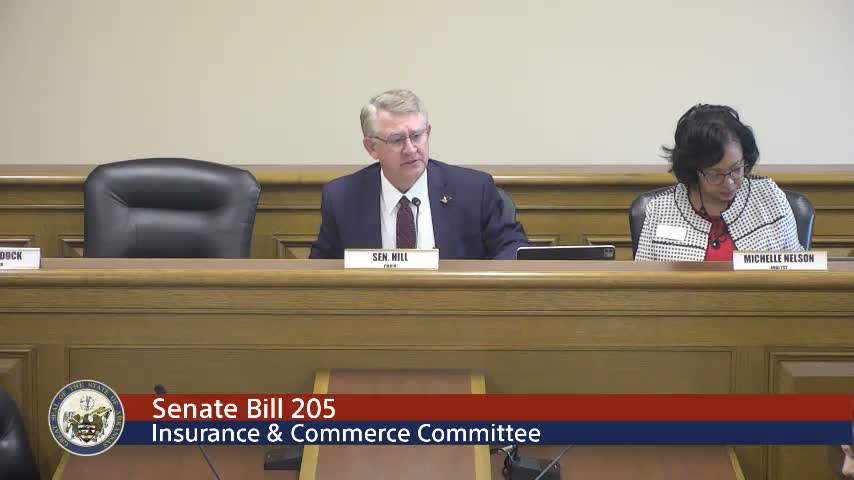
Senators heard testimony on legislation that would require Medicaid and other insurers to reimburse a collaborative psychiatric-care model in primary-care settings and then paused the measure to gather fiscal analysis.
Senator Sandra Irvin introduced the bill and invited clinicians to present details. Dr. Patty Gibson, a psychiatrist and president-elect of the Arkansas Psychiatric Society, described the model as a way to increase access by embedding behavioral-health care in primary care: "This bill is to require Medicaid and all insurance payers to pay for this type of care," Gibson said, adding that Medicare and many commercial payers already reimburse similar services. She told the committee there are only 64 child and adolescent psychiatrists in the state and argued collaborative care can expand access quickly by having psychiatrists supervise care managers who support many patients.
Lawmakers repeatedly asked about cost and utilization controls. Senator Hickey and others sought clarity on whether the bill prohibits benefit limits. Senator Johnson said he was concerned about creating a "blank check" for care without per-patient or annual caps; DHS staff said clients could be limited through program design and noted that some components might be implemented administratively.
Elizabeth Pittman, director for the Division of Medical Services, told the committee Medicaid is being held flat this year and that any program expansion draws on the trust fund balance. DHS modeled uptake scenarios ranging from 10,000 to 35,000 clients and estimated a state-share fiscal range of roughly $3 million to $40 million, with a mid-range estimate of about $20 million at a 50% uptake. Pittman cautioned that these are preliminary modeling figures and that removing utilization caps increases uncertainty about long-term costs.
A representative for private carriers (Blue Cross Blue Shield general counsel) said he would survey private-market rate impacts and include Arkansas-managed plans in the inquiry. After committee members emphasized the need for a fuller budget review and insurer responses on utilization and rate impacts, the committee agreed to pull the bill for further study; no vote on passage was taken.
The committee left the record open for fiscal detail and carrier impact statements; sponsors and staff said they would return with additional information before pursuing a vote.
Senator Sandra Irvin introduced the bill and invited clinicians to present details. Dr. Patty Gibson, a psychiatrist and president-elect of the Arkansas Psychiatric Society, described the model as a way to increase access by embedding behavioral-health care in primary care: "This bill is to require Medicaid and all insurance payers to pay for this type of care," Gibson said, adding that Medicare and many commercial payers already reimburse similar services. She told the committee there are only 64 child and adolescent psychiatrists in the state and argued collaborative care can expand access quickly by having psychiatrists supervise care managers who support many patients.
Lawmakers repeatedly asked about cost and utilization controls. Senator Hickey and others sought clarity on whether the bill prohibits benefit limits. Senator Johnson said he was concerned about creating a "blank check" for care without per-patient or annual caps; DHS staff said clients could be limited through program design and noted that some components might be implemented administratively.
Elizabeth Pittman, director for the Division of Medical Services, told the committee Medicaid is being held flat this year and that any program expansion draws on the trust fund balance. DHS modeled uptake scenarios ranging from 10,000 to 35,000 clients and estimated a state-share fiscal range of roughly $3 million to $40 million, with a mid-range estimate of about $20 million at a 50% uptake. Pittman cautioned that these are preliminary modeling figures and that removing utilization caps increases uncertainty about long-term costs.
A representative for private carriers (Blue Cross Blue Shield general counsel) said he would survey private-market rate impacts and include Arkansas-managed plans in the inquiry. After committee members emphasized the need for a fuller budget review and insurer responses on utilization and rate impacts, the committee agreed to pull the bill for further study; no vote on passage was taken.
The committee left the record open for fiscal detail and carrier impact statements; sponsors and staff said they would return with additional information before pursuing a vote.
View the Full Meeting & All Its Details
This article offers just a summary. Unlock complete video, transcripts, and insights as a Founder Member.
✓
Watch full, unedited meeting videos
✓
Search every word spoken in unlimited transcripts
✓
AI summaries & real-time alerts (all government levels)
✓
Permanent access to expanding government content
30-day money-back guarantee
