Committee backs bill to pay primary‑care providers for integrated mental‑health services; DHS estimates $10.59M state share
March 07, 2023 | INSURANCE & COMMERCE - SENATE, Senate, Committees, Legislative, Arkansas
This article was created by AI summarizing key points discussed. AI makes mistakes, so for full details and context, please refer to the video of the full meeting. Please report any errors so we can fix them. Report an error »
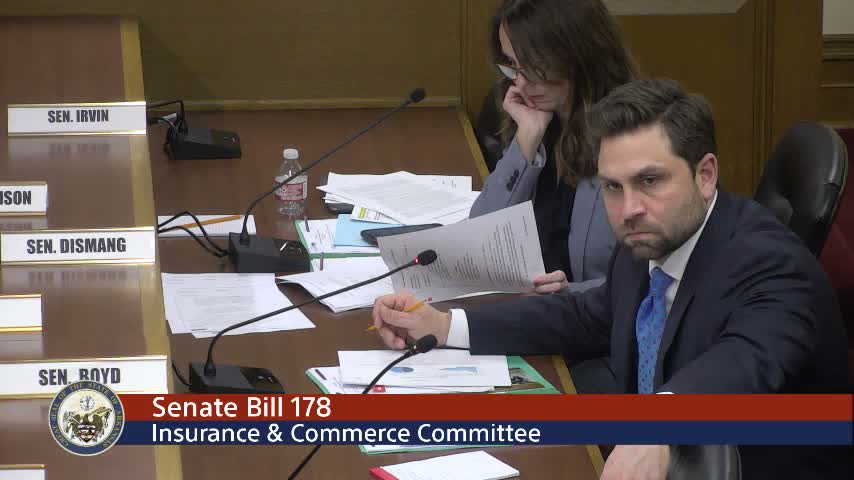
Sen. Hammer presented a bill to fund behavioral‑health integration in primary care and related settings, telling the committee the aim is to invest upstream in mental‑health services to reduce higher downstream costs such as inpatient psychiatric stays.
Mark White of the Department of Human Services provided a mid‑range fiscal estimate: a total computable cost of $37,590,000 annually with a state's share of $10,590,000. White cautioned that while some savings are possible from reduced downstream utilization, those savings are difficult to quantify and were not included in the fiscal estimate.
Representatives from clinical and payer groups provided supporting evidence. Patty Gibson summarized Blue Cross Blue Shield materials showing reduced total cost of care where payers supported integrated behavioral‑health codes; UAMS psychologist Tisha Dean said phased implementation helps build infrastructure and can improve access and outcomes. Gibson and other witnesses noted many payers already reimburse elements of this care and that utilization would phase up over time.
Committee members expressed support for the policy goals but also concern about near‑term Medicaid cost pressures. Several senators asked the sponsor to obtain additional data from Blue Cross Blue Shield and DHS on phased implementation, expected uptake rates, and monitoring metrics; the sponsor committed to provide that information and not to run the bill on the floor until members receive follow‑up materials.
The committee moved the bill on a do‑pass motion and recorded that the bill passed out of committee.
Next steps: Sponsor will provide DHS and Blue Cross Blue Shield supplemental statements and implementation details to committee members before any floor action; the bill was reported to the Senate floor.
Mark White of the Department of Human Services provided a mid‑range fiscal estimate: a total computable cost of $37,590,000 annually with a state's share of $10,590,000. White cautioned that while some savings are possible from reduced downstream utilization, those savings are difficult to quantify and were not included in the fiscal estimate.
Representatives from clinical and payer groups provided supporting evidence. Patty Gibson summarized Blue Cross Blue Shield materials showing reduced total cost of care where payers supported integrated behavioral‑health codes; UAMS psychologist Tisha Dean said phased implementation helps build infrastructure and can improve access and outcomes. Gibson and other witnesses noted many payers already reimburse elements of this care and that utilization would phase up over time.
Committee members expressed support for the policy goals but also concern about near‑term Medicaid cost pressures. Several senators asked the sponsor to obtain additional data from Blue Cross Blue Shield and DHS on phased implementation, expected uptake rates, and monitoring metrics; the sponsor committed to provide that information and not to run the bill on the floor until members receive follow‑up materials.
The committee moved the bill on a do‑pass motion and recorded that the bill passed out of committee.
Next steps: Sponsor will provide DHS and Blue Cross Blue Shield supplemental statements and implementation details to committee members before any floor action; the bill was reported to the Senate floor.
View the Full Meeting & All Its Details
This article offers just a summary. Unlock complete video, transcripts, and insights as a Founder Member.
✓
Watch full, unedited meeting videos
✓
Search every word spoken in unlimited transcripts
✓
AI summaries & real-time alerts (all government levels)
✓
Permanent access to expanding government content
30-day money-back guarantee
