Insurance & Commerce committee pauses vote on prescription-rebate bill after extended testimony
March 09, 2023 | INSURANCE & COMMERCE - SENATE, Senate, Committees, Legislative, Arkansas
This article was created by AI summarizing key points discussed. AI makes mistakes, so for full details and context, please refer to the video of the full meeting. Please report any errors so we can fix them. Report an error »
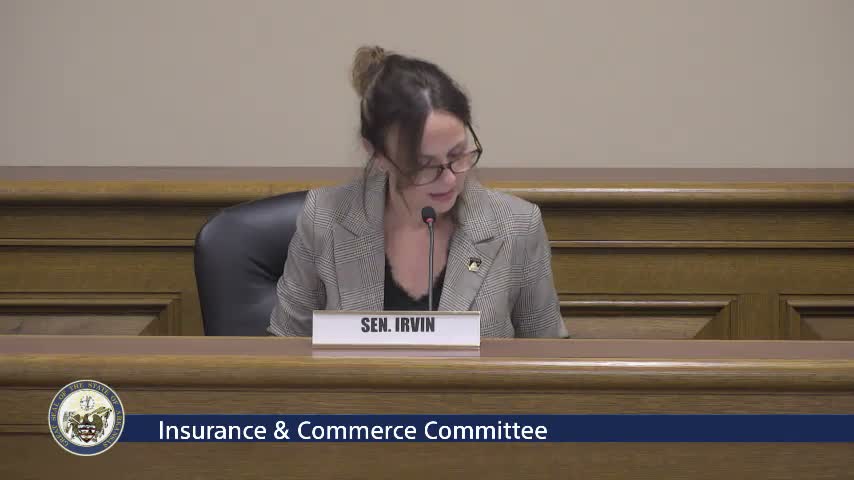
The Senate Insurance & Commerce Committee on Tuesday heard hours of testimony on House Bill 14-81, a proposal to have patient out-of-pocket costs for prescription drugs reflect the net price after manufacturer rebates rather than the list price.
Senator Justin Boyd, the bill sponsor, said the measure is designed "to help the patient at the point of sale," explaining that when rebates are passed through at dispensing, "the patient who is driving that rebate ... also benefits." Boyd told members the change would make coinsurance and deductibles based on the net price of a drug instead of its list price.
Sharon Lamberton, who identified herself as representing Pharma and said she is a nurse by training, urged the committee to move the bill. "This is a truly a patient bill," she said, adding that it would aid "over 607,000 Arkansans." Lamberton cited studies she said show modest premium impact and asserted that passing rebates at the pharmacy counter can increase medication adherence and reduce overall health costs.
Committee members pressed for specifics. One senator asked why the change would not simply be written to apply rebate savings directly to premium reductions; Boyd and witnesses responded that the operational model used in West Virginia and other states delivers the savings at the pharmacy counter without additional pharmacy software and that PBMs and plans currently make choice decisions about how to use rebates. Jennifer Lamberton and other witnesses referenced three studies they said show premium increases, if any, would be nominal (cited in testimony as about 0.6%).
Members also questioned why ERISA plans and state employee plans are carved out; witnesses said federal law and litigation exposure limit the state’s reach into ERISA plans and that the bill is designed to affect commercial fully insured plans at this stage.
After extended questioning and public testimony, the committee did not take a final vote on HB 14-81 and left the measure on the agenda for further consideration. The sponsor agreed to withdraw the bill from today's action and return it when the committee can consider it with more members present.
Next steps: The committee received testimony but took no action; the bill remains on the committee agenda for a future meeting.
Senator Justin Boyd, the bill sponsor, said the measure is designed "to help the patient at the point of sale," explaining that when rebates are passed through at dispensing, "the patient who is driving that rebate ... also benefits." Boyd told members the change would make coinsurance and deductibles based on the net price of a drug instead of its list price.
Sharon Lamberton, who identified herself as representing Pharma and said she is a nurse by training, urged the committee to move the bill. "This is a truly a patient bill," she said, adding that it would aid "over 607,000 Arkansans." Lamberton cited studies she said show modest premium impact and asserted that passing rebates at the pharmacy counter can increase medication adherence and reduce overall health costs.
Committee members pressed for specifics. One senator asked why the change would not simply be written to apply rebate savings directly to premium reductions; Boyd and witnesses responded that the operational model used in West Virginia and other states delivers the savings at the pharmacy counter without additional pharmacy software and that PBMs and plans currently make choice decisions about how to use rebates. Jennifer Lamberton and other witnesses referenced three studies they said show premium increases, if any, would be nominal (cited in testimony as about 0.6%).
Members also questioned why ERISA plans and state employee plans are carved out; witnesses said federal law and litigation exposure limit the state’s reach into ERISA plans and that the bill is designed to affect commercial fully insured plans at this stage.
After extended questioning and public testimony, the committee did not take a final vote on HB 14-81 and left the measure on the agenda for further consideration. The sponsor agreed to withdraw the bill from today's action and return it when the committee can consider it with more members present.
Next steps: The committee received testimony but took no action; the bill remains on the committee agenda for a future meeting.
Don't Miss a Word: See the Full Meeting!
Go beyond summaries. Unlock every video, transcript, and key insight with a Founder Membership.
✓
Get instant access to full meeting videos
✓
Search and clip any phrase from complete transcripts
✓
Receive AI-powered summaries & custom alerts
✓
Enjoy lifetime, unrestricted access to government data
30-day money-back guarantee
