Committee advances bill to require drug rebate pass-through at point of sale for commercial plans; insurers warn of higher premiums
March 14, 2023 | INSURANCE & COMMERCE - SENATE, Senate, Committees, Legislative, Arkansas
This article was created by AI summarizing key points discussed. AI makes mistakes, so for full details and context, please refer to the video of the full meeting. Please report any errors so we can fix them. Report an error »
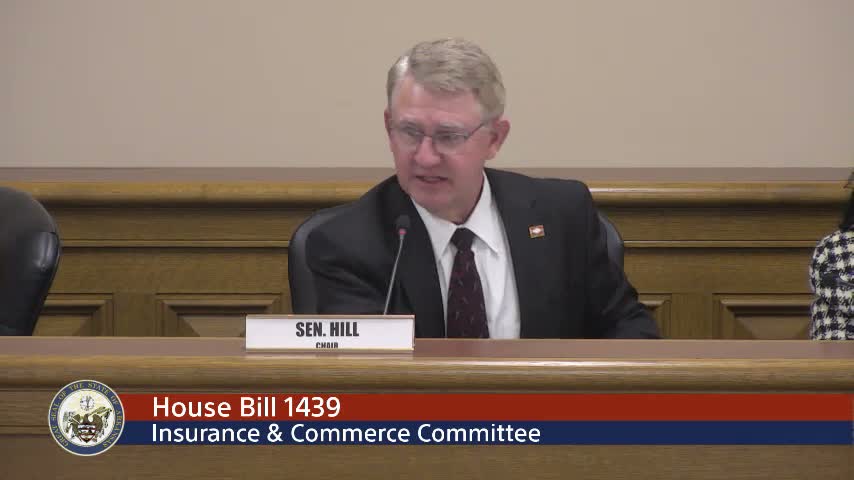
State Senator Justin Boyd (District 27) presented House Bill 14 81 to the Senate Insurance & Commerce Committee, describing the measure as limited to commercial insurance plans and designed to route manufacturer rebates to the pharmacy counter so they reduce a patient's coinsurance or deductible rather than being retained upstream by plans or pharmacy benefit managers (PBMs).
The hearing drew multiple witnesses. Jonathan Buxton of the Pharmaceutical Care Management Association testified in opposition, saying point-of-sale rebate mandates can shift savings away from premiums and raise overall costs. Buxton cited an analysis attributed to the Centers for Medicare & Medicaid Services and said a Part D mandate would have increased federal spending by an estimated $82 billion over 10 years and raised Medicare Part D premiums by about 11 percent. "Rebates are offered on a very, very small percentage of the drugs...but those small number of drugs account for over 60%, and sometimes up to 75% of the drug spend itself," Buxton said, arguing that moving rebates to the counter harms broader premium stability.
Dr. Buster Lackey, executive director of NAMI Arkansas, testified for the bill and said that many patients with serious mental illness depend on medications and that rebates often do not reach patients. "House bill 14 81 will help patients," Lackey said, and cited actuarial studies (including Milliman Group) that he said indicate only modest premium increases when rebates are passed through and major patient savings at the counter.
Max Greenwood, speaking for Arkansas Blue Cross and Blue Shield, opposed the bill and explained from a plan perspective how manufacturer coupons and post-sale rebates interact with pricing, formulary placement and rate filings. Greenwood said that in calendar year 2020 the plan used rebate dollars to offset claims and reduced member premiums by about 7 percent; without those rebates he said members would have faced substantially higher rates. He argued that applying rebates only to individuals at the counter would reduce plans' negotiating leverage and could increase premiums for the broader membership.
Senator Boyd said the bill is narrowly tailored to help patients with coinsurance or deductible exposure and to provide transparency; he moved the measure for a do-pass vote. The committee adopted the motion and advanced HB 14 81.
The committee record at this hearing contains competing claims about the net effect on premiums and on manufacturer profits; the transcript includes citations to actuarial work and to a CMS analysis, and committee members discussed those conflicting projections during questioning. The measure will proceed to the Senate calendar for further action.
The hearing drew multiple witnesses. Jonathan Buxton of the Pharmaceutical Care Management Association testified in opposition, saying point-of-sale rebate mandates can shift savings away from premiums and raise overall costs. Buxton cited an analysis attributed to the Centers for Medicare & Medicaid Services and said a Part D mandate would have increased federal spending by an estimated $82 billion over 10 years and raised Medicare Part D premiums by about 11 percent. "Rebates are offered on a very, very small percentage of the drugs...but those small number of drugs account for over 60%, and sometimes up to 75% of the drug spend itself," Buxton said, arguing that moving rebates to the counter harms broader premium stability.
Dr. Buster Lackey, executive director of NAMI Arkansas, testified for the bill and said that many patients with serious mental illness depend on medications and that rebates often do not reach patients. "House bill 14 81 will help patients," Lackey said, and cited actuarial studies (including Milliman Group) that he said indicate only modest premium increases when rebates are passed through and major patient savings at the counter.
Max Greenwood, speaking for Arkansas Blue Cross and Blue Shield, opposed the bill and explained from a plan perspective how manufacturer coupons and post-sale rebates interact with pricing, formulary placement and rate filings. Greenwood said that in calendar year 2020 the plan used rebate dollars to offset claims and reduced member premiums by about 7 percent; without those rebates he said members would have faced substantially higher rates. He argued that applying rebates only to individuals at the counter would reduce plans' negotiating leverage and could increase premiums for the broader membership.
Senator Boyd said the bill is narrowly tailored to help patients with coinsurance or deductible exposure and to provide transparency; he moved the measure for a do-pass vote. The committee adopted the motion and advanced HB 14 81.
The committee record at this hearing contains competing claims about the net effect on premiums and on manufacturer profits; the transcript includes citations to actuarial work and to a CMS analysis, and committee members discussed those conflicting projections during questioning. The measure will proceed to the Senate calendar for further action.
View the Full Meeting & All Its Details
This article offers just a summary. Unlock complete video, transcripts, and insights as a Founder Member.
✓
Watch full, unedited meeting videos
✓
Search every word spoken in unlimited transcripts
✓
AI summaries & real-time alerts (all government levels)
✓
Permanent access to expanding government content
30-day money-back guarantee
