Arkansas utilities and PSC urge data‑driven fix for net‑metering ‘cost shift’; industry warns of regulatory overreach
September 07, 2022 | CITY, COUNTY & LOCAL AFFAIRS COMMITTEE - SENATE, Senate, Committees, Legislative, Arkansas
This article was created by AI summarizing key points discussed. AI makes mistakes, so for full details and context, please refer to the video of the full meeting. Please report any errors so we can fix them. Report an error »
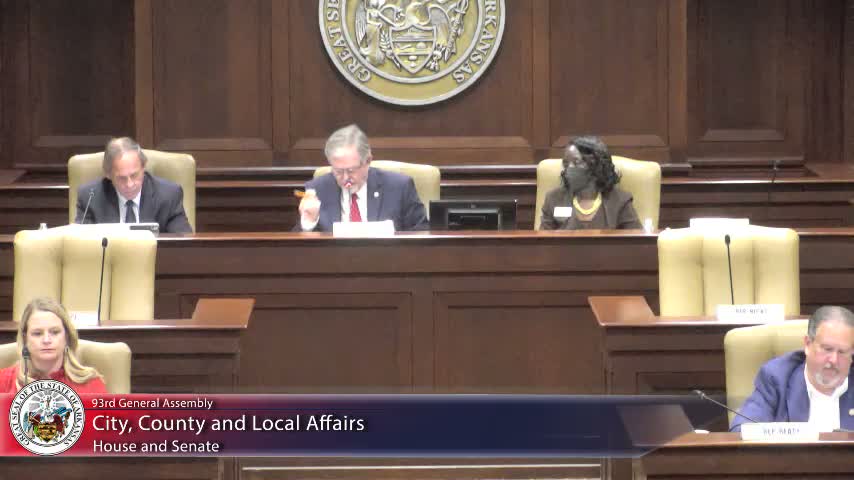
The hearing’s second major thread focused on net metering, rate design and the so‑called “cost shift” — the redistribution of fixed utility system costs onto customers who cannot participate in net metering. Ted Thomas, chair of the Arkansas Public Service Commission, told the committee that the PSC’s prior grid‑fee approach (June 2020) was intended to manage cumulative cost shifts but that legal appeals and co‑op recusal motions have complicated the agency’s options. “We need data,” Thomas said, urging utilities to file the evidence that will allow the PSC to quantify any redistribution and design an appropriate mitigation.
Utilities told the committee that Arkansas’ current net‑metering regime is unusually generous. John Bethel, Entergy Arkansas director of public affairs, said Entergy’s system has more than 4,000 net‑metering systems totaling roughly 64 megawatts and noted that the state’s 1:1 retail credit and aggregation rules allow customers to receive a full retail kilowatt‑hour credit for energy exported to the grid. Bethel asserted that such credits can leave non‑participating customers to shoulder the costs of shared infrastructure and energy‑efficiency programs and urged the PSC to open a proceeding to consider non‑bypassable charges or grid charges for new systems.
Co‑op witnesses described the same problem at the distribution level and provided historic figures they say demonstrate growing revenue impacts. AECC representatives said their internal calculations of lost revenue associated with net‑metering credits rose from the low six‑figures in earlier years to multi‑million dollars in recent years and projected continued growth if current rules remained unchanged. AECC and co‑op witnesses emphasized differences between residential rooftop rooftop uses and larger remotely sited or aggregated generators allowed under Arkansas law and cautioned that remote siting and large system caps (the state allows up to 20 megawatts) make the economics different from behind‑the‑meter rooftop installations.
Committee members asked whether immediate legislative action was needed and whether alternatives such as time‑varying rates, storage incentives or properly designed grid charges could reduce any unfair cost shift while preserving options for consumers. Witnesses and the PSC repeatedly returned to one recommendation: collect the utility data and let the PSC analyze cumulative cost shift and propose a data‑backed remedy to the legislature.
No vote was taken; the committee requested that utilities and the PSC supply the requested data to inform further legislative or regulatory action.
Utilities told the committee that Arkansas’ current net‑metering regime is unusually generous. John Bethel, Entergy Arkansas director of public affairs, said Entergy’s system has more than 4,000 net‑metering systems totaling roughly 64 megawatts and noted that the state’s 1:1 retail credit and aggregation rules allow customers to receive a full retail kilowatt‑hour credit for energy exported to the grid. Bethel asserted that such credits can leave non‑participating customers to shoulder the costs of shared infrastructure and energy‑efficiency programs and urged the PSC to open a proceeding to consider non‑bypassable charges or grid charges for new systems.
Co‑op witnesses described the same problem at the distribution level and provided historic figures they say demonstrate growing revenue impacts. AECC representatives said their internal calculations of lost revenue associated with net‑metering credits rose from the low six‑figures in earlier years to multi‑million dollars in recent years and projected continued growth if current rules remained unchanged. AECC and co‑op witnesses emphasized differences between residential rooftop rooftop uses and larger remotely sited or aggregated generators allowed under Arkansas law and cautioned that remote siting and large system caps (the state allows up to 20 megawatts) make the economics different from behind‑the‑meter rooftop installations.
Committee members asked whether immediate legislative action was needed and whether alternatives such as time‑varying rates, storage incentives or properly designed grid charges could reduce any unfair cost shift while preserving options for consumers. Witnesses and the PSC repeatedly returned to one recommendation: collect the utility data and let the PSC analyze cumulative cost shift and propose a data‑backed remedy to the legislature.
No vote was taken; the committee requested that utilities and the PSC supply the requested data to inform further legislative or regulatory action.
View the Full Meeting & All Its Details
This article offers just a summary. Unlock complete video, transcripts, and insights as a Founder Member.
✓
Watch full, unedited meeting videos
✓
Search every word spoken in unlimited transcripts
✓
AI summaries & real-time alerts (all government levels)
✓
Permanent access to expanding government content
30-day money-back guarantee
