Senate committee approves bill limiting local limits on short‑term rentals after hours of testimony
February 21, 2023 | CITY, COUNTY & LOCAL AFFAIRS COMMITTEE - SENATE, Senate, Committees, Legislative, Arkansas
This article was created by AI summarizing key points discussed. AI makes mistakes, so for full details and context, please refer to the video of the full meeting. Please report any errors so we can fix them. Report an error »
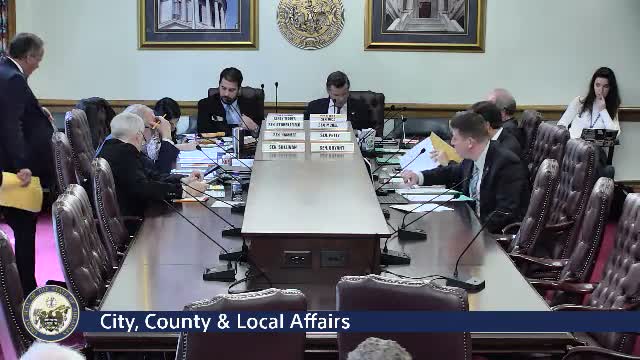
Little Rock — The Senate City, County & Local Affairs Committee voted to advance SB 197 after lengthy testimony for and against the measure, which backers described as a statute to protect private property rights and opponents said would trim municipal tools to manage nuisance and public‑health risks.
Sponsor Sen. Joshua Bridal (District 32) told the committee the bill is intended to ensure “the right to sell or to rent one's property” remains a constitutional property right that municipalities should not extinguish through zoning or local ordinances. Bridal said the measure treats short‑term rentals as residential uses and leaves nuisance enforcement to local police powers.
The bill drew sustained opposition from the Arkansas Municipal League and several city planners, who warned the language — particularly the clause barring ordinances that would "in any practical effect prohibit" short‑term rental use — could prevent municipalities from addressing repeated nuisance properties. John Wilkerson, general counsel for the Municipal League, said the term "practical effect" raises legal uncertainty and noted the bill includes no permit fee, which he said would leave cities fewer enforcement options.
Owners and managers of short‑term rentals, many from Bella Vista and northwest Arkansas, said the state should step in where they believe local ordinances have been overly burdensome. Michelle Chiaco, who described herself as an owner‑occupied operator, said STRs provided critical income during the COVID pandemic and that Bella Vista's ordinance produces few complaints: "Out of 692 complaints [from 2018‑2022], only 29 were short‑term rentals," she said, citing a FOIA review.
Public‑health concerns featured in questioning. Terry Paul, Environmental Health Branch chief at the Department of Health, told the committee that septic systems are designed to an average‑daily‑use standard and can be overloaded by large, transient occupancies; he warned that advertised capacities of 15 or more occupants can exceed on‑site wastewater design in some lake communities.
City officials urged more time and local input. Tyler Overstreet, planning director for Bentonville, said his city is studying STRs and has more than 700 active listings in AirDNA data; he asked the legislature to allow additional discussion to craft a compromise that distinguishes owner‑occupied rentals from investor‑run portfolios.
Committee members debated tradeoffs between property rights and local public‑safety and nuisance controls. Supporters argued the bill preserves taxation and marketplaces will continue to remit taxes; opponents said the measure limits municipal authority to require local representatives, reasonable fees, or targeted restrictions for repeat offenders.
After sponsor closing remarks, Sen. Bridal moved a "do pass" recommendation; the motion was seconded and the committee approved the bill by voice vote. The committee recorded no roll‑call tally in the transcript.
Sponsor Sen. Joshua Bridal (District 32) told the committee the bill is intended to ensure “the right to sell or to rent one's property” remains a constitutional property right that municipalities should not extinguish through zoning or local ordinances. Bridal said the measure treats short‑term rentals as residential uses and leaves nuisance enforcement to local police powers.
The bill drew sustained opposition from the Arkansas Municipal League and several city planners, who warned the language — particularly the clause barring ordinances that would "in any practical effect prohibit" short‑term rental use — could prevent municipalities from addressing repeated nuisance properties. John Wilkerson, general counsel for the Municipal League, said the term "practical effect" raises legal uncertainty and noted the bill includes no permit fee, which he said would leave cities fewer enforcement options.
Owners and managers of short‑term rentals, many from Bella Vista and northwest Arkansas, said the state should step in where they believe local ordinances have been overly burdensome. Michelle Chiaco, who described herself as an owner‑occupied operator, said STRs provided critical income during the COVID pandemic and that Bella Vista's ordinance produces few complaints: "Out of 692 complaints [from 2018‑2022], only 29 were short‑term rentals," she said, citing a FOIA review.
Public‑health concerns featured in questioning. Terry Paul, Environmental Health Branch chief at the Department of Health, told the committee that septic systems are designed to an average‑daily‑use standard and can be overloaded by large, transient occupancies; he warned that advertised capacities of 15 or more occupants can exceed on‑site wastewater design in some lake communities.
City officials urged more time and local input. Tyler Overstreet, planning director for Bentonville, said his city is studying STRs and has more than 700 active listings in AirDNA data; he asked the legislature to allow additional discussion to craft a compromise that distinguishes owner‑occupied rentals from investor‑run portfolios.
Committee members debated tradeoffs between property rights and local public‑safety and nuisance controls. Supporters argued the bill preserves taxation and marketplaces will continue to remit taxes; opponents said the measure limits municipal authority to require local representatives, reasonable fees, or targeted restrictions for repeat offenders.
After sponsor closing remarks, Sen. Bridal moved a "do pass" recommendation; the motion was seconded and the committee approved the bill by voice vote. The committee recorded no roll‑call tally in the transcript.
Don't Miss a Word: See the Full Meeting!
Go beyond summaries. Unlock every video, transcript, and key insight with a Founder Membership.
✓
Get instant access to full meeting videos
✓
Search and clip any phrase from complete transcripts
✓
Receive AI-powered summaries & custom alerts
✓
Enjoy lifetime, unrestricted access to government data
30-day money-back guarantee
