DHS director briefs Senate panel on child-welfare reports; Garrett’s Law referrals and foster-care trends highlighted
January 24, 2022 | CHILDREN AND YOUTH COMMITTEE - SENATE, Senate, Committees, Legislative, Arkansas
This article was created by AI summarizing key points discussed. AI makes mistakes, so for full details and context, please refer to the video of the full meeting. Please report any errors so we can fix them. Report an error »
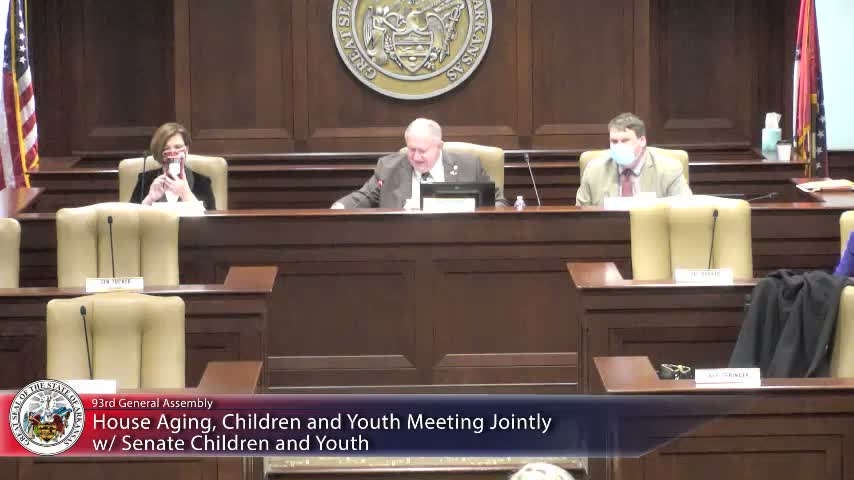
Director Missha Martin, who leads the Division of Children and Family Services at the Arkansas Department of Human Services, presented multiple statutorily required reports to the Senate Children and Youth Committee, including overturned-investigation statistics, the Garrett’s Law referral summary and family-preservation and quarterly performance data.
Martin said the overturned-investigation exhibits (D1 and D2) cover July 2019–June 2020 and explained the data columns (hotline calls, accepted investigations, substantiated findings, appeals and overturned outcomes). She told the committee that, in the cited period, about 8.6% of appealed investigations were overturned and that overturned cases represent under 1% of total investigations in the reports she reviewed.
On Garrett’s Law (state fiscal year 2021, exhibit D4 with county-level detail in D3), Martin said the office received 1,619 referrals — roughly 20% higher than the prior year as presented — and described drug exposures cited in those referrals: marijuana (including THC/cannabis) in 75% of reports; amphetamines/methamphetamines in 26%; opioids in 10%; benzodiazepines and cocaine less frequently. She said statewide 93% of Garrett’s Law reports were substantiated as reported and that about 15% of substantiated Garrett’s Law cases resulted in removal of the newborn into DCFS custody. “Most of these reports are called in by the hospital where the child was born,” Martin said, explaining why a single positive test at birth often yields a substantiated report.
Martin also summarized family preservation and foster-care statistics for calendar year 2020 and the first quarter of fiscal 2022. Key points she highlighted: the agency accepted 25,554 child-maltreatment reports for investigation in 2020 (plus 3,738 assigned for differential response) and met an 86% on-time initiation/completion target for investigations that year; the reoccurrence-of-maltreatment rate within 12 months was reported at 9.1% statewide; foster-care population counts rose during the pandemic (4,651 at end of 2020, with quarterly reporting later showing about 4,868 for the July–Sept quarter and agency statements noting a decline afterward to about 4,600); placement with relatives increased to roughly 37% (up from under 20% in 2015); and placement-stability measures remained above the national average (placement-move rate ~5.54–5.64 vs. national ~4.12). Martin said county and DCFS-area breakdowns appear in the report appendices.
Committee members followed with operational questions. Martin said children must be placed in a home six months before an adoption can be finalized and described an agency target to complete foster-parent adoptions within roughly three months after termination of parental rights where appropriate. She acknowledged COVID-era workforce pressures and described steps to recruit and retain staff: moving roughly 38–42 positions from the Department of Developmental Disabilities to DCFS, special hiring events that filled seven positions in December, a new salary grid that raised program-assistant entry pay from about $26.05 to $28.05 per hour as reported, and added overtime/on-call compensation in some areas. Members requested county-level breakdowns and follow-up data (for example, adoption-timeline and age-out numbers) that Martin said the agency would provide.
The committee approved the meeting minutes at the start of the session (procedural motion and second noted on the record). Martin repeatedly directed members to exhibit D3 for county-specific details and offered to share monthly and county-level data that the committee requested.
What happens next: committee members requested supplemental data and county-level charts (adoption timing, age-out counts, detailed relative-placement charts and foster-home closure reasons) that Martin said DHS will provide for follow-up and future briefings.
Martin said the overturned-investigation exhibits (D1 and D2) cover July 2019–June 2020 and explained the data columns (hotline calls, accepted investigations, substantiated findings, appeals and overturned outcomes). She told the committee that, in the cited period, about 8.6% of appealed investigations were overturned and that overturned cases represent under 1% of total investigations in the reports she reviewed.
On Garrett’s Law (state fiscal year 2021, exhibit D4 with county-level detail in D3), Martin said the office received 1,619 referrals — roughly 20% higher than the prior year as presented — and described drug exposures cited in those referrals: marijuana (including THC/cannabis) in 75% of reports; amphetamines/methamphetamines in 26%; opioids in 10%; benzodiazepines and cocaine less frequently. She said statewide 93% of Garrett’s Law reports were substantiated as reported and that about 15% of substantiated Garrett’s Law cases resulted in removal of the newborn into DCFS custody. “Most of these reports are called in by the hospital where the child was born,” Martin said, explaining why a single positive test at birth often yields a substantiated report.
Martin also summarized family preservation and foster-care statistics for calendar year 2020 and the first quarter of fiscal 2022. Key points she highlighted: the agency accepted 25,554 child-maltreatment reports for investigation in 2020 (plus 3,738 assigned for differential response) and met an 86% on-time initiation/completion target for investigations that year; the reoccurrence-of-maltreatment rate within 12 months was reported at 9.1% statewide; foster-care population counts rose during the pandemic (4,651 at end of 2020, with quarterly reporting later showing about 4,868 for the July–Sept quarter and agency statements noting a decline afterward to about 4,600); placement with relatives increased to roughly 37% (up from under 20% in 2015); and placement-stability measures remained above the national average (placement-move rate ~5.54–5.64 vs. national ~4.12). Martin said county and DCFS-area breakdowns appear in the report appendices.
Committee members followed with operational questions. Martin said children must be placed in a home six months before an adoption can be finalized and described an agency target to complete foster-parent adoptions within roughly three months after termination of parental rights where appropriate. She acknowledged COVID-era workforce pressures and described steps to recruit and retain staff: moving roughly 38–42 positions from the Department of Developmental Disabilities to DCFS, special hiring events that filled seven positions in December, a new salary grid that raised program-assistant entry pay from about $26.05 to $28.05 per hour as reported, and added overtime/on-call compensation in some areas. Members requested county-level breakdowns and follow-up data (for example, adoption-timeline and age-out numbers) that Martin said the agency would provide.
The committee approved the meeting minutes at the start of the session (procedural motion and second noted on the record). Martin repeatedly directed members to exhibit D3 for county-specific details and offered to share monthly and county-level data that the committee requested.
What happens next: committee members requested supplemental data and county-level charts (adoption timing, age-out counts, detailed relative-placement charts and foster-home closure reasons) that Martin said DHS will provide for follow-up and future briefings.
View the Full Meeting & All Its Details
This article offers just a summary. Unlock complete video, transcripts, and insights as a Founder Member.
✓
Watch full, unedited meeting videos
✓
Search every word spoken in unlimited transcripts
✓
AI summaries & real-time alerts (all government levels)
✓
Permanent access to expanding government content
30-day money-back guarantee
