Advocates press DHS for dementia-caregiver respite grants; witnesses describe program and personal need
January 24, 2022 | CHILDREN AND YOUTH COMMITTEE - SENATE, Senate, Committees, Legislative, Arkansas
This article was created by AI summarizing key points discussed. AI makes mistakes, so for full details and context, please refer to the video of the full meeting. Please report any errors so we can fix them. Report an error »
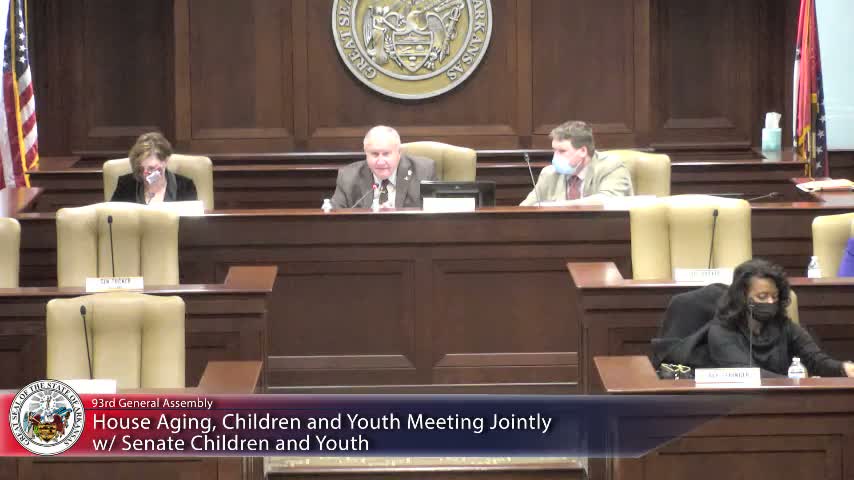
David Cook, representing the Alzheimer's Association, and witnesses urged the Senate Children and Youth Committee to support targeted respite grants for family caregivers of people with Alzheimer’s disease and other dementias. Cook said the Alzheimer and Dementia Advisory Council (created by Act 391) prioritized caregiver supports and asked DHS to allocate funds for respite grants that reach rural areas and caregivers who are not covered by existing Medicaid waivers.
Testimony included a personal account from Rodney Smith, who described his wife’s early-onset dementia (diagnosed in 2016) and the financial and emotional toll on the family. Smith said short-term respite helped his family but emphasized broader need for accessible programs to avoid caregiver burnout.
Amanda Shaw of Alzheimer's Arkansas described how her organization manages DHS subgrants and caregiver awards. She said grant rounds are typically administered using an Apricot grant-management system, that individual caregiver awards distributed under a DHS grant are commonly $250 per approved caregiver, and that organizational awards DHS provided to her agency totaled $40,000 in the most recent year cited; she added that approved DHS caregiver applications are processed within 10 business days and that DHS reporting provides county-level data on awarded grants.
Cook and members discussed program design; Cook said the proposed DHS approach would base eligibility on clinical acuity rather than income so younger-onset cases that do not qualify for Medicaid could be included. Lawmakers asked for reports showing which counties received funds and how dollars were spent; witnesses and DHS staff said they would provide that detail to the committee for oversight.
What happens next: DHS and advocates will work to finalize program design and supply the committee with grant-distribution data and county-level reports requested by members.
Testimony included a personal account from Rodney Smith, who described his wife’s early-onset dementia (diagnosed in 2016) and the financial and emotional toll on the family. Smith said short-term respite helped his family but emphasized broader need for accessible programs to avoid caregiver burnout.
Amanda Shaw of Alzheimer's Arkansas described how her organization manages DHS subgrants and caregiver awards. She said grant rounds are typically administered using an Apricot grant-management system, that individual caregiver awards distributed under a DHS grant are commonly $250 per approved caregiver, and that organizational awards DHS provided to her agency totaled $40,000 in the most recent year cited; she added that approved DHS caregiver applications are processed within 10 business days and that DHS reporting provides county-level data on awarded grants.
Cook and members discussed program design; Cook said the proposed DHS approach would base eligibility on clinical acuity rather than income so younger-onset cases that do not qualify for Medicaid could be included. Lawmakers asked for reports showing which counties received funds and how dollars were spent; witnesses and DHS staff said they would provide that detail to the committee for oversight.
What happens next: DHS and advocates will work to finalize program design and supply the committee with grant-distribution data and county-level reports requested by members.
Don't Miss a Word: See the Full Meeting!
Go beyond summaries. Unlock every video, transcript, and key insight with a Founder Membership.
✓
Get instant access to full meeting videos
✓
Search and clip any phrase from complete transcripts
✓
Receive AI-powered summaries & custom alerts
✓
Enjoy lifetime, unrestricted access to government data
30-day money-back guarantee
