Restore Hope Arkansas outlines statewide 100 Families initiative, cites steep outcome gains
August 23, 2022 | CHILDREN AND YOUTH COMMITTEE - SENATE, Senate, Committees, Legislative, Arkansas
This article was created by AI summarizing key points discussed. AI makes mistakes, so for full details and context, please refer to the video of the full meeting. Please report any errors so we can fix them. Report an error »
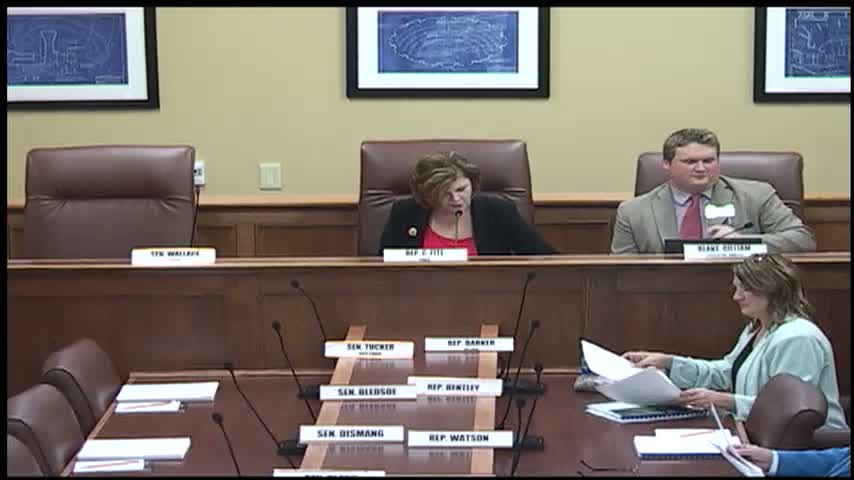
Restore Hope Arkansas told the Senate Children and Youth Committee that its 100 Families Initiative is expanding across the state and producing measurable improvements in family reunification, housing stability and employment.
Karen Phillips, the 100 Families director, said Restore Hope acts as the initiative’s backbone organization and that local alliances adopt its shared practices and a common assessment tool. “We use a HIPAA, FERPA, COPPA compliant system that allows communication across sectors,” Phillips said, describing the nonprofit’s HopeArc case‑management system and its role tracking TANF eligibility and client progress.
Paul Chapman, Restore Hope’s executive director, described the group’s systems approach and said it helps communities coordinate services such as housing, transportation, education, employment and recovery. “We are now at a point in Arkansas where we've got scalable infrastructure that can be placed into a community that allows the existing resource in the community to optimize its connections amongst each other,” Chapman said.
The presenters gave specific enrollment and outcome figures: Restore Hope reported monthly enrollment rising to a projected more‑than‑100 new families per month as it adds counties, 964 active families currently enrolled, and 2,215 children served. They said families spent an average of eight months in the program and reported a 76% reunification rate for families enrolled with DCFS caseworker collaboration — up from 43% reunification without the program’s engagement, and that 2,638 children were kept safely in their homes through community supports.
Restore Hope identified TANF as the primary funding source for the 100 Families initiative and listed additional partners and funding streams, including a UAMS child abuse prevention grant, Delta Regional Authority vocational training support and Emergency Rental Assistance (ERA) funds used for short‑term rent and utility assistance. The group said much of its current work is privately funded and that it is offering multiple launch models for communities — affiliate agreements, subgrants and direct service models where Restore Hope hires case managers directly.
Members of the committee asked for contact information and logistical follow‑up; the presenters were asked to provide their details to the committee staff for distribution. The committee did not take any formal vote or action on funding or policy during the presentation.
Next steps: Restore Hope said it aims to expand the 100 Families model to Arkansas’s top 25 counties and is seeking partners and grant funding to support rollout and training.
Karen Phillips, the 100 Families director, said Restore Hope acts as the initiative’s backbone organization and that local alliances adopt its shared practices and a common assessment tool. “We use a HIPAA, FERPA, COPPA compliant system that allows communication across sectors,” Phillips said, describing the nonprofit’s HopeArc case‑management system and its role tracking TANF eligibility and client progress.
Paul Chapman, Restore Hope’s executive director, described the group’s systems approach and said it helps communities coordinate services such as housing, transportation, education, employment and recovery. “We are now at a point in Arkansas where we've got scalable infrastructure that can be placed into a community that allows the existing resource in the community to optimize its connections amongst each other,” Chapman said.
The presenters gave specific enrollment and outcome figures: Restore Hope reported monthly enrollment rising to a projected more‑than‑100 new families per month as it adds counties, 964 active families currently enrolled, and 2,215 children served. They said families spent an average of eight months in the program and reported a 76% reunification rate for families enrolled with DCFS caseworker collaboration — up from 43% reunification without the program’s engagement, and that 2,638 children were kept safely in their homes through community supports.
Restore Hope identified TANF as the primary funding source for the 100 Families initiative and listed additional partners and funding streams, including a UAMS child abuse prevention grant, Delta Regional Authority vocational training support and Emergency Rental Assistance (ERA) funds used for short‑term rent and utility assistance. The group said much of its current work is privately funded and that it is offering multiple launch models for communities — affiliate agreements, subgrants and direct service models where Restore Hope hires case managers directly.
Members of the committee asked for contact information and logistical follow‑up; the presenters were asked to provide their details to the committee staff for distribution. The committee did not take any formal vote or action on funding or policy during the presentation.
Next steps: Restore Hope said it aims to expand the 100 Families model to Arkansas’s top 25 counties and is seeking partners and grant funding to support rollout and training.
Don't Miss a Word: See the Full Meeting!
Go beyond summaries. Unlock every video, transcript, and key insight with a Founder Membership.
✓
Get instant access to full meeting videos
✓
Search and clip any phrase from complete transcripts
✓
Receive AI-powered summaries & custom alerts
✓
Enjoy lifetime, unrestricted access to government data
30-day money-back guarantee
