Arkansas DCFS reports modest improvements in timeliness, outlines prevention push and workforce fixes
June 21, 2022 | CHILDREN AND YOUTH COMMITTEE - SENATE, Senate, Committees, Legislative, Arkansas
This article was created by AI summarizing key points discussed. AI makes mistakes, so for full details and context, please refer to the video of the full meeting. Please report any errors so we can fix them. Report an error »
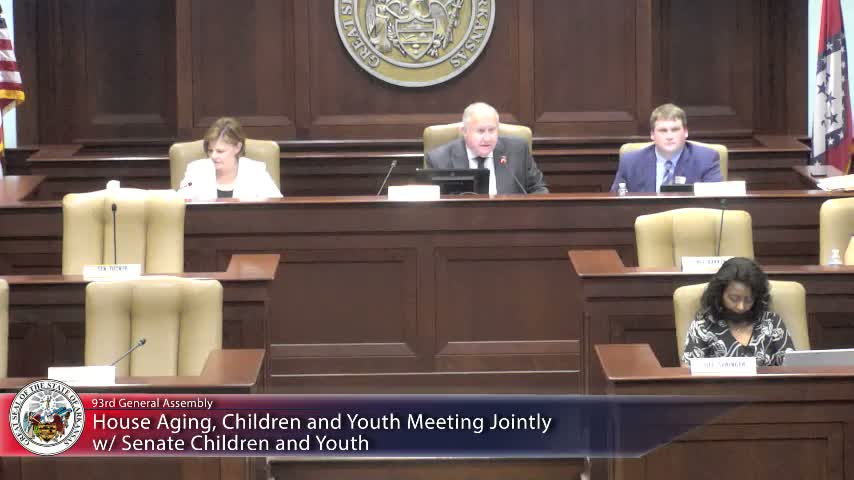
Michelle Martin, director of the Division of Children and Family Services, told the Senate Children and Youth Committee that the department’s quarterly performance report shows incremental improvements in several core child‑welfare metrics and outlined plans to expand prevention programs statewide.
“In this quarter the child abuse hotline received 7,808 calls,” Martin said, and the division handled 6,277 assigned cases. She said 5,114 of those were assigned to investigation and 1,163 were assigned to the department’s differential‑response track, which Martin described as a lower‑level intervention aimed at linking families to community supports rather than pursuing formal investigation.
Martin reported combined timely initiation for priority 1 and 2 responses rose slightly to 79 percent, and timely completion of maltreatment investigations increased to 76 percent. Recurrent maltreatment within 12 months declined from 8 percent to 6 percent. “We serve more children in their homes than we do in foster care,” Martin told the committee, noting the department opened 2,674 in‑home cases this quarter involving 6,273 children.
On foster care and permanency, Martin said as of the report the foster‑care population had edged down (from a recent peak) and that adoption timeliness remains a priority: the average time from termination to adoption was about 10 months and the department finalized 93 adoptions in the quarter. Martin described process improvements — including an electronic disclosure packet and a portal for adoptive parents — intended to reduce administrative barriers that slow adoptions.
Prevention was central to DCFS’s presentation. Martin described Arkansas’s early adoption of Family First federal options and said intensive in‑home services were associated with measurable declines: counties offering the model saw foster‑care entries fall about 24 percent from 2018–2020, while counties without the service experienced an increase. Programs cited included Triple P (a 10‑session parenting program) and SafeCare (a home‑visiting model for children ages 0–5).
Workforce challenges drew repeated attention from legislators. Martin said DCFS currently has roughly 89 vacancies and described a package of recent actions meant to recruit and retain staff: paying on‑call time, paying out comp time banks, implementing a career ladder for family‑service workers, targeted raises for program assistants, a governor‑authorized 2 percent increase in February and a 5 percent performance increase for many staff. She said longer‑term workforce planning includes a market labor study to assess salary competitiveness.
Committee members asked for longer trend data beyond quarterly snapshots, and Martin said an annual report with multi‑year comparisons is available and could be shared. The director also noted that county caseload spikes were often driven by attrition in small counties and that DCFS is working to direct supervisory resources and district officers where needed.
The director framed the department’s priorities as prevention, permanency and workforce. She said the department will expand intensive in‑home services statewide in the coming fiscal year and continue to measure outcomes.
The committee did not take a formal vote on policy changes during the presentation; the department asked lawmakers for continued support on funding and personnel issues and indicated it would return with additional detail if supplemental funding is required.
“In this quarter the child abuse hotline received 7,808 calls,” Martin said, and the division handled 6,277 assigned cases. She said 5,114 of those were assigned to investigation and 1,163 were assigned to the department’s differential‑response track, which Martin described as a lower‑level intervention aimed at linking families to community supports rather than pursuing formal investigation.
Martin reported combined timely initiation for priority 1 and 2 responses rose slightly to 79 percent, and timely completion of maltreatment investigations increased to 76 percent. Recurrent maltreatment within 12 months declined from 8 percent to 6 percent. “We serve more children in their homes than we do in foster care,” Martin told the committee, noting the department opened 2,674 in‑home cases this quarter involving 6,273 children.
On foster care and permanency, Martin said as of the report the foster‑care population had edged down (from a recent peak) and that adoption timeliness remains a priority: the average time from termination to adoption was about 10 months and the department finalized 93 adoptions in the quarter. Martin described process improvements — including an electronic disclosure packet and a portal for adoptive parents — intended to reduce administrative barriers that slow adoptions.
Prevention was central to DCFS’s presentation. Martin described Arkansas’s early adoption of Family First federal options and said intensive in‑home services were associated with measurable declines: counties offering the model saw foster‑care entries fall about 24 percent from 2018–2020, while counties without the service experienced an increase. Programs cited included Triple P (a 10‑session parenting program) and SafeCare (a home‑visiting model for children ages 0–5).
Workforce challenges drew repeated attention from legislators. Martin said DCFS currently has roughly 89 vacancies and described a package of recent actions meant to recruit and retain staff: paying on‑call time, paying out comp time banks, implementing a career ladder for family‑service workers, targeted raises for program assistants, a governor‑authorized 2 percent increase in February and a 5 percent performance increase for many staff. She said longer‑term workforce planning includes a market labor study to assess salary competitiveness.
Committee members asked for longer trend data beyond quarterly snapshots, and Martin said an annual report with multi‑year comparisons is available and could be shared. The director also noted that county caseload spikes were often driven by attrition in small counties and that DCFS is working to direct supervisory resources and district officers where needed.
The director framed the department’s priorities as prevention, permanency and workforce. She said the department will expand intensive in‑home services statewide in the coming fiscal year and continue to measure outcomes.
The committee did not take a formal vote on policy changes during the presentation; the department asked lawmakers for continued support on funding and personnel issues and indicated it would return with additional detail if supplemental funding is required.
Don't Miss a Word: See the Full Meeting!
Go beyond summaries. Unlock every video, transcript, and key insight with a Founder Membership.
✓
Get instant access to full meeting videos
✓
Search and clip any phrase from complete transcripts
✓
Receive AI-powered summaries & custom alerts
✓
Enjoy lifetime, unrestricted access to government data
30-day money-back guarantee
