Arkansas nonprofits describe safe houses, long-term advocacy and gaps in services
May 16, 2022 | CHILDREN AND YOUTH COMMITTEE - SENATE, Senate, Committees, Legislative, Arkansas
This article was created by AI summarizing key points discussed. AI makes mistakes, so for full details and context, please refer to the video of the full meeting. Please report any errors so we can fix them. Report an error »
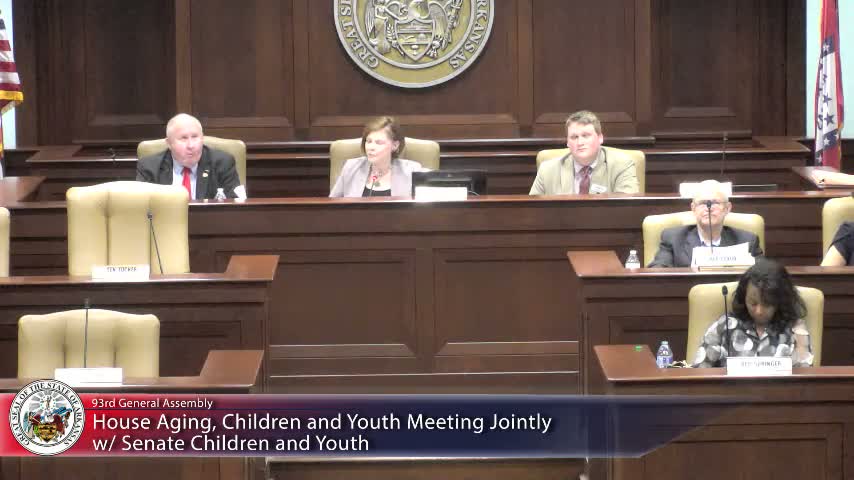
Representatives and senators heard from two Arkansas nonprofits about survivor services, outreach and resource gaps. Grace Fundaro, community education director at Partners Against Trafficking Humans (PATH), described PATH’s three-part model—client care, community education and development—saying PATH has about 25 active cases, operates a safe house and that roughly 90% of PATH’s survivor base are Arkansas residents.
Fundaro described PATH’s stepped residential level system and a car program that requires survivors to make payments into a fund that becomes savings for future needs. She said PATH conducts victim-service awareness trainings and that its helpline received more than 400 calls in 2021 from parents, potential victims and survivors. Fundaro urged lawmakers to connect PATH with school superintendents so PATH can scale prevention and classroom programming across the state.
Into the Light (founding executive director Gretchen Smeltzer; program director and lead trainer Beth Cratchville; and Mika Pratt, a CSEC advocate) gave survivor-focused testimony and an overview of prevention, intervention and long-term advocacy. Smeltzer described an 'Enlightened' prevention curriculum for high‑risk youth and a 24/7 advocacy model: Into the Light said it serves clients across 16 counties from offices in Mountain Home (Baxter County) and Springdale (Washington County) and reported that its presentation numbers span 2015 to the present, with '2,022' described in the hearing as a current‑clients figure.
Speakers stressed that trafficking happens in every county and highlighted the need for school-based prevention (presenters gave the average age for commercial sexual‑exploitation onset as 12–14 and noted younger ages for some boys). Legislators asked about stretches of coverage and collaboration with other faith and secular partners; PATH and Into the Light said both faith-based and secular partnerships are part of their scaling strategy.
Both organizations emphasized survivor voice, long-term case management and collaboration with law enforcement and federal task forces; they also urged more funding for safe houses and emphasized that prosecution without services can leave survivors without alternatives.
The committee asked about training dates and outreach; PATH confirmed a training on May 21 and offered pamphlets and contact information for follow-up.
Fundaro described PATH’s stepped residential level system and a car program that requires survivors to make payments into a fund that becomes savings for future needs. She said PATH conducts victim-service awareness trainings and that its helpline received more than 400 calls in 2021 from parents, potential victims and survivors. Fundaro urged lawmakers to connect PATH with school superintendents so PATH can scale prevention and classroom programming across the state.
Into the Light (founding executive director Gretchen Smeltzer; program director and lead trainer Beth Cratchville; and Mika Pratt, a CSEC advocate) gave survivor-focused testimony and an overview of prevention, intervention and long-term advocacy. Smeltzer described an 'Enlightened' prevention curriculum for high‑risk youth and a 24/7 advocacy model: Into the Light said it serves clients across 16 counties from offices in Mountain Home (Baxter County) and Springdale (Washington County) and reported that its presentation numbers span 2015 to the present, with '2,022' described in the hearing as a current‑clients figure.
Speakers stressed that trafficking happens in every county and highlighted the need for school-based prevention (presenters gave the average age for commercial sexual‑exploitation onset as 12–14 and noted younger ages for some boys). Legislators asked about stretches of coverage and collaboration with other faith and secular partners; PATH and Into the Light said both faith-based and secular partnerships are part of their scaling strategy.
Both organizations emphasized survivor voice, long-term case management and collaboration with law enforcement and federal task forces; they also urged more funding for safe houses and emphasized that prosecution without services can leave survivors without alternatives.
The committee asked about training dates and outreach; PATH confirmed a training on May 21 and offered pamphlets and contact information for follow-up.
View the Full Meeting & All Its Details
This article offers just a summary. Unlock complete video, transcripts, and insights as a Founder Member.
✓
Watch full, unedited meeting videos
✓
Search every word spoken in unlimited transcripts
✓
AI summaries & real-time alerts (all government levels)
✓
Permanent access to expanding government content
30-day money-back guarantee
