ACIC and DOC brief lawmakers on arrests, convictions, parole and a juvenile-records rule
May 16, 2022 | CHILDREN AND YOUTH COMMITTEE - SENATE, Senate, Committees, Legislative, Arkansas
This article was created by AI summarizing key points discussed. AI makes mistakes, so for full details and context, please refer to the video of the full meeting. Please report any errors so we can fix them. Report an error »
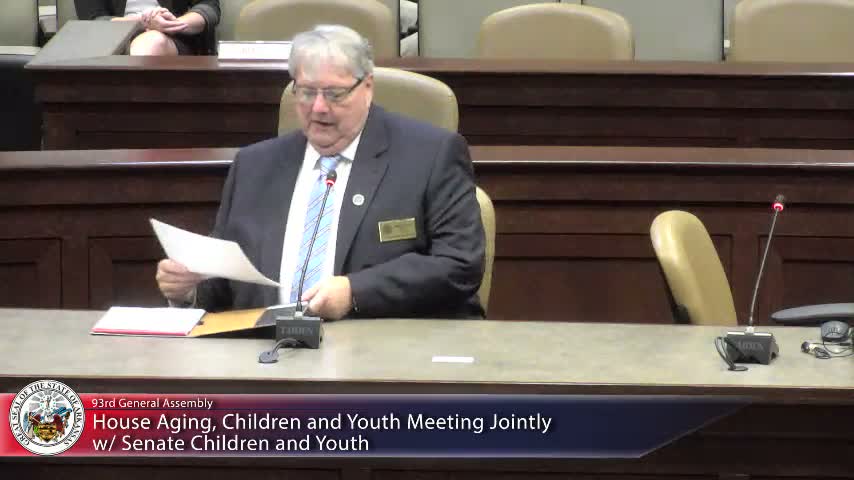
Brad Kuzorda, director of the Arkansas Crime Information Center (ACIC), summarized state criminal-record data for trafficking-related statutes, noting that ACIC’s records show 108 people arrested (122 counts), 15 people convicted (19 counts), 24 cases in 'null process' (30 counts) and 7 persons with permanently dismissed cases (8 counts). Kuzorda said final dispositions exist for 46 people and 57 counts and that some null-process cases are refiled in federal court for differences in sentencing practice.
In a follow-up, legislators asked whether patronizing/buying charges appear in the data; Kuzorda confirmed statutes include patronizing provisions for buyers, including when the victim is a minor, and noted that convictions under those provisions carry sex‑offender registration obligations.
Representatives asked for sentencing data to match convictions with time actually served; Kuzorda said his presentation counted counts and dispositions but did not include sentence-length pulls for the briefing and that those data could be compiled with IT support.
Lindsay Wallace, chief of staff in the Office of the Secretary for the Department of Corrections, addressed parole eligibility. DOC told the committee that trafficking offenses involving a minor require offenders to serve 70% of their sentence (an 'above the line' seriousness level). DOC illustrated the policy with a 10‑year example: a trafficking conviction with a minor victim would translate to about seven years served with meritorious good time considered; a non‑minor victim at the same offense level would serve roughly half the sentence less good time.
DOC also presented a rule proposal made pursuant to Act 187 of 2021 concerning extended juvenile jurisdiction transfers and access to juvenile records for limited purposes (risk assessments, treatment and supervision planning for a small subset of offenders). Committee members were told the rule is narrowly tailored and applies only to a limited group of extended-jurisdiction offenders; the committee reviewed the rule language and, without objection, the rule was reviewed.
Committee members asked DOC about sight-and-sound separation and computer access for juveniles in custody; DOC reiterated separation policies to avoid commingling juveniles with adult offenders and said policies limit contact and access in custody settings.
Lawmakers asked for follow-up data on sentences actually imposed and time served to better assess the enforcement and supervision landscape in Arkansas.
In a follow-up, legislators asked whether patronizing/buying charges appear in the data; Kuzorda confirmed statutes include patronizing provisions for buyers, including when the victim is a minor, and noted that convictions under those provisions carry sex‑offender registration obligations.
Representatives asked for sentencing data to match convictions with time actually served; Kuzorda said his presentation counted counts and dispositions but did not include sentence-length pulls for the briefing and that those data could be compiled with IT support.
Lindsay Wallace, chief of staff in the Office of the Secretary for the Department of Corrections, addressed parole eligibility. DOC told the committee that trafficking offenses involving a minor require offenders to serve 70% of their sentence (an 'above the line' seriousness level). DOC illustrated the policy with a 10‑year example: a trafficking conviction with a minor victim would translate to about seven years served with meritorious good time considered; a non‑minor victim at the same offense level would serve roughly half the sentence less good time.
DOC also presented a rule proposal made pursuant to Act 187 of 2021 concerning extended juvenile jurisdiction transfers and access to juvenile records for limited purposes (risk assessments, treatment and supervision planning for a small subset of offenders). Committee members were told the rule is narrowly tailored and applies only to a limited group of extended-jurisdiction offenders; the committee reviewed the rule language and, without objection, the rule was reviewed.
Committee members asked DOC about sight-and-sound separation and computer access for juveniles in custody; DOC reiterated separation policies to avoid commingling juveniles with adult offenders and said policies limit contact and access in custody settings.
Lawmakers asked for follow-up data on sentences actually imposed and time served to better assess the enforcement and supervision landscape in Arkansas.
Don't Miss a Word: See the Full Meeting!
Go beyond summaries. Unlock every video, transcript, and key insight with a Founder Membership.
✓
Get instant access to full meeting videos
✓
Search and clip any phrase from complete transcripts
✓
Receive AI-powered summaries & custom alerts
✓
Enjoy lifetime, unrestricted access to government data
30-day money-back guarantee
