DYS director reports post‑COVID surge, plans to expand in‑home services and step‑down options
December 19, 2022 | CHILDREN AND YOUTH COMMITTEE - SENATE, Senate, Committees, Legislative, Arkansas
This article was created by AI summarizing key points discussed. AI makes mistakes, so for full details and context, please refer to the video of the full meeting. Please report any errors so we can fix them. Report an error »
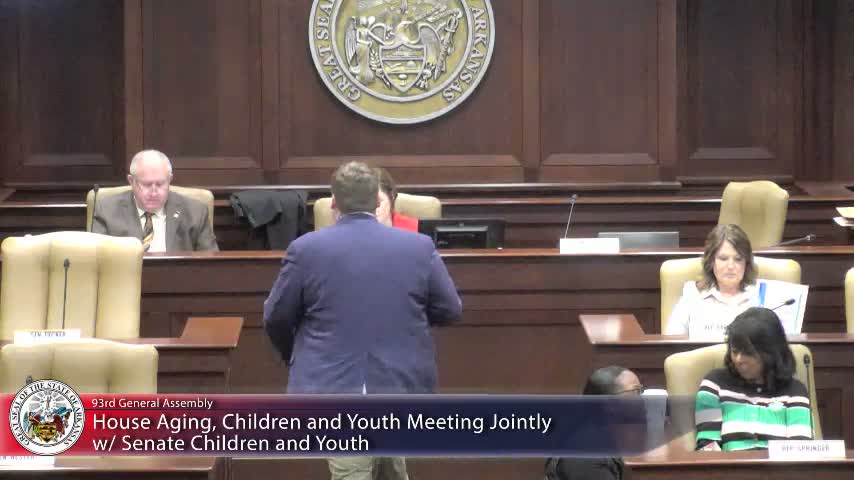
Michael Crump, director of the Division of Youth Services, briefed the committee on census trends, capacity and program changes since the 2019 reforms and the COVID period.
Crump said reforms beginning in 2019 reduced unnecessary placements and that Secure Care census briefly dropped during COVID (to about 152 daily) before a Spring 2022 surge that produced a multi‑month bottleneck because assessments and placements take time. He explained the assessment process—20 contracted assessment beds (Rite of Passage), a three‑week assessment window and a multidisciplinary team to set treatment plans.
To avoid bottlenecks, DYS plans to streamline initial assessments, adopt tiered treatment plans so lower‑need youth can move faster, and shorten the time to placement where appropriate. Crump described an intensive in‑home services pilot (funded partly with TANF) that places clinicians in homes up to three times weekly for roughly four to six months to stabilize families and reduce returns to custody.
Crump also described community reintegration (step‑down) cottages in Saline County (six beds per cottage), a potential Rite of Passage partnership and work with the Saline Career Education Center to give youth vocational exposure during the final months before discharge. He reported the C‑STEP residential diversion program at Camp Robinson is operating at 32 slots and said DYS is exploring a Lewisville facility that could include a 12‑bed cottage for girls if funding is secured.
Committee members asked for operational details. Crump said intensive in‑home providers currently include Youth Villages, St. Francis and Youth Advocate Programs; practitioners conduct assessments and scale services to family needs. On special education, Crump said DYS sometimes identifies previously undiagnosed learning disabilities (including dyslexia) and passes records to schools and courts on discharge.
Crump urged legislative support for Medicaid rule changes that would expand diversion funding and asked members to consider funding for female diversion slots and step‑down capacity.
Crump said reforms beginning in 2019 reduced unnecessary placements and that Secure Care census briefly dropped during COVID (to about 152 daily) before a Spring 2022 surge that produced a multi‑month bottleneck because assessments and placements take time. He explained the assessment process—20 contracted assessment beds (Rite of Passage), a three‑week assessment window and a multidisciplinary team to set treatment plans.
To avoid bottlenecks, DYS plans to streamline initial assessments, adopt tiered treatment plans so lower‑need youth can move faster, and shorten the time to placement where appropriate. Crump described an intensive in‑home services pilot (funded partly with TANF) that places clinicians in homes up to three times weekly for roughly four to six months to stabilize families and reduce returns to custody.
Crump also described community reintegration (step‑down) cottages in Saline County (six beds per cottage), a potential Rite of Passage partnership and work with the Saline Career Education Center to give youth vocational exposure during the final months before discharge. He reported the C‑STEP residential diversion program at Camp Robinson is operating at 32 slots and said DYS is exploring a Lewisville facility that could include a 12‑bed cottage for girls if funding is secured.
Committee members asked for operational details. Crump said intensive in‑home providers currently include Youth Villages, St. Francis and Youth Advocate Programs; practitioners conduct assessments and scale services to family needs. On special education, Crump said DYS sometimes identifies previously undiagnosed learning disabilities (including dyslexia) and passes records to schools and courts on discharge.
Crump urged legislative support for Medicaid rule changes that would expand diversion funding and asked members to consider funding for female diversion slots and step‑down capacity.
View the Full Meeting & All Its Details
This article offers just a summary. Unlock complete video, transcripts, and insights as a Founder Member.
✓
Watch full, unedited meeting videos
✓
Search every word spoken in unlimited transcripts
✓
AI summaries & real-time alerts (all government levels)
✓
Permanent access to expanding government content
30-day money-back guarantee
