Provider describes Fostering Change reintegration program for youth and urges more supports and reimbursement
September 22, 2023 | CHILDREN AND YOUTH COMMITTEE - SENATE, Senate, Committees, Legislative, Arkansas
This article was created by AI summarizing key points discussed. AI makes mistakes, so for full details and context, please refer to the video of the full meeting. Please report any errors so we can fix them. Report an error »
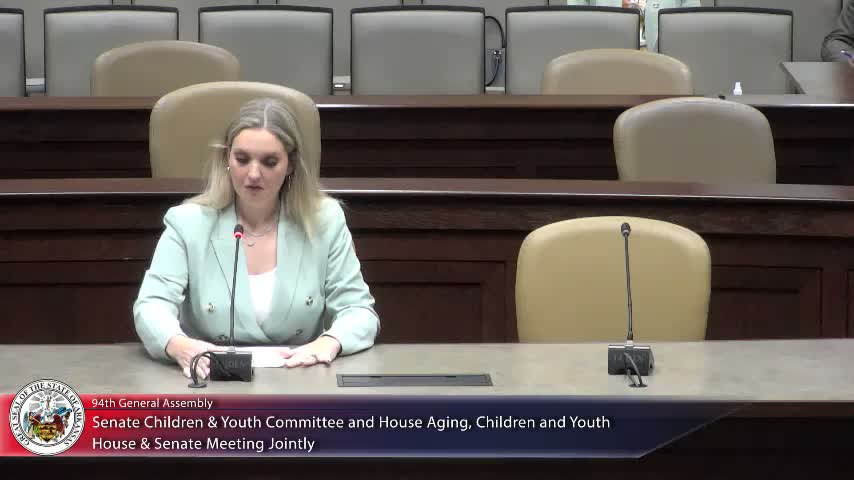
Abby Rendell, program director of Fostering Change in Fort Smith, told the Senate Children and Youth Committee that her program provides 24‑hour intensive therapeutic care for adolescents transitioning from higher-level psychiatric placements to community settings. She said Fostering Change opened in April 2018, has served 113 youth ages 13–17, operates with 27 employees across three shifts and currently manages 22 beds across three programs including Robin's House (a DCFS‑funded QRTP) and a supervised independent living program for ages 18–21.
Rendell described the program's therapeutic philosophy and day‑to‑day operations: youth attend public school, participate in community activities and are gradually given responsibilities such as part‑time jobs and cell‑phone privileges as part of reintegration. She said the program follows applied behavior analysis (ABA) practices alongside mental‑health treatment but noted that in Arkansas ABA is not billable for children without an autism diagnosis, which limits provider capacity and sustainability. Rendell described treating youth with extensive placement histories and severe trauma, and she urged the committee to consider supporting more provider capacity, increased reimbursement and stronger pre‑ and post‑adoption supports to reduce failed placements.
Committee members asked about diagnoses seen in the program, adoption disruptions and what supports are available after adoption; Rendell recommended slowing some adoption timelines, expanding parent training and providing wraparound services to prevent returns to care. Senator Sullivan and others commended the program's work and urged continued legislative attention to foster‑care system capacity.
Rendell described the program's therapeutic philosophy and day‑to‑day operations: youth attend public school, participate in community activities and are gradually given responsibilities such as part‑time jobs and cell‑phone privileges as part of reintegration. She said the program follows applied behavior analysis (ABA) practices alongside mental‑health treatment but noted that in Arkansas ABA is not billable for children without an autism diagnosis, which limits provider capacity and sustainability. Rendell described treating youth with extensive placement histories and severe trauma, and she urged the committee to consider supporting more provider capacity, increased reimbursement and stronger pre‑ and post‑adoption supports to reduce failed placements.
Committee members asked about diagnoses seen in the program, adoption disruptions and what supports are available after adoption; Rendell recommended slowing some adoption timelines, expanding parent training and providing wraparound services to prevent returns to care. Senator Sullivan and others commended the program's work and urged continued legislative attention to foster‑care system capacity.
View the Full Meeting & All Its Details
This article offers just a summary. Unlock complete video, transcripts, and insights as a Founder Member.
✓
Watch full, unedited meeting videos
✓
Search every word spoken in unlimited transcripts
✓
AI summaries & real-time alerts (all government levels)
✓
Permanent access to expanding government content
30-day money-back guarantee
