Expert, Local Farmers Describe Energy, Water and Noise Problems From Crypto Mining
April 04, 2024 | CHILDREN AND YOUTH COMMITTEE - SENATE, Senate, Committees, Legislative, Arkansas
This article was created by AI summarizing key points discussed. AI makes mistakes, so for full details and context, please refer to the video of the full meeting. Please report any errors so we can fix them. Report an error »
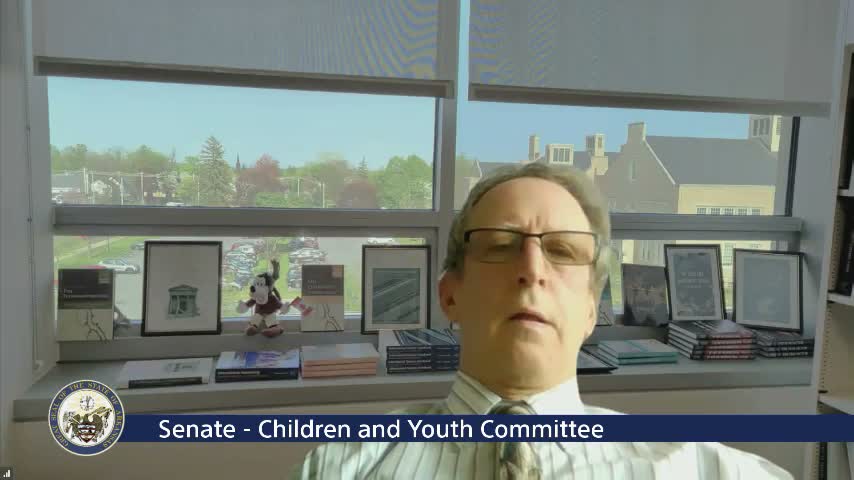
Professor Reed, an academic who formerly served as mayor of Plattsburgh, New York, told the committee that Bitcoin's proof-of-work protocol demands "an unbelievably large number of power-hungry machines" and that the resulting noise, heat and energy use were central problems Plattsburgh faced in 2017.
"Bitcoin uses something called proof of work to memorialize transactions and prevent subsequent tampering that is the root of all the problems we now see from the mining industry," Reed said. He emphasized that most other digital currencies use less energy-intensive protocols and that large Bitcoin mines typically do not recycle their waste heat.
Local agricultural witnesses described an Arkansas County site whose operators drilled a submersible well and installed containerized mining units. "They have a facility that has... been reported as much as 3,000 computers in these containers," Jerry Lee Bogart said, and he raised concerns that a closed-loop cooling system of that scale would still produce discharge and require permits. Bogart said, "There is no discharge permit for this site." He added that the Grand Prairie depends on the Sparta aquifer and that a large new electrical load during July–September irrigation months could cause brownouts and economic harm to farmers.
Tammy Hornbeck, a DeWitt coffee-shop owner and chair of a citizens committee, said testing fans at the site already displaced deer and disrupted hunting and fishing near the facility. She and others said the company has not been forthcoming about ownership, water plans or discharge handling.
Committee members asked utilities and environmental agencies to verify water-use and discharge permits; witnesses cited figures of roughly 250,000 to 600,000 gallons per month at different Arkansas sites, but said consistency requires follow-up. No industry representative responded during this hearing; the committee scheduled a later session for company rebuttal.
"Bitcoin uses something called proof of work to memorialize transactions and prevent subsequent tampering that is the root of all the problems we now see from the mining industry," Reed said. He emphasized that most other digital currencies use less energy-intensive protocols and that large Bitcoin mines typically do not recycle their waste heat.
Local agricultural witnesses described an Arkansas County site whose operators drilled a submersible well and installed containerized mining units. "They have a facility that has... been reported as much as 3,000 computers in these containers," Jerry Lee Bogart said, and he raised concerns that a closed-loop cooling system of that scale would still produce discharge and require permits. Bogart said, "There is no discharge permit for this site." He added that the Grand Prairie depends on the Sparta aquifer and that a large new electrical load during July–September irrigation months could cause brownouts and economic harm to farmers.
Tammy Hornbeck, a DeWitt coffee-shop owner and chair of a citizens committee, said testing fans at the site already displaced deer and disrupted hunting and fishing near the facility. She and others said the company has not been forthcoming about ownership, water plans or discharge handling.
Committee members asked utilities and environmental agencies to verify water-use and discharge permits; witnesses cited figures of roughly 250,000 to 600,000 gallons per month at different Arkansas sites, but said consistency requires follow-up. No industry representative responded during this hearing; the committee scheduled a later session for company rebuttal.
Don't Miss a Word: See the Full Meeting!
Go beyond summaries. Unlock every video, transcript, and key insight with a Founder Membership.
✓
Get instant access to full meeting videos
✓
Search and clip any phrase from complete transcripts
✓
Receive AI-powered summaries & custom alerts
✓
Enjoy lifetime, unrestricted access to government data
30-day money-back guarantee
