Senate committee reviews rule updates: Families First alignment, 'resource home' terminology and youth aging-out changes
April 05, 2022 | CHILDREN AND YOUTH COMMITTEE - SENATE, Senate, Committees, Legislative, Arkansas
This article was created by AI summarizing key points discussed. AI makes mistakes, so for full details and context, please refer to the video of the full meeting. Please report any errors so we can fix them. Report an error »
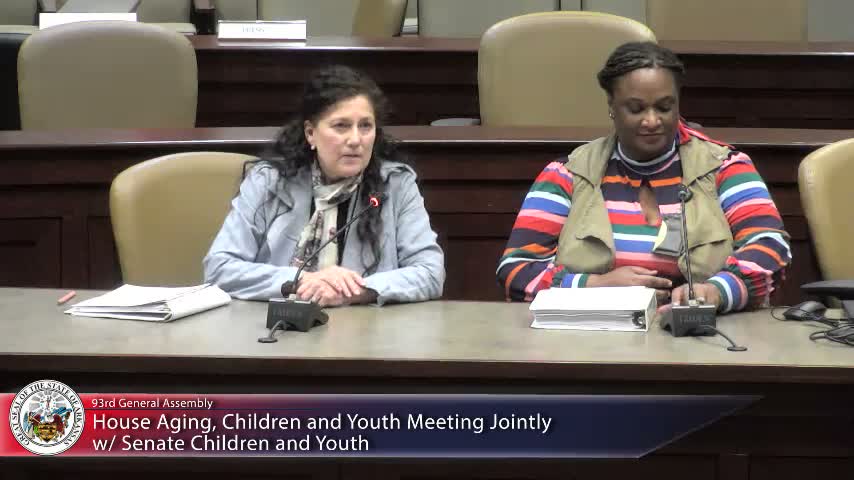
State child welfare staff told the Senate Children and Youth Committee they rewrote multiple placement and foster-care rules to align state policy with the federal Families First Prevention Services Act and several 2021 acts, and they briefly explained safety and procedural changes to committee members.
Kristen Harper, assistant director with the Division of Children and Family Services, described changes that replace older language and clarify the department’s approach to ‘‘resource homes’’ — a term that encompasses both foster and adoptive homes — and to align DCFS approval requirements with national model licensing standards. Harper said most changes formalize current practice; one substantive safety change requires a 4-foot enclosure around in-ground pools where standard covers are not used and removal of ladders/access to above-ground pools when not in use. Harper said about 107 resource homes statewide had pools, out of roughly 1,700 resource homes.
Staff also described changes for transitional supervised independent living for youth: under provisions tied to Family First, some youth in extended care can enter supervised independent-living placements even if they had not previously been served by that provider. Another rule clarifies information-sharing with resource parents under Acts 317 and 814, allowing release of certain information to resource parents when DCFS determines there is a legitimate need, and clarifies that DCFS will not pay for vacation expenses when resource parents transport children outside Arkansas with prior DHS approval.
On youth aging out of foster care, Harper said the division will streamline reentry by removing a mandatory petition requirement for youth returning to services, make the six-month review hearing optional for extended-care participants, and formalize sponsor background checks and expectations to help youth manage monthly board payments. Committee members asked for more detail on pool requirements and transitional living eligibility; staff said most changes reflect current practice and that the fence height was reduced from an earlier 5-foot proposal to 4 feet after receiving pushback.
The committee reviewed these rules without recorded objection during the meeting. Staff said the rule changes incorporate specific 2021 acts (including Act 556, Act 270 and Act 896 where referenced for maltreatment and registry topics) and national licensing guidance tied to Family First.
Kristen Harper, assistant director with the Division of Children and Family Services, described changes that replace older language and clarify the department’s approach to ‘‘resource homes’’ — a term that encompasses both foster and adoptive homes — and to align DCFS approval requirements with national model licensing standards. Harper said most changes formalize current practice; one substantive safety change requires a 4-foot enclosure around in-ground pools where standard covers are not used and removal of ladders/access to above-ground pools when not in use. Harper said about 107 resource homes statewide had pools, out of roughly 1,700 resource homes.
Staff also described changes for transitional supervised independent living for youth: under provisions tied to Family First, some youth in extended care can enter supervised independent-living placements even if they had not previously been served by that provider. Another rule clarifies information-sharing with resource parents under Acts 317 and 814, allowing release of certain information to resource parents when DCFS determines there is a legitimate need, and clarifies that DCFS will not pay for vacation expenses when resource parents transport children outside Arkansas with prior DHS approval.
On youth aging out of foster care, Harper said the division will streamline reentry by removing a mandatory petition requirement for youth returning to services, make the six-month review hearing optional for extended-care participants, and formalize sponsor background checks and expectations to help youth manage monthly board payments. Committee members asked for more detail on pool requirements and transitional living eligibility; staff said most changes reflect current practice and that the fence height was reduced from an earlier 5-foot proposal to 4 feet after receiving pushback.
The committee reviewed these rules without recorded objection during the meeting. Staff said the rule changes incorporate specific 2021 acts (including Act 556, Act 270 and Act 896 where referenced for maltreatment and registry topics) and national licensing guidance tied to Family First.
View the Full Meeting & All Its Details
This article offers just a summary. Unlock complete video, transcripts, and insights as a Founder Member.
✓
Watch full, unedited meeting videos
✓
Search every word spoken in unlimited transcripts
✓
AI summaries & real-time alerts (all government levels)
✓
Permanent access to expanding government content
30-day money-back guarantee
