Quarterly performance briefing highlights 8,257 hotline reports, staffing gaps and declines in timeliness metrics
April 05, 2022 | CHILDREN AND YOUTH COMMITTEE - SENATE, Senate, Committees, Legislative, Arkansas
This article was created by AI summarizing key points discussed. AI makes mistakes, so for full details and context, please refer to the video of the full meeting. Please report any errors so we can fix them. Report an error »
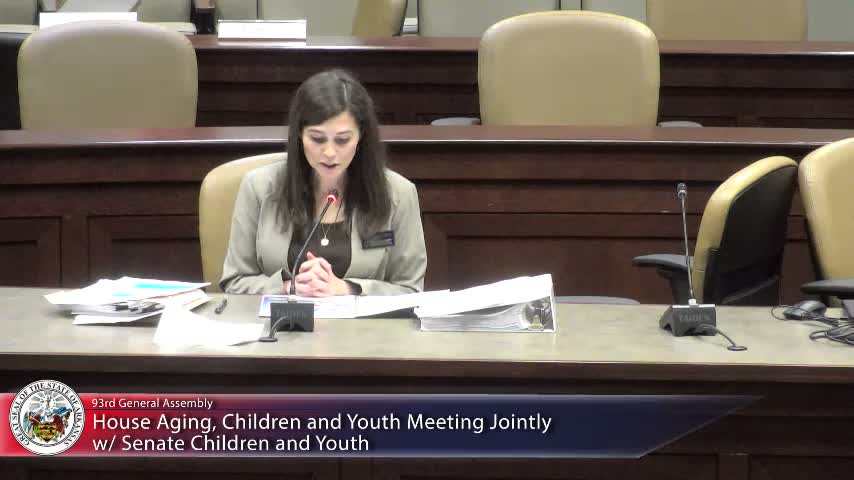
State child-welfare staff presented a quarterly performance update that showed rising hotline volume, ongoing workforce shortages and mixed outcomes across investigation and permanency metrics.
Kristen Harper, assistant director of the Division of Children and Family Services, said the hotline received 8,257 reports during the quarter; 19% of those were assigned to the Arkansas State Police Crimes Against Children Division (CACD) and 81% to DCFS. Of DCFS assignments, 82% were routed to investigative pathways and 18% to differential response. Harper said the division saw a year-over-year drop in the percentage of investigations found true for the quarter but offered no definitive explanation and said staff will continue to monitor the trend. She reported two findings of true in fatalities and 12 fatalities pending determination.
Harper described a staffing shortfall that has affected service delivery: the division had about 210 vacancies statewide and monthly face-to-face visits to in-home cases dropped to about 63% (target 95%). She said staffing shortages have increased workloads in some counties, forced staff to carry cases across county lines and contributed to slower progress toward permanency measures. Harper said there were 4,661 children in foster care at quarter end and that the quarter showed more discharges than admissions — contributing to a small decline in the foster-care population.
Harper also reported placement shifts: 38% of children in care were with relatives or fictive kin at quarter end and, as of Feb. 28, the relative-placement rate was 41% statewide. She said the division saw a net gain of 72 foster homes during the quarter but also reported 34 failed adoptions in the last six months and said staff are reviewing those cases and increasing post-adoption supports. Harper credited partners — including Project Zero — with helping finalize 229 adoptions during the quarter.
Major Jeff of the Arkansas State Police Crimes Against Children Division summarized the CACD annual report in a brief appearance, reporting 63,085 hotline calls in 2021 and 35,217 calls accepted for investigation; he said CACD’s substantiation and closure statistics are detailed in the annual report. Major Jeff and committee members discussed staffing challenges at CACD’s 24/7 hotline; Major Jeff attributed low staffing levels partly to pay and scheduling for round-the-clock operations and said agency leadership is reevaluating the positions.
Committee members asked for additional data breakouts — for example, the overlap of entry reasons when children have multiple listed reasons and cross-referencing true findings to removals — and staff agreed to follow up with data teams.
Kristen Harper, assistant director of the Division of Children and Family Services, said the hotline received 8,257 reports during the quarter; 19% of those were assigned to the Arkansas State Police Crimes Against Children Division (CACD) and 81% to DCFS. Of DCFS assignments, 82% were routed to investigative pathways and 18% to differential response. Harper said the division saw a year-over-year drop in the percentage of investigations found true for the quarter but offered no definitive explanation and said staff will continue to monitor the trend. She reported two findings of true in fatalities and 12 fatalities pending determination.
Harper described a staffing shortfall that has affected service delivery: the division had about 210 vacancies statewide and monthly face-to-face visits to in-home cases dropped to about 63% (target 95%). She said staffing shortages have increased workloads in some counties, forced staff to carry cases across county lines and contributed to slower progress toward permanency measures. Harper said there were 4,661 children in foster care at quarter end and that the quarter showed more discharges than admissions — contributing to a small decline in the foster-care population.
Harper also reported placement shifts: 38% of children in care were with relatives or fictive kin at quarter end and, as of Feb. 28, the relative-placement rate was 41% statewide. She said the division saw a net gain of 72 foster homes during the quarter but also reported 34 failed adoptions in the last six months and said staff are reviewing those cases and increasing post-adoption supports. Harper credited partners — including Project Zero — with helping finalize 229 adoptions during the quarter.
Major Jeff of the Arkansas State Police Crimes Against Children Division summarized the CACD annual report in a brief appearance, reporting 63,085 hotline calls in 2021 and 35,217 calls accepted for investigation; he said CACD’s substantiation and closure statistics are detailed in the annual report. Major Jeff and committee members discussed staffing challenges at CACD’s 24/7 hotline; Major Jeff attributed low staffing levels partly to pay and scheduling for round-the-clock operations and said agency leadership is reevaluating the positions.
Committee members asked for additional data breakouts — for example, the overlap of entry reasons when children have multiple listed reasons and cross-referencing true findings to removals — and staff agreed to follow up with data teams.
Don't Miss a Word: See the Full Meeting!
Go beyond summaries. Unlock every video, transcript, and key insight with a Founder Membership.
✓
Get instant access to full meeting videos
✓
Search and clip any phrase from complete transcripts
✓
Receive AI-powered summaries & custom alerts
✓
Enjoy lifetime, unrestricted access to government data
30-day money-back guarantee
