Senate passes bill asserting property owners’ rights over trees; planners, cities warn of unintended consequences
April 20, 2021 | STATE AGENCIES & GOVT'L AFFAIRS-SENATE, Senate, Committees, Legislative, Arkansas
This article was created by AI summarizing key points discussed. AI makes mistakes, so for full details and context, please refer to the video of the full meeting. Please report any errors so we can fix them. Report an error »
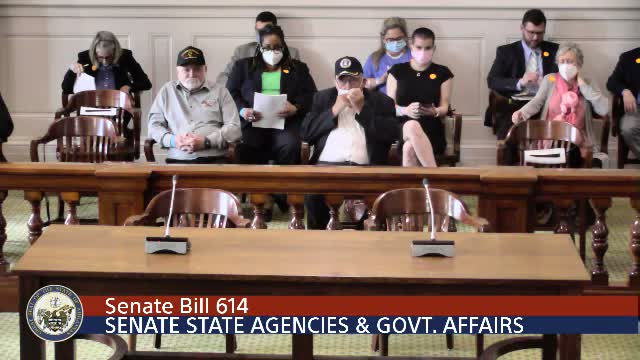
Senator Hester told the committee SB 634 is intended to clarify that property owners retain the right to manage vegetation, including removing nuisance or hazardous trees on their land. "If I wanna go cut a tree on my property or a bush, I have the right to do that," he said, adding the bill is aimed at maintenance rather than changing municipal development requirements.
James Wallen, representing the City of Conway and the American Planning Association Arkansas chapter, testified in opposition and urged caution. He said the bill is written broadly and could negate commonly used planning tools such as vegetative buffers that ease neighborhood concerns during conditional‑use permitting. Wallen described real examples, including commercial buffering projects used to make developments acceptable to neighbors.
Peter Nierngarten, Fayetteville environmental director, said Fayetteville values mature trees for property values, shade, wildlife habitat and storm resiliency. He noted the city’s tree preservation ordinance already exempts routine homeowner trimming and focuses on development projects larger than one acre; he expressed concern the bill could unintentionally prevent cities from enforcing hazardous‑tree removal after storms because the draft lacks explicit emergency language.
Sponsor Hester replied that the bill is focused narrowly on maintenance and does not prevent planning departments from requiring trees during development. After discussion, the committee adopted the amendment (earlier in the hearing) and passed the bill by voice vote.
What’s next: The bill passed committee and will advance to the Senate floor; municipal officials and planning groups signaled they may seek clarifying language in subsequent stages to protect development tools and emergency responses.
James Wallen, representing the City of Conway and the American Planning Association Arkansas chapter, testified in opposition and urged caution. He said the bill is written broadly and could negate commonly used planning tools such as vegetative buffers that ease neighborhood concerns during conditional‑use permitting. Wallen described real examples, including commercial buffering projects used to make developments acceptable to neighbors.
Peter Nierngarten, Fayetteville environmental director, said Fayetteville values mature trees for property values, shade, wildlife habitat and storm resiliency. He noted the city’s tree preservation ordinance already exempts routine homeowner trimming and focuses on development projects larger than one acre; he expressed concern the bill could unintentionally prevent cities from enforcing hazardous‑tree removal after storms because the draft lacks explicit emergency language.
Sponsor Hester replied that the bill is focused narrowly on maintenance and does not prevent planning departments from requiring trees during development. After discussion, the committee adopted the amendment (earlier in the hearing) and passed the bill by voice vote.
What’s next: The bill passed committee and will advance to the Senate floor; municipal officials and planning groups signaled they may seek clarifying language in subsequent stages to protect development tools and emergency responses.
Don't Miss a Word: See the Full Meeting!
Go beyond summaries. Unlock every video, transcript, and key insight with a Founder Membership.
✓
Get instant access to full meeting videos
✓
Search and clip any phrase from complete transcripts
✓
Receive AI-powered summaries & custom alerts
✓
Enjoy lifetime, unrestricted access to government data
30-day money-back guarantee
