Senate committee advances bill to create post-election integrity reviews; critics warn of potential for county targeting
February 21, 2023 | STATE AGENCIES & GOVT'L AFFAIRS-SENATE, Senate, Committees, Legislative, Arkansas
This article was created by AI summarizing key points discussed. AI makes mistakes, so for full details and context, please refer to the video of the full meeting. Please report any errors so we can fix them. Report an error »
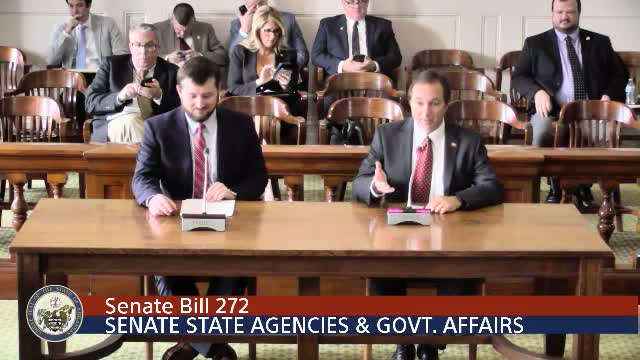
Senator Jim Petty introduced SB 272 to create an election integrity review process that would allow the State Board of Election Commissioners to conduct systematic, post-election reviews of election-related records and extend machine audits to primaries as well as general elections. "If the general assembly wants us to do more to protect election integrity, the place to do that is... absentee voting and voter registration records," Daniel Schultz, director of the State Election Commission, told the committee.
Under the bill as described by Schultz, the board would randomly select about 15 counties per review cycle (a decade-long plan would cover all 75 counties) and could add counties if reporting anomalies or other indicators warranted further review. Schultz said the commission lacks current bandwidth and would include a personnel request for two additional attorneys and an investigator; he said the measure would be accompanied by a budget request to fund those positions.
Several senators, including Senator Tucker and Senator Payton, pressed for clearer standards on county selection and raised concerns that subsection allowing the Joint Performance Review (JPR) Committee to designate counties could be used to target particular counties. "The larger concern is that some counties could get picked on," Senator Payton said, urging limits or a standard similar to the two-thirds vote required for the board to add a county. Public testimony from Brady Shires of the Arkansas Public Policy Panel urged safeguards against abuse and questioned whether the statute’s language could allow punitive or unfair actions; he called for accountability measures for the state board.
Schultz said the plan was intended to be implemented by rule and that sponsors would work on clarifying language; he also said non-codified language delays mandatory reviews until resources are in place. Committee members noted both the potential benefit of process review and skepticism that audits will find fraud; several members urged waiting for the personnel appropriation before making the mandate effective. The committee ultimately voted to pass the bill.
Under the bill as described by Schultz, the board would randomly select about 15 counties per review cycle (a decade-long plan would cover all 75 counties) and could add counties if reporting anomalies or other indicators warranted further review. Schultz said the commission lacks current bandwidth and would include a personnel request for two additional attorneys and an investigator; he said the measure would be accompanied by a budget request to fund those positions.
Several senators, including Senator Tucker and Senator Payton, pressed for clearer standards on county selection and raised concerns that subsection allowing the Joint Performance Review (JPR) Committee to designate counties could be used to target particular counties. "The larger concern is that some counties could get picked on," Senator Payton said, urging limits or a standard similar to the two-thirds vote required for the board to add a county. Public testimony from Brady Shires of the Arkansas Public Policy Panel urged safeguards against abuse and questioned whether the statute’s language could allow punitive or unfair actions; he called for accountability measures for the state board.
Schultz said the plan was intended to be implemented by rule and that sponsors would work on clarifying language; he also said non-codified language delays mandatory reviews until resources are in place. Committee members noted both the potential benefit of process review and skepticism that audits will find fraud; several members urged waiting for the personnel appropriation before making the mandate effective. The committee ultimately voted to pass the bill.
View the Full Meeting & All Its Details
This article offers just a summary. Unlock complete video, transcripts, and insights as a Founder Member.
✓
Watch full, unedited meeting videos
✓
Search every word spoken in unlimited transcripts
✓
AI summaries & real-time alerts (all government levels)
✓
Permanent access to expanding government content
30-day money-back guarantee
