Lawmakers move ballot‑title review back to Attorney General after Supreme Court ruling
February 28, 2023 | STATE AGENCIES & GOVT'L AFFAIRS-SENATE, Senate, Committees, Legislative, Arkansas
This article was created by AI summarizing key points discussed. AI makes mistakes, so for full details and context, please refer to the video of the full meeting. Please report any errors so we can fix them. Report an error »
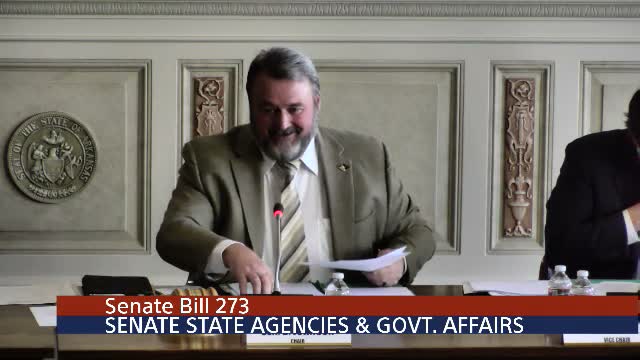
Representative Ray introduced House Bill 1320 on behalf of sponsors who say the measure restores the pre‑2019 process for reviewing initiative ballot titles.
“This ballot title review in the attorney general's office was set up in 1943 by the legislature and it stayed there until 2019,” Representative Ray said, describing litigation that followed the State Board of Election Commissioners’ refusal to certify a recreational‑marijuana ballot title and subsequent Supreme Court review. Ray and deputy Attorney General Ryan Owlsley told the committee the court’s Armstrong decision held that Amendment 7 limits the State Board’s discretion to review ballot titles and that the AG’s process is the only route the Supreme Court has approved.
Owlsley said the struck‑down 2019 law created a conflict with the constitutional role assigned under Amendment 7, noting that the earlier AG process had been accepted by the court in prior precedent dating back to 1956. “What the Supreme Court said was, since the Constitution says the State Board shall certify, the State Board just doesn't have discretion about whether to certify,” Owlsley told senators.
Committee members sought specifics about how the AG’s office would handle substituted titles and the sponsor’s options. Owlsley explained the three‑option practice used historically: certify the sponsor’s language, substitute a more suitable title (which the sponsor may accept or decline), or decline certification and state reasons so the sponsor can revise and resubmit. If sponsors decline substitution, Owlsley said, they may either resubmit or seek relief in the Supreme Court under the bill’s current challenge process.
Several senators asked whether the bill should explicitly require the Supreme Court to act “expeditiously” on title challenges. Owlsley said the court already has original jurisdiction and internal rules that typically produce expedited review; he acknowledged that adding explicit language could be a legislative tweak but said the court controls timing under its constitutional authority.
Misty Orpen of Common Ground Arkansas told the committee her organization supports restoring the AG process and believes the change complies with court precedent. There were no members of the public speaking in opposition during the hearing.
The committee approved HB 1320 as amended and advanced it from committee.
What’s next: The bill will proceed to the next legislative stage per the committee’s roll call.
“This ballot title review in the attorney general's office was set up in 1943 by the legislature and it stayed there until 2019,” Representative Ray said, describing litigation that followed the State Board of Election Commissioners’ refusal to certify a recreational‑marijuana ballot title and subsequent Supreme Court review. Ray and deputy Attorney General Ryan Owlsley told the committee the court’s Armstrong decision held that Amendment 7 limits the State Board’s discretion to review ballot titles and that the AG’s process is the only route the Supreme Court has approved.
Owlsley said the struck‑down 2019 law created a conflict with the constitutional role assigned under Amendment 7, noting that the earlier AG process had been accepted by the court in prior precedent dating back to 1956. “What the Supreme Court said was, since the Constitution says the State Board shall certify, the State Board just doesn't have discretion about whether to certify,” Owlsley told senators.
Committee members sought specifics about how the AG’s office would handle substituted titles and the sponsor’s options. Owlsley explained the three‑option practice used historically: certify the sponsor’s language, substitute a more suitable title (which the sponsor may accept or decline), or decline certification and state reasons so the sponsor can revise and resubmit. If sponsors decline substitution, Owlsley said, they may either resubmit or seek relief in the Supreme Court under the bill’s current challenge process.
Several senators asked whether the bill should explicitly require the Supreme Court to act “expeditiously” on title challenges. Owlsley said the court already has original jurisdiction and internal rules that typically produce expedited review; he acknowledged that adding explicit language could be a legislative tweak but said the court controls timing under its constitutional authority.
Misty Orpen of Common Ground Arkansas told the committee her organization supports restoring the AG process and believes the change complies with court precedent. There were no members of the public speaking in opposition during the hearing.
The committee approved HB 1320 as amended and advanced it from committee.
What’s next: The bill will proceed to the next legislative stage per the committee’s roll call.
Don't Miss a Word: See the Full Meeting!
Go beyond summaries. Unlock every video, transcript, and key insight with a Founder Membership.
✓
Get instant access to full meeting videos
✓
Search and clip any phrase from complete transcripts
✓
Receive AI-powered summaries & custom alerts
✓
Enjoy lifetime, unrestricted access to government data
30-day money-back guarantee
