Arkansas committee advances bill to ban state-sponsored race-based preferences after contentious hearing
March 07, 2023 | STATE AGENCIES & GOVT'L AFFAIRS-SENATE, Senate, Committees, Legislative, Arkansas
This article was created by AI summarizing key points discussed. AI makes mistakes, so for full details and context, please refer to the video of the full meeting. Please report any errors so we can fix them. Report an error »
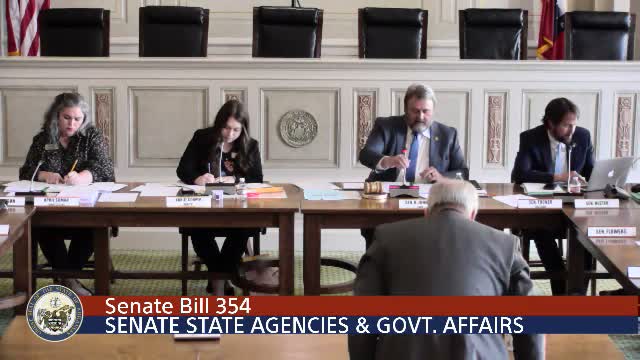
The State Agencies & Governmental Affairs Senate committee advanced Senate Bill 71 after several hours of debate and public testimony over whether the measure would in practice criminalize programs that give preferences based on race or other characteristics.
Sponsor Sen. Dan Sullivan (Dist. 20) told the committee the bill's intent is to ‘‘end state-sponsored discrimination.’’ "All this does is end state sponsored discrimination," Sullivan said, adding that the attorney general's office had reviewed the bill and found no constitutional infirmities. He acknowledged the bill will have winners and losers. "Clearly, people will be impacted," he said.
Opponents, including Senator Tucker in questioning and multiple public witnesses, said the bill goes further than the sponsor describes. Tucker asked whether institutions such as the Mosaic Templars Cultural Center — a state museum that displays Black history and buys from Black artists — would be made to commit a crime by following their mission. "If this bill becomes law…when the people who work at the Mosaic Templars Cultural Center do their jobs according to the mission of that museum, they'll be committing a crime," Tucker said.
Public witnesses urged the committee to retain current language that allows state programs to address disparities. Annabeth Gorman, CEO of the Women's Foundation of Arkansas, said removing language that recognizes past transgressions would hamper efforts to address maternal mortality and support women and minority-owned businesses. "This language of this bill isn't solving a problem. It's cutting our state off at the knees to address continued disparities," she said. Lance LaVarre described personal experiences of unequal policing and warned the bill would erase civil-rights language.
Committee members pressed sponsor and witnesses on criminal penalties in the bill. The transcript shows the bill assigns a negligence mental state for violations that would be a Class A misdemeanor (page and line references were discussed in committee). Sullivan said the negligence language was pulled from FOIA law and that enforcement practice might be limited.
After debate and public comment, the committee voted to pass SB 71 by voice. Several senators urged caution about unintended consequences; supporters said the bill is needed to stop state-backed preferences.
SB 71 now moves to the next legislative steps in the process.
Sponsor Sen. Dan Sullivan (Dist. 20) told the committee the bill's intent is to ‘‘end state-sponsored discrimination.’’ "All this does is end state sponsored discrimination," Sullivan said, adding that the attorney general's office had reviewed the bill and found no constitutional infirmities. He acknowledged the bill will have winners and losers. "Clearly, people will be impacted," he said.
Opponents, including Senator Tucker in questioning and multiple public witnesses, said the bill goes further than the sponsor describes. Tucker asked whether institutions such as the Mosaic Templars Cultural Center — a state museum that displays Black history and buys from Black artists — would be made to commit a crime by following their mission. "If this bill becomes law…when the people who work at the Mosaic Templars Cultural Center do their jobs according to the mission of that museum, they'll be committing a crime," Tucker said.
Public witnesses urged the committee to retain current language that allows state programs to address disparities. Annabeth Gorman, CEO of the Women's Foundation of Arkansas, said removing language that recognizes past transgressions would hamper efforts to address maternal mortality and support women and minority-owned businesses. "This language of this bill isn't solving a problem. It's cutting our state off at the knees to address continued disparities," she said. Lance LaVarre described personal experiences of unequal policing and warned the bill would erase civil-rights language.
Committee members pressed sponsor and witnesses on criminal penalties in the bill. The transcript shows the bill assigns a negligence mental state for violations that would be a Class A misdemeanor (page and line references were discussed in committee). Sullivan said the negligence language was pulled from FOIA law and that enforcement practice might be limited.
After debate and public comment, the committee voted to pass SB 71 by voice. Several senators urged caution about unintended consequences; supporters said the bill is needed to stop state-backed preferences.
SB 71 now moves to the next legislative steps in the process.
View the Full Meeting & All Its Details
This article offers just a summary. Unlock complete video, transcripts, and insights as a Founder Member.
✓
Watch full, unedited meeting videos
✓
Search every word spoken in unlimited transcripts
✓
AI summaries & real-time alerts (all government levels)
✓
Permanent access to expanding government content
30-day money-back guarantee
