Senate committee debates FOIA change to force responses when no records exist
March 14, 2023 | STATE AGENCIES & GOVT'L AFFAIRS-SENATE, Senate, Committees, Legislative, Arkansas
This article was created by AI summarizing key points discussed. AI makes mistakes, so for full details and context, please refer to the video of the full meeting. Please report any errors so we can fix them. Report an error »
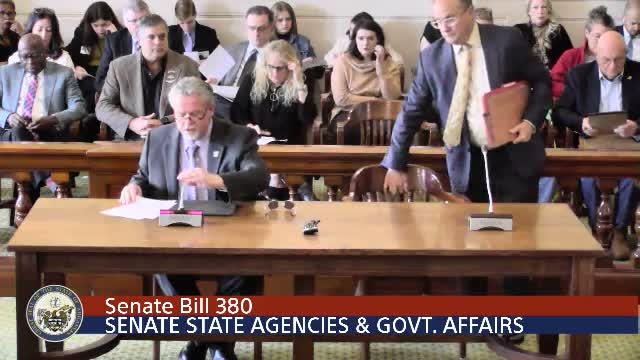
A Senate committee heard lengthy testimony on SB 380, a measure sponsors say would strengthen Arkansas’s public‑records process by making a written response mandatory when a custodian has no responsive documents, when they claim an exemption, or when the request was sent to the wrong office.
Joey McCutcheon, with the Arkansas Transparency and Government Group, described the bill as a ‘‘people‑friendly’’ clarification of FOIA designed to prevent unnecessary litigation and make it easier for citizens to know whether records exist. Under the proposal, custodians would be required to send written notice — by email or other means — saying either that no responsive records exist, which exemption is being claimed, or who the proper custodian is.
Senator Payton and other committee members questioned the three‑day timeline the bill references, saying that in practice custodians may need more time to conduct a diligent search, particularly over weekends or for large or older requests. McCutcheon and FOIA experts testified that the three‑day period is the same time frame in existing FOIA law and that the law applies a negligence or reasonableness standard; they said penalties in the referenced statute already cover failures to respond rather than honest mistakes arising from a reasonable search.
Lanny Richmond, legal counsel for the Arkansas Municipal League, warned the committee that FOIA contains several distinct timeframes — for active records, for storage, and for personnel requests that trigger separate notice periods and possible AG opinions — and that applying a flat three‑day requirement to all requests could create ambiguity and practical burdens for local governments.
Numerous journalists, transparency advocates and citizens testified in favor, describing repeated experiences in which custodians did not reply and requesters were left uncertain whether records existed. Supporters stressed that the penalty is a class C misdemeanor tied to failure to respond and argued the bill’s primary effect would be better communication, not prosecutions.
The committee adopted an amendment to the bill and advanced related FOIA items; the transcript does not record a final roll‑call vote on SB 380 in the excerpt provided. Sponsors said they are open to clarifying language about ‘‘working days’’ and AG opinion timelines if the committee wishes to avoid unintended consequences for personnel records.
Joey McCutcheon, with the Arkansas Transparency and Government Group, described the bill as a ‘‘people‑friendly’’ clarification of FOIA designed to prevent unnecessary litigation and make it easier for citizens to know whether records exist. Under the proposal, custodians would be required to send written notice — by email or other means — saying either that no responsive records exist, which exemption is being claimed, or who the proper custodian is.
Senator Payton and other committee members questioned the three‑day timeline the bill references, saying that in practice custodians may need more time to conduct a diligent search, particularly over weekends or for large or older requests. McCutcheon and FOIA experts testified that the three‑day period is the same time frame in existing FOIA law and that the law applies a negligence or reasonableness standard; they said penalties in the referenced statute already cover failures to respond rather than honest mistakes arising from a reasonable search.
Lanny Richmond, legal counsel for the Arkansas Municipal League, warned the committee that FOIA contains several distinct timeframes — for active records, for storage, and for personnel requests that trigger separate notice periods and possible AG opinions — and that applying a flat three‑day requirement to all requests could create ambiguity and practical burdens for local governments.
Numerous journalists, transparency advocates and citizens testified in favor, describing repeated experiences in which custodians did not reply and requesters were left uncertain whether records existed. Supporters stressed that the penalty is a class C misdemeanor tied to failure to respond and argued the bill’s primary effect would be better communication, not prosecutions.
The committee adopted an amendment to the bill and advanced related FOIA items; the transcript does not record a final roll‑call vote on SB 380 in the excerpt provided. Sponsors said they are open to clarifying language about ‘‘working days’’ and AG opinion timelines if the committee wishes to avoid unintended consequences for personnel records.
View the Full Meeting & All Its Details
This article offers just a summary. Unlock complete video, transcripts, and insights as a Founder Member.
✓
Watch full, unedited meeting videos
✓
Search every word spoken in unlimited transcripts
✓
AI summaries & real-time alerts (all government levels)
✓
Permanent access to expanding government content
30-day money-back guarantee
