Senate committee approves state nondiscrimination measure after heated debate over affirmative-action language
January 31, 2023 | STATE AGENCIES & GOVT'L AFFAIRS-SENATE, Senate, Committees, Legislative, Arkansas
This article was created by AI summarizing key points discussed. AI makes mistakes, so for full details and context, please refer to the video of the full meeting. Please report any errors so we can fix them. Report an error »
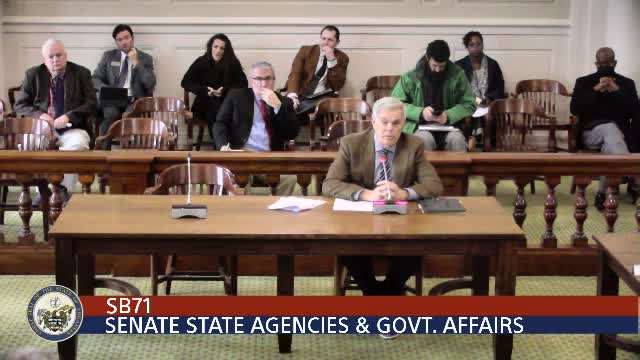
Senators on the Senate State Agencies committee voted to advance SB 71 as amended after a lengthy debate over whether the measure would effectively end state-backed affirmative-action programs.
Sponsor Senator Mark Sullivan presented an amendment that replaces several references to “equity” and affirmative-action language with nondiscrimination and equality provisions and makes the ban apply only to state entities. Sullivan said the change ‘‘prohibits discrimination or preferential treatment by the state of Arkansas and other public entities’’ while preserving limited exceptions, including bona fide occupational qualifications and actions necessary to maintain eligibility for federal funds.
Opponents, led by Senator Clark Tucker, said the amendment sends a harmful message about the state’s approach to historical discrimination and could undo statutory programs aimed at increasing contracting and hiring of minority- and women-owned businesses. ‘‘This bill . . . says is that racism no longer exists,’’ Tucker said, arguing the measure overlooks entrenched disparities and established numerical goals in current law intended to address them.
Sullivan pushed back, accusing Tucker of misstating the bill’s intent and saying the measure targets state action rather than private or charitable programs. ‘‘This bill directs that we end discrimination, whether it’s race or gender,’’ Sullivan said. He added the amendment contains exceptions for foundations and private scholarships and for actions necessary to retain federal funding.
The committee adopted the amendment on a voice vote and then approved a motion to move SB 71 out of committee as amended. Several senators urged additional work to reconcile the bill with the state’s minority and women-owned business statutes, and Tucker said he would vote against the measure because of concerns about criminal and civil exposure for public employees and local governments.
Bernice Nazaree, vice director of the Black Chamber of Commerce and Community Development of Arkansas, testified in opposition during public comment. She described how minority-business certification and related programs had helped her family’s enterprise and argued the programs are still young and needed. ‘‘I personally felt like the minority owned business program was a great . . . substitute for restitution and reparations because I felt supported by the state,’’ Nazaree said.
What happens next: The committee’s do-pass recommendation sends SB 71, as amended, to the Senate floor. Members said the measure will be engrossed and available for further amendment and debate there.
Sponsor Senator Mark Sullivan presented an amendment that replaces several references to “equity” and affirmative-action language with nondiscrimination and equality provisions and makes the ban apply only to state entities. Sullivan said the change ‘‘prohibits discrimination or preferential treatment by the state of Arkansas and other public entities’’ while preserving limited exceptions, including bona fide occupational qualifications and actions necessary to maintain eligibility for federal funds.
Opponents, led by Senator Clark Tucker, said the amendment sends a harmful message about the state’s approach to historical discrimination and could undo statutory programs aimed at increasing contracting and hiring of minority- and women-owned businesses. ‘‘This bill . . . says is that racism no longer exists,’’ Tucker said, arguing the measure overlooks entrenched disparities and established numerical goals in current law intended to address them.
Sullivan pushed back, accusing Tucker of misstating the bill’s intent and saying the measure targets state action rather than private or charitable programs. ‘‘This bill directs that we end discrimination, whether it’s race or gender,’’ Sullivan said. He added the amendment contains exceptions for foundations and private scholarships and for actions necessary to retain federal funding.
The committee adopted the amendment on a voice vote and then approved a motion to move SB 71 out of committee as amended. Several senators urged additional work to reconcile the bill with the state’s minority and women-owned business statutes, and Tucker said he would vote against the measure because of concerns about criminal and civil exposure for public employees and local governments.
Bernice Nazaree, vice director of the Black Chamber of Commerce and Community Development of Arkansas, testified in opposition during public comment. She described how minority-business certification and related programs had helped her family’s enterprise and argued the programs are still young and needed. ‘‘I personally felt like the minority owned business program was a great . . . substitute for restitution and reparations because I felt supported by the state,’’ Nazaree said.
What happens next: The committee’s do-pass recommendation sends SB 71, as amended, to the Senate floor. Members said the measure will be engrossed and available for further amendment and debate there.
View the Full Meeting & All Its Details
This article offers just a summary. Unlock complete video, transcripts, and insights as a Founder Member.
✓
Watch full, unedited meeting videos
✓
Search every word spoken in unlimited transcripts
✓
AI summaries & real-time alerts (all government levels)
✓
Permanent access to expanding government content
30-day money-back guarantee
