San Antonio Water System explains aquifer storage, desalination and push for permit stability
October 31, 2022 | AGRICULTURE, FORESTRY & ECONOMIC DEVELOPMENT - SENATE, Senate, Committees, Legislative, Arkansas
This article was created by AI summarizing key points discussed. AI makes mistakes, so for full details and context, please refer to the video of the full meeting. Please report any errors so we can fix them. Report an error »
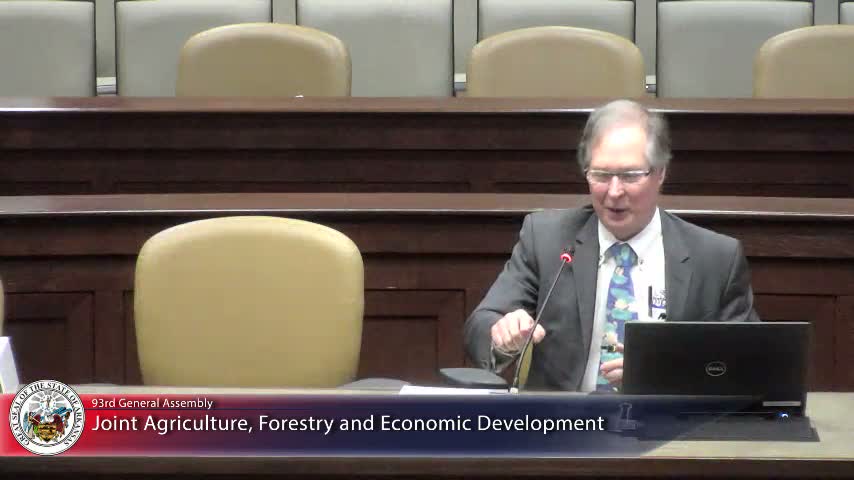
Greg Eckhart, representing the San Antonio Water System (SAWS), told legislators that the Edwards Aquifer historically supplied most of San Antonio’s water and that a federal endangered‑species lawsuit in the 1990s forced the city to limit pumping and diversify supply.
Eckhart described SAWS as serving more than 2 million customers over more than 13,000 miles of water and wastewater pipe and said the utility expects to invest more than $2.5 billion in capital projects over the next five years. He outlined several major projects: an aquifer storage and recovery (ASR) program that stores Edwards water in a sand aquifer for later use (SAWS reported roughly 186,000 acre‑feet in underground storage on a recent morning), a large recycled‑water pipeline serving industrial and irrigation customers and downtown river flows, and a reverse‑osmosis desalination plant drawing slightly brackish water from the Wilcox Aquifer.
Eckhart explained some regulatory constraints: groundwater in Texas is regulated differently from surface water and is often managed by local groundwater conservation districts; SAWS located wells and injection sites across county lines in part to address differing district rules. He said many water providers will seek long‑term permit stability from groundwater conservation districts so that utilities can justify large, multi‑year investments.
In questions, Eckhart described a "bottoms‑up" drought planning emphasis — local planning and collaborative solutions — defended the federal intervention of the 1990s as a catalyst for diversification, and said recycled water is widely used for irrigation and to sustain downtown flow but is not injected into the Edwards Aquifer. He also described substantial conservation gains: SAWS reduced per‑capita water use by about 50% over 30 years, he said.
Eckhart concluded by urging evidence‑based management and described SAWS’ public outreach and investments that he said set the city up for future growth.
Eckhart described SAWS as serving more than 2 million customers over more than 13,000 miles of water and wastewater pipe and said the utility expects to invest more than $2.5 billion in capital projects over the next five years. He outlined several major projects: an aquifer storage and recovery (ASR) program that stores Edwards water in a sand aquifer for later use (SAWS reported roughly 186,000 acre‑feet in underground storage on a recent morning), a large recycled‑water pipeline serving industrial and irrigation customers and downtown river flows, and a reverse‑osmosis desalination plant drawing slightly brackish water from the Wilcox Aquifer.
Eckhart explained some regulatory constraints: groundwater in Texas is regulated differently from surface water and is often managed by local groundwater conservation districts; SAWS located wells and injection sites across county lines in part to address differing district rules. He said many water providers will seek long‑term permit stability from groundwater conservation districts so that utilities can justify large, multi‑year investments.
In questions, Eckhart described a "bottoms‑up" drought planning emphasis — local planning and collaborative solutions — defended the federal intervention of the 1990s as a catalyst for diversification, and said recycled water is widely used for irrigation and to sustain downtown flow but is not injected into the Edwards Aquifer. He also described substantial conservation gains: SAWS reduced per‑capita water use by about 50% over 30 years, he said.
Eckhart concluded by urging evidence‑based management and described SAWS’ public outreach and investments that he said set the city up for future growth.
View the Full Meeting & All Its Details
This article offers just a summary. Unlock complete video, transcripts, and insights as a Founder Member.
✓
Watch full, unedited meeting videos
✓
Search every word spoken in unlimited transcripts
✓
AI summaries & real-time alerts (all government levels)
✓
Permanent access to expanding government content
30-day money-back guarantee
