Senate panel clears bill clarifying prescribed‑burn rules, training and liability
March 28, 2023 | AGRICULTURE, FORESTRY & ECONOMIC DEVELOPMENT - SENATE, Senate, Committees, Legislative, Arkansas
This article was created by AI summarizing key points discussed. AI makes mistakes, so for full details and context, please refer to the video of the full meeting. Please report any errors so we can fix them. Report an error »
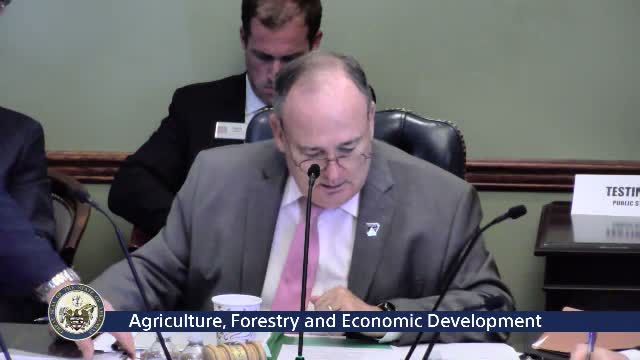
The Senate Agriculture Committee approved SB415 after extended discussion about liability standards, training requirements and protections for private landowners.
Sen. Matt Stone, sponsor, said the bill removes ambiguity in existing law that has made liability insurance hard to obtain and hindered the use of prescribed fire. Attorney Justin Allen, representing forestry interests, told the committee the bill clarifies that negligence—rather than strict liability—will be the standard for damages arising from prescribed burns. Allen said that aligns Arkansas with other timber states and should help landowners obtain insurance.
Joe Fox, State Forester with the Arkansas Department of Agriculture, described the required training for a certified prescribed burner under nationally recognized wildland fire standards. He said a basic certified prescribed‑burn course could be offered in about three days with an outdoor burn component and that professional courses typically run about 4.5 days; Fox also said federal grants are available to cover training costs.
Several witnesses representing private landowners and fire professionals raised concerns. Thomas Baldridge, a retired fire investigator and White County landowner, urged clearer language on the acreage threshold (he described practical problems distinguishing 99 acres from 101.1 acres) and warned multi‑day training requirements or costs could burden small landowners. Baldridge said he supports prescribed fire in principle but wanted the committee to refine training access and acreage rules.
Sen. Stone said the bill includes an exemption allowing private landowners to burn up to 100 acres without being a certified burner; larger burns would require a qualified burner and written prescription. He argued smaller, incremental burns improve control and public safety.
The committee approved SB415 by voice vote. Sponsors said the Forestry Division will promulgate rules to define burner qualifications and the department expects to pursue grant funding to reduce training costs for participants.
What happens next: Department rulemaking will define training and prescription standards; sponsors and agency staff indicated grants and federal programs could offset participant costs.
Sen. Matt Stone, sponsor, said the bill removes ambiguity in existing law that has made liability insurance hard to obtain and hindered the use of prescribed fire. Attorney Justin Allen, representing forestry interests, told the committee the bill clarifies that negligence—rather than strict liability—will be the standard for damages arising from prescribed burns. Allen said that aligns Arkansas with other timber states and should help landowners obtain insurance.
Joe Fox, State Forester with the Arkansas Department of Agriculture, described the required training for a certified prescribed burner under nationally recognized wildland fire standards. He said a basic certified prescribed‑burn course could be offered in about three days with an outdoor burn component and that professional courses typically run about 4.5 days; Fox also said federal grants are available to cover training costs.
Several witnesses representing private landowners and fire professionals raised concerns. Thomas Baldridge, a retired fire investigator and White County landowner, urged clearer language on the acreage threshold (he described practical problems distinguishing 99 acres from 101.1 acres) and warned multi‑day training requirements or costs could burden small landowners. Baldridge said he supports prescribed fire in principle but wanted the committee to refine training access and acreage rules.
Sen. Stone said the bill includes an exemption allowing private landowners to burn up to 100 acres without being a certified burner; larger burns would require a qualified burner and written prescription. He argued smaller, incremental burns improve control and public safety.
The committee approved SB415 by voice vote. Sponsors said the Forestry Division will promulgate rules to define burner qualifications and the department expects to pursue grant funding to reduce training costs for participants.
What happens next: Department rulemaking will define training and prescription standards; sponsors and agency staff indicated grants and federal programs could offset participant costs.
View the Full Meeting & All Its Details
This article offers just a summary. Unlock complete video, transcripts, and insights as a Founder Member.
✓
Watch full, unedited meeting videos
✓
Search every word spoken in unlimited transcripts
✓
AI summaries & real-time alerts (all government levels)
✓
Permanent access to expanding government content
30-day money-back guarantee
