Committee declines to advance bill that would let Comprehensive Transition Programs access lottery scholarships
April 19, 2021 | EDUCATION COMMITTEE - SENATE, Senate, Committees, Legislative, Arkansas
This article was created by AI summarizing key points discussed. AI makes mistakes, so for full details and context, please refer to the video of the full meeting. Please report any errors so we can fix them. Report an error »
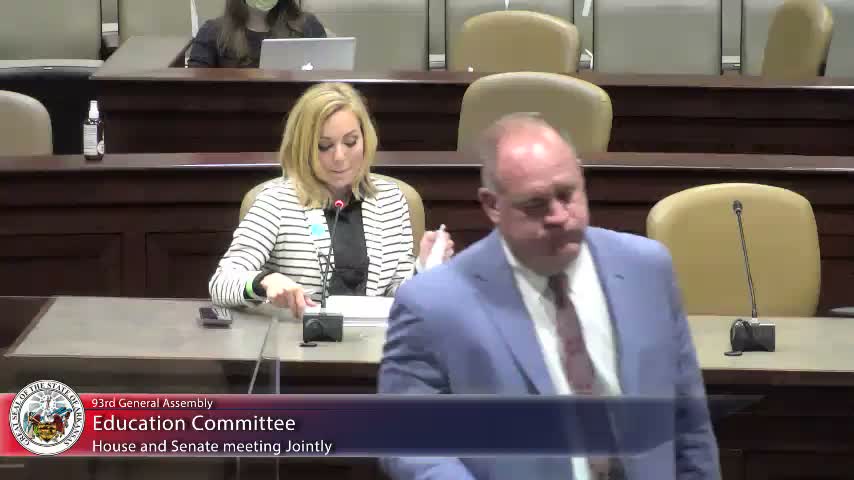
Senate Bill 4 57, which would expand Arkansas Academic Challenge Scholarship eligibility to students enrolled in Comprehensive Transition and Postsecondary programs (CTPs), failed to win committee approval on a 4–4 vote.
The sponsor, Senator Bridal Davis, told the joint House and Senate Education Committee that the bill would allow students in CTPs — programs that combine coursework, advising, internships and student-life activities and may qualify institutions for federal Pell and work‑study — to receive the state scholarship. "This bill is not just about a social issue feel good bill. It's about helping those with intellectual disabilities continue their education for gainful employment," Davis said during her closing remarks.
Dr. Kristen Johnson, representing the Arkansas Alliance of Inclusive Postsecondary Education Programs, described growth in Arkansas CTPs and pointed to national studies showing higher employment and earnings for program graduates. She summarized program features required for CTP designation under the Higher Education Opportunity Act and stressed that certification also reduces a financial barrier for families by enabling access to federal aid.
Fiscal staff described the bill's estimated cost. Nick Fuller, assistant director for finance at the Division of Higher Education, said the SB 4 57 fiscal impact was based on existing program enrollment (about 60 students) and an assumed program growth to 100 students per year; using that projection over a four‑year award structure produced the $1,400,000 fiscal estimate.
Committee members asked clarifying questions about program standards, what constitutes satisfactory academic progress, tuition and fees and how the scholarship amount is calculated. Dr. Johnson said CTP standards vary by program but are documented in each institution's CTP materials and typically require passing coursework, participation and progress toward individualized goals. Maria Markham, director of the Division of Higher Education, explained the process the committee used to calculate available lottery funds and how new scholarships are measured against available net proceeds.
When members voted after closing statements, the roll call recorded ayes from Senators Eads, Lehi, Beckham and Ervin; with four non‑voting members the chair announced "4 ayes and 4 non voting" and declared the bill did not pass out of committee.
The next procedural step for the sponsor would be to refile or seek reconsideration in a subsequent committee if she chooses; the committee adjourned without advancing the measure.
The sponsor, Senator Bridal Davis, told the joint House and Senate Education Committee that the bill would allow students in CTPs — programs that combine coursework, advising, internships and student-life activities and may qualify institutions for federal Pell and work‑study — to receive the state scholarship. "This bill is not just about a social issue feel good bill. It's about helping those with intellectual disabilities continue their education for gainful employment," Davis said during her closing remarks.
Dr. Kristen Johnson, representing the Arkansas Alliance of Inclusive Postsecondary Education Programs, described growth in Arkansas CTPs and pointed to national studies showing higher employment and earnings for program graduates. She summarized program features required for CTP designation under the Higher Education Opportunity Act and stressed that certification also reduces a financial barrier for families by enabling access to federal aid.
Fiscal staff described the bill's estimated cost. Nick Fuller, assistant director for finance at the Division of Higher Education, said the SB 4 57 fiscal impact was based on existing program enrollment (about 60 students) and an assumed program growth to 100 students per year; using that projection over a four‑year award structure produced the $1,400,000 fiscal estimate.
Committee members asked clarifying questions about program standards, what constitutes satisfactory academic progress, tuition and fees and how the scholarship amount is calculated. Dr. Johnson said CTP standards vary by program but are documented in each institution's CTP materials and typically require passing coursework, participation and progress toward individualized goals. Maria Markham, director of the Division of Higher Education, explained the process the committee used to calculate available lottery funds and how new scholarships are measured against available net proceeds.
When members voted after closing statements, the roll call recorded ayes from Senators Eads, Lehi, Beckham and Ervin; with four non‑voting members the chair announced "4 ayes and 4 non voting" and declared the bill did not pass out of committee.
The next procedural step for the sponsor would be to refile or seek reconsideration in a subsequent committee if she chooses; the committee adjourned without advancing the measure.
View the Full Meeting & All Its Details
This article offers just a summary. Unlock complete video, transcripts, and insights as a Founder Member.
✓
Watch full, unedited meeting videos
✓
Search every word spoken in unlimited transcripts
✓
AI summaries & real-time alerts (all government levels)
✓
Permanent access to expanding government content
30-day money-back guarantee
