State Education Department debuts ESSER/ARP dashboard showing partial reimbursement, district-by-district detail
November 09, 2021 | EDUCATION COMMITTEE - SENATE, Senate, Committees, Legislative, Arkansas
This article was created by AI summarizing key points discussed. AI makes mistakes, so for full details and context, please refer to the video of the full meeting. Please report any errors so we can fix them. Report an error »
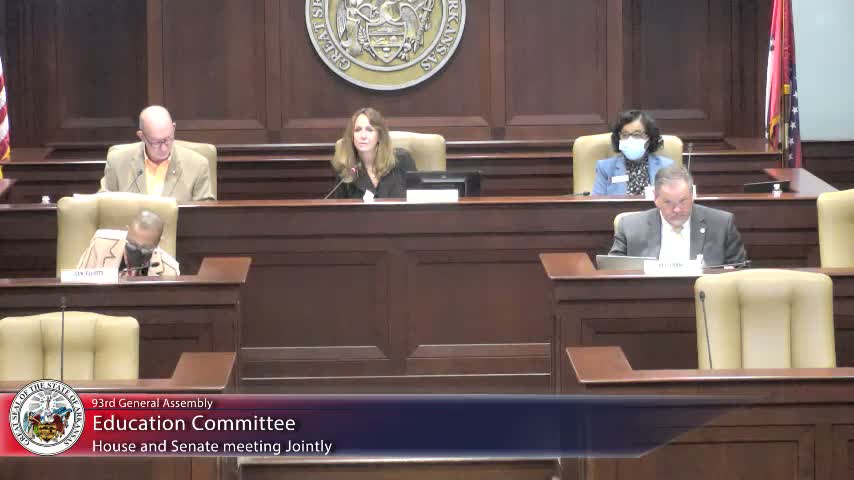
The Arkansas Department of Education on Thursday demonstrated a new public dashboard that tracks how federal ESSER and ARP relief funds have been allocated and reimbursed to school districts.
"This is a transparency website to show you all of the details around funding that is available for public school districts," said Ivy Pfeffer of the Department of Education, who appeared for Secretary Key and introduced Arijit Sarkar, ADE’s chief information officer. Sarkar said the dashboard is available at esser-insight.ade.arkansas.gov.
Pfeffer and Sarkar walked committee members through two dashboards: one that shows combined reimbursements and one that breaks spending down by allowable categories such as systemic procedures, technology, student support, facilities and food security. Pfeffer said, as of Oct. 22, a combined 26.66% of ESSER/ARP allocations had been reimbursed to districts.
On category spending, Sarkar said about 41% of reported reimbursements were coded to "systemic procedures," a category ADE defines to include actions that restore on-site instruction and health-related activities (PPE, attendance-tracking systems, substitute costs and similar items). ADE staff also noted that ESSER 1 funds were largely spent (Pfeffer characterized ESSER 1 as "getting close" to fully spent), ESSER 2 reimbursements were near 60% and ARP ESSER reimbursements were just over 4% at the time of the presentation.
ADE used Bryant School District as an example: the department reported Bryant’s total allocation at a little more than $14,000,000 and said the district had been reimbursed "a little over" $7,000,000, leaving ARP funds as the remaining source to be drawn down under district plans.
Committee members asked practical questions about the distinction between funds that are "obligated" and funds that have been reimbursed. Pfeffer said some dollars may be obligated by district contracts or purchase orders but not yet invoiced and reimbursed at the state level; she recommended reviewing each district’s plan on the site to see timing and intended uses.
Senator Chesterfield asked whether any districts remain under the state fiscal-distress designation. Pfeffer said fiscal-distress status is a separate state designation and offered to provide a list of districts still in distress and explain how one-time federal funds interact with longer-term fiscal-distress plans.
Committee members asked ADE to circulate the dashboard link and to update the site monthly; ADE staff said they expect monthly updates and that large reimbursement events could change the dashboard materially from month to month.
The department emphasized the obligation deadlines embedded in federal rules: ESSER 1 funds must be obligated by September 2022, and ARP ESSER funds must be obligated by September 2024, per the guidance Pfeffer relayed to the committee.
The committee did not take action on the dashboard itself; ADE staff said they would provide follow-up data as requested.
"This is a transparency website to show you all of the details around funding that is available for public school districts," said Ivy Pfeffer of the Department of Education, who appeared for Secretary Key and introduced Arijit Sarkar, ADE’s chief information officer. Sarkar said the dashboard is available at esser-insight.ade.arkansas.gov.
Pfeffer and Sarkar walked committee members through two dashboards: one that shows combined reimbursements and one that breaks spending down by allowable categories such as systemic procedures, technology, student support, facilities and food security. Pfeffer said, as of Oct. 22, a combined 26.66% of ESSER/ARP allocations had been reimbursed to districts.
On category spending, Sarkar said about 41% of reported reimbursements were coded to "systemic procedures," a category ADE defines to include actions that restore on-site instruction and health-related activities (PPE, attendance-tracking systems, substitute costs and similar items). ADE staff also noted that ESSER 1 funds were largely spent (Pfeffer characterized ESSER 1 as "getting close" to fully spent), ESSER 2 reimbursements were near 60% and ARP ESSER reimbursements were just over 4% at the time of the presentation.
ADE used Bryant School District as an example: the department reported Bryant’s total allocation at a little more than $14,000,000 and said the district had been reimbursed "a little over" $7,000,000, leaving ARP funds as the remaining source to be drawn down under district plans.
Committee members asked practical questions about the distinction between funds that are "obligated" and funds that have been reimbursed. Pfeffer said some dollars may be obligated by district contracts or purchase orders but not yet invoiced and reimbursed at the state level; she recommended reviewing each district’s plan on the site to see timing and intended uses.
Senator Chesterfield asked whether any districts remain under the state fiscal-distress designation. Pfeffer said fiscal-distress status is a separate state designation and offered to provide a list of districts still in distress and explain how one-time federal funds interact with longer-term fiscal-distress plans.
Committee members asked ADE to circulate the dashboard link and to update the site monthly; ADE staff said they expect monthly updates and that large reimbursement events could change the dashboard materially from month to month.
The department emphasized the obligation deadlines embedded in federal rules: ESSER 1 funds must be obligated by September 2022, and ARP ESSER funds must be obligated by September 2024, per the guidance Pfeffer relayed to the committee.
The committee did not take action on the dashboard itself; ADE staff said they would provide follow-up data as requested.
View the Full Meeting & All Its Details
This article offers just a summary. Unlock complete video, transcripts, and insights as a Founder Member.
✓
Watch full, unedited meeting videos
✓
Search every word spoken in unlimited transcripts
✓
AI summaries & real-time alerts (all government levels)
✓
Permanent access to expanding government content
30-day money-back guarantee
