Senate education panel hears history of Arkansas school funding, bureau warns problems persist despite higher spending
January 04, 2022 | EDUCATION COMMITTEE - SENATE, Senate, Committees, Legislative, Arkansas
This article was created by AI summarizing key points discussed. AI makes mistakes, so for full details and context, please refer to the video of the full meeting. Please report any errors so we can fix them. Report an error »
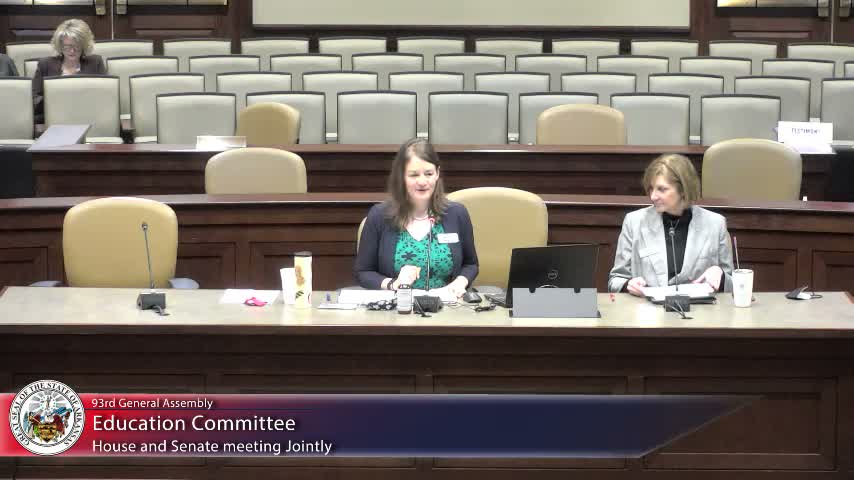
The Senate Education Committee received a broad history of Arkansas school funding and adequacy work on Monday, with bureau staff saying the state has reworked its funding tools over decades but continues to fall short on many student outcome measures.
Elizabeth Feinham of the Bureau of Legislative Research told the committee the bureau separated the historical analysis because the adequacy story spans decades, beginning with early state studies in the 1920s and moving through major court decisions and legislative responses such as Dupree v. Alma and the Lakeview litigation. Feinham summarized reforms in 1995, 2003 and 2006 that created the foundation funding matrix and categorical allocations for English-language learners, special programs and other needs.
The presentation emphasized that the matrix lines introduced in 2006 remain largely the same, even as amounts and some funding streams have changed. The consultants who advised the state in 2003 recommended a resource-based model (staffing and items by school) that the legislature largely converted to per-pupil amounts. Feinham said the consultants built recommendations around hypothetical school sizes (500-student models), a point the bureau plans to revisit in next month’s funding report.
Why it matters: committee members said the history helps explain persistent gaps between dollars spent and student outcomes. The bureau reported Arkansas’ per-pupil spending rose to more than $10,000 in 2019 but remains below the national average; top-performing states spend substantially more per student.
Questions and next steps: lawmakers pressed the bureau for more granular demographic trend data, a list of schools operating under Act 60 waivers and an analysis of whether recent investments — including a multi-year, $50 million program to raise minimum teacher salaries — are translating into measurable improvements. Staff said those items are coming in future reports and that the bureau can draft model legislation related to committee recommendations for early review.
The committee will next focus on funding and spending analyses in detail at its February session, bureau staff said. The meeting concluded with members urging cross-committee work on education and economic development to address rural school closures and local labor-market connections.
Elizabeth Feinham of the Bureau of Legislative Research told the committee the bureau separated the historical analysis because the adequacy story spans decades, beginning with early state studies in the 1920s and moving through major court decisions and legislative responses such as Dupree v. Alma and the Lakeview litigation. Feinham summarized reforms in 1995, 2003 and 2006 that created the foundation funding matrix and categorical allocations for English-language learners, special programs and other needs.
The presentation emphasized that the matrix lines introduced in 2006 remain largely the same, even as amounts and some funding streams have changed. The consultants who advised the state in 2003 recommended a resource-based model (staffing and items by school) that the legislature largely converted to per-pupil amounts. Feinham said the consultants built recommendations around hypothetical school sizes (500-student models), a point the bureau plans to revisit in next month’s funding report.
Why it matters: committee members said the history helps explain persistent gaps between dollars spent and student outcomes. The bureau reported Arkansas’ per-pupil spending rose to more than $10,000 in 2019 but remains below the national average; top-performing states spend substantially more per student.
Questions and next steps: lawmakers pressed the bureau for more granular demographic trend data, a list of schools operating under Act 60 waivers and an analysis of whether recent investments — including a multi-year, $50 million program to raise minimum teacher salaries — are translating into measurable improvements. Staff said those items are coming in future reports and that the bureau can draft model legislation related to committee recommendations for early review.
The committee will next focus on funding and spending analyses in detail at its February session, bureau staff said. The meeting concluded with members urging cross-committee work on education and economic development to address rural school closures and local labor-market connections.
Don't Miss a Word: See the Full Meeting!
Go beyond summaries. Unlock every video, transcript, and key insight with a Founder Membership.
✓
Get instant access to full meeting videos
✓
Search and clip any phrase from complete transcripts
✓
Receive AI-powered summaries & custom alerts
✓
Enjoy lifetime, unrestricted access to government data
30-day money-back guarantee
