BLR: Arkansas has more teachers but they are less experienced; DESE highlights residencies and incentives
April 05, 2022 | EDUCATION COMMITTEE - SENATE, Senate, Committees, Legislative, Arkansas
This article was created by AI summarizing key points discussed. AI makes mistakes, so for full details and context, please refer to the video of the full meeting. Please report any errors so we can fix them. Report an error »
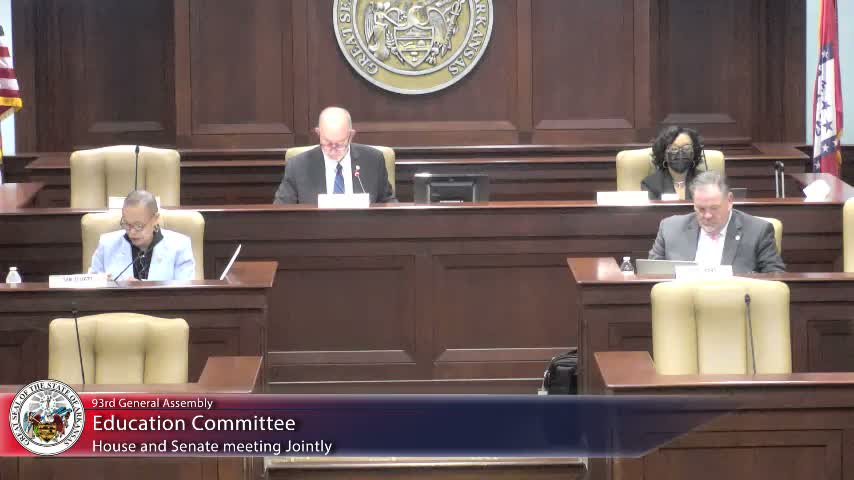
The Senate Education Committee on April 5 heard a Bureau of Legislative Research presentation showing Arkansas’s teacher workforce has grown in recent years even as average years of experience declined and attrition rose.
“My name is Adrienne Beck with the Bureau of Legislative Research,” said Beck as she walked members through five-year trends. The BLR data show the percentage of inexperienced teachers (those in their first three years) nearly doubled in 2021 and attrition increased from about 18% to about 21% in 2021, while the division’s Workforce Stability Index fell that year.
BLR highlighted persistent gaps in teacher representation: schools with higher poverty and higher minority enrollments tend to have more inexperienced, out‑of‑field, and uncertified teachers. Special education has been on the state’s academic shortage list since 2008.
The report summarized results from BLR’s 2021 educator survey: principals ranked difficulty offering competitive salaries as their top recruitment challenge, and teachers most frequently cited school leadership as their primary reason for remaining at a school (73%). Stress and workload were listed by 75% of principals and teachers as leading retention problems.
Department of Education officials told the committee the state is pursuing multi-part approaches rather than a single fix. Carly Saracini, assistant commissioner for educator effectiveness and licensure, described a state review of educator preparation and a forthcoming state residency program aimed to produce “day‑1 ready” teachers. “We have someone facilitating it, TNTP,” Saracini said, referring to The New Teacher Project’s role in structuring the review and support work.
Department leaders and legislators emphasized the pipeline nature of the problem and the need for multi-year approaches including grow‑your‑own programs, residency models and targeted financial supports. BLR and DESE agreed to provide members follow-up details requested during the hearing including district-level lists of bonus recipients, comparisons with other states, and more granular shortage counts by subject.
“My name is Adrienne Beck with the Bureau of Legislative Research,” said Beck as she walked members through five-year trends. The BLR data show the percentage of inexperienced teachers (those in their first three years) nearly doubled in 2021 and attrition increased from about 18% to about 21% in 2021, while the division’s Workforce Stability Index fell that year.
BLR highlighted persistent gaps in teacher representation: schools with higher poverty and higher minority enrollments tend to have more inexperienced, out‑of‑field, and uncertified teachers. Special education has been on the state’s academic shortage list since 2008.
The report summarized results from BLR’s 2021 educator survey: principals ranked difficulty offering competitive salaries as their top recruitment challenge, and teachers most frequently cited school leadership as their primary reason for remaining at a school (73%). Stress and workload were listed by 75% of principals and teachers as leading retention problems.
Department of Education officials told the committee the state is pursuing multi-part approaches rather than a single fix. Carly Saracini, assistant commissioner for educator effectiveness and licensure, described a state review of educator preparation and a forthcoming state residency program aimed to produce “day‑1 ready” teachers. “We have someone facilitating it, TNTP,” Saracini said, referring to The New Teacher Project’s role in structuring the review and support work.
Department leaders and legislators emphasized the pipeline nature of the problem and the need for multi-year approaches including grow‑your‑own programs, residency models and targeted financial supports. BLR and DESE agreed to provide members follow-up details requested during the hearing including district-level lists of bonus recipients, comparisons with other states, and more granular shortage counts by subject.
Don't Miss a Word: See the Full Meeting!
Go beyond summaries. Unlock every video, transcript, and key insight with a Founder Membership.
✓
Get instant access to full meeting videos
✓
Search and clip any phrase from complete transcripts
✓
Receive AI-powered summaries & custom alerts
✓
Enjoy lifetime, unrestricted access to government data
30-day money-back guarantee
