BLR report: Arkansas teacher pay below national average but improves under cost-of-living adjustment; gaps remain across districts
April 05, 2022 | EDUCATION COMMITTEE - SENATE, Senate, Committees, Legislative, Arkansas
This article was created by AI summarizing key points discussed. AI makes mistakes, so for full details and context, please refer to the video of the full meeting. Please report any errors so we can fix them. Report an error »
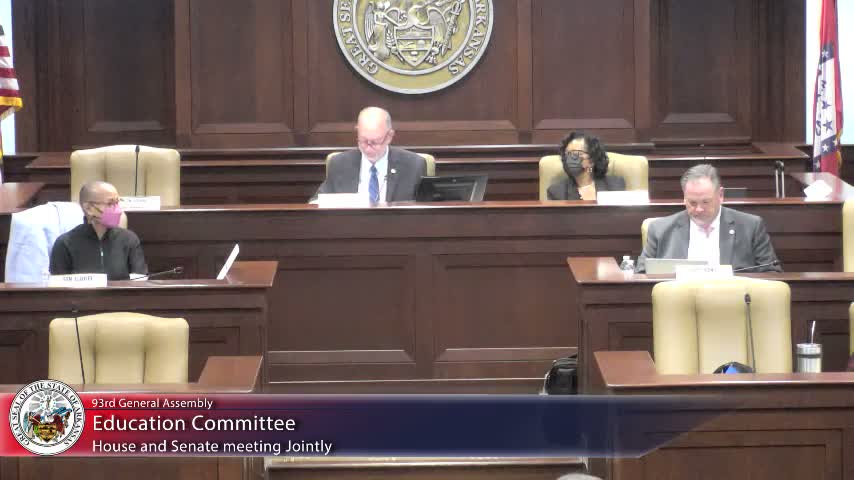
The committee received BLR’s annual teacher‑salary report, which compared Arkansas salaries with national, Southern Regional Education Board and neighboring states using 2020 national data and 2021 in‑state data.
BLR reported the 2020 national average teacher salary was $64,133 while Arkansas’s 2020 average was $50,546. Using a cost‑of‑living adjustment, Arkansas’s relative ranking rises; BLR used the Missouri cost-of-living index for the adjustment. For in‑state comparisons BLR used 2021 data and its own methodology (detailed in appendix A of the report).
The report summarized the state’s minimum salary schedule established by Act 170 (2019) and noted the 2021 creation of a teacher salary equalization fund intended to address disparities and help reach the legislature’s $51,822 target. BLR said all districts meet the statutory minimum (reported as $33,800 in 2021) but wide variation remains: in 2021 some districts paid initial minimums as high as about $48,000 while 97 districts paid the statutory floor.
Committee members asked whether reported averages include incentive payments; BLR said incentives are not incorporated into the salary comparisons used in the salary section and agreed to follow up with district-level details on incentive participation and funding sources.
BLR also presented county- and school‑level breakdowns showing higher average salaries in urban and larger districts and persistent disparities within counties. The report and the committee exchange underscored that salary policy interacts with local wealth, district choices and recent state policy changes.
BLR reported the 2020 national average teacher salary was $64,133 while Arkansas’s 2020 average was $50,546. Using a cost‑of‑living adjustment, Arkansas’s relative ranking rises; BLR used the Missouri cost-of-living index for the adjustment. For in‑state comparisons BLR used 2021 data and its own methodology (detailed in appendix A of the report).
The report summarized the state’s minimum salary schedule established by Act 170 (2019) and noted the 2021 creation of a teacher salary equalization fund intended to address disparities and help reach the legislature’s $51,822 target. BLR said all districts meet the statutory minimum (reported as $33,800 in 2021) but wide variation remains: in 2021 some districts paid initial minimums as high as about $48,000 while 97 districts paid the statutory floor.
Committee members asked whether reported averages include incentive payments; BLR said incentives are not incorporated into the salary comparisons used in the salary section and agreed to follow up with district-level details on incentive participation and funding sources.
BLR also presented county- and school‑level breakdowns showing higher average salaries in urban and larger districts and persistent disparities within counties. The report and the committee exchange underscored that salary policy interacts with local wealth, district choices and recent state policy changes.
View the Full Meeting & All Its Details
This article offers just a summary. Unlock complete video, transcripts, and insights as a Founder Member.
✓
Watch full, unedited meeting videos
✓
Search every word spoken in unlimited transcripts
✓
AI summaries & real-time alerts (all government levels)
✓
Permanent access to expanding government content
30-day money-back guarantee
