Committee briefed on Arkansas alternative learning environments: funding stable, counseling spending low
May 03, 2022 | EDUCATION COMMITTEE - SENATE, Senate, Committees, Legislative, Arkansas
This article was created by AI summarizing key points discussed. AI makes mistakes, so for full details and context, please refer to the video of the full meeting. Please report any errors so we can fix them. Report an error »
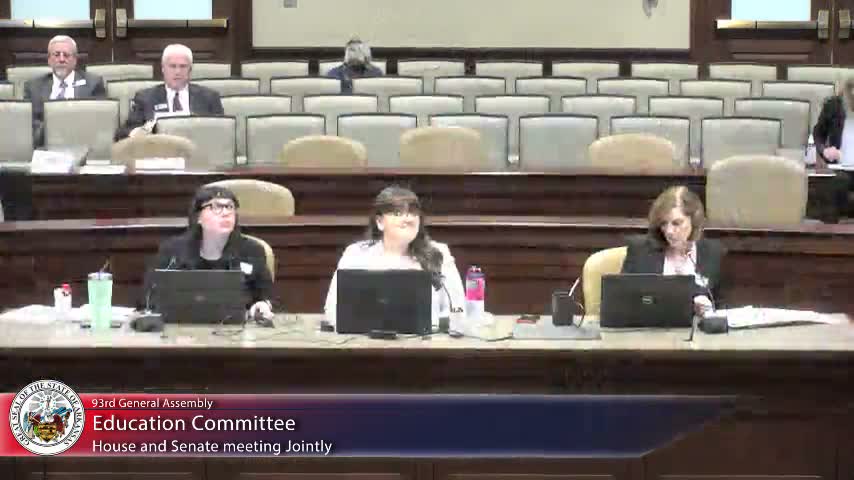
Jasmine Ray of the Bureau of Legislative Research outlined the statutory purpose, DESE responsibilities and the funding and outcomes for Arkansas’ Alternative Learning Environments (ALEs).
"Alternative learning environment means an alternate class or program within a public school or school district that … seeks to eliminate barriers to learning and for any student whose academic and social progress is negatively affected by the student's personal characteristics or situation," Ray told the Senate Education Committee, citing state statute and DESE rules.
Ray said ALEs are intended to be non‑punitive, must assess students before or upon entry and create individualized action plans with intervention and transition goals. The 2020 ALE categorical supplement was $4,700 per identified ALE student; funding is calculated on prior‑year ALE FTE counts and accounts for part‑day and part‑year attendance.
The bureau reported that ALE enrollment declined over three years while ALE FTEs rose — indicating students spend more time in ALEs — and noted a close‑to 6% FTE increase for 2020 even as enrollment fell. The bureau also said districts must submit program descriptions to the Alternative Education Unit every three years and that DESE is charged with monitoring, approving curricula, and establishing teacher training and measures of effectiveness.
Members asked how ALE dollars are spent. Ray said most ALE expenditures were for certified and classified salaries; less than 1% of reported ALE program expenditures were spent on counselors and student supports. Senator Chesterfield told the committee she was “disturbed” by that figure and urged follow‑up with DESE on whether ALEs are delivering the intensive counseling services that lawmakers intended.
"Alternative learning environment means an alternate class or program within a public school or school district that … seeks to eliminate barriers to learning and for any student whose academic and social progress is negatively affected by the student's personal characteristics or situation," Ray told the Senate Education Committee, citing state statute and DESE rules.
Ray said ALEs are intended to be non‑punitive, must assess students before or upon entry and create individualized action plans with intervention and transition goals. The 2020 ALE categorical supplement was $4,700 per identified ALE student; funding is calculated on prior‑year ALE FTE counts and accounts for part‑day and part‑year attendance.
The bureau reported that ALE enrollment declined over three years while ALE FTEs rose — indicating students spend more time in ALEs — and noted a close‑to 6% FTE increase for 2020 even as enrollment fell. The bureau also said districts must submit program descriptions to the Alternative Education Unit every three years and that DESE is charged with monitoring, approving curricula, and establishing teacher training and measures of effectiveness.
Members asked how ALE dollars are spent. Ray said most ALE expenditures were for certified and classified salaries; less than 1% of reported ALE program expenditures were spent on counselors and student supports. Senator Chesterfield told the committee she was “disturbed” by that figure and urged follow‑up with DESE on whether ALEs are delivering the intensive counseling services that lawmakers intended.
Don't Miss a Word: See the Full Meeting!
Go beyond summaries. Unlock every video, transcript, and key insight with a Founder Membership.
✓
Get instant access to full meeting videos
✓
Search and clip any phrase from complete transcripts
✓
Receive AI-powered summaries & custom alerts
✓
Enjoy lifetime, unrestricted access to government data
30-day money-back guarantee
