Committee hears how Arkansas targets Enhanced Student Achievement funds and options for alternative poverty measures
May 03, 2022 | EDUCATION COMMITTEE - SENATE, Senate, Committees, Legislative, Arkansas
This article was created by AI summarizing key points discussed. AI makes mistakes, so for full details and context, please refer to the video of the full meeting. Please report any errors so we can fix them. Report an error »
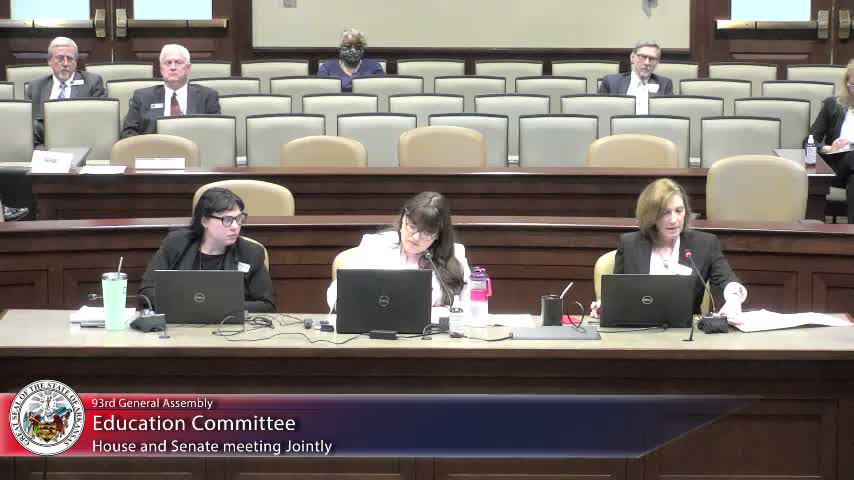
Bureau analysts told the Senate Education Committee how Arkansas identifies students for Enhanced Student Achievement (ESA) funding and how districts spend the categorical dollars.
Julie Holt explained that ESA funding historically relied on National School Lunch Program participation and direct certification via SNAP to identify students in poverty; about 65% of Arkansas students qualified for free or reduced lunch in 2021. The bureau summarized APA's 2020 finding that states use varied methods — direct certification, other public‑assistance programs, census poverty counts, or combinations — and warned that switching identification methods would create winners and losers among districts.
Holt said Arkansas distributed $236,500,000 in ESA categorical funding in 2021 plus $5.3 million for a matching ESA grant program. The committee was told that allowable uses were restructured by Act 322 of 2021 into six broad categories and that school districts must create ESA spending plans subject to ADE monitoring.
Committee members asked whether districts are using ESA dollars where research suggests most impact (for example, preschool). Department and bureau staff said districts have discretion; some districts (Little Rock cited in discussion) direct ESA dollars to pre‑K while others use funds for a range of allowed services, and transportation and access barriers can limit take‑up of some interventions.
Julie Holt explained that ESA funding historically relied on National School Lunch Program participation and direct certification via SNAP to identify students in poverty; about 65% of Arkansas students qualified for free or reduced lunch in 2021. The bureau summarized APA's 2020 finding that states use varied methods — direct certification, other public‑assistance programs, census poverty counts, or combinations — and warned that switching identification methods would create winners and losers among districts.
Holt said Arkansas distributed $236,500,000 in ESA categorical funding in 2021 plus $5.3 million for a matching ESA grant program. The committee was told that allowable uses were restructured by Act 322 of 2021 into six broad categories and that school districts must create ESA spending plans subject to ADE monitoring.
Committee members asked whether districts are using ESA dollars where research suggests most impact (for example, preschool). Department and bureau staff said districts have discretion; some districts (Little Rock cited in discussion) direct ESA dollars to pre‑K while others use funds for a range of allowed services, and transportation and access barriers can limit take‑up of some interventions.
View the Full Meeting & All Its Details
This article offers just a summary. Unlock complete video, transcripts, and insights as a Founder Member.
✓
Watch full, unedited meeting videos
✓
Search every word spoken in unlimited transcripts
✓
AI summaries & real-time alerts (all government levels)
✓
Permanent access to expanding government content
30-day money-back guarantee
