Arkansas speech‑language pathologists tell Senate committee heavy paperwork, low pay and workload push clinicians from schools
August 08, 2022 | EDUCATION COMMITTEE - SENATE, Senate, Committees, Legislative, Arkansas
This article was created by AI summarizing key points discussed. AI makes mistakes, so for full details and context, please refer to the video of the full meeting. Please report any errors so we can fix them. Report an error »
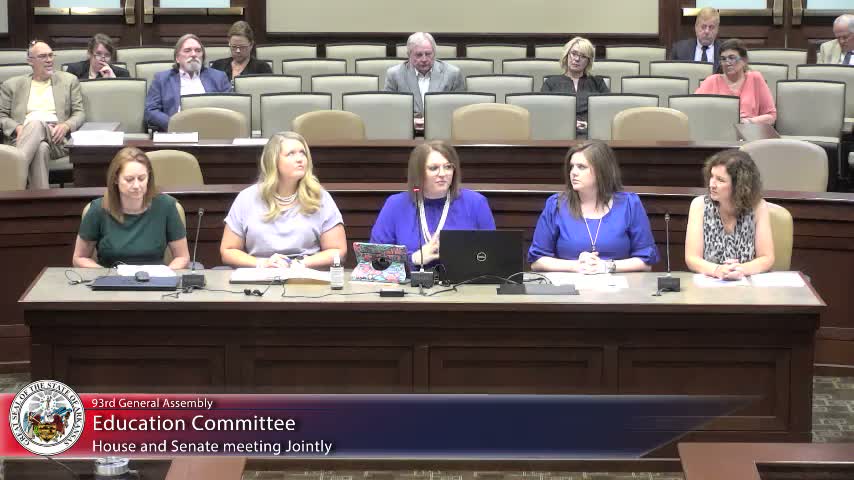
A group of school‑based speech‑language pathologists told the Senate Education Committee that recruitment and retention problems stem from heavy non‑direct‑service workloads, inconsistent district practices, and pay differentials with clinical settings.
Lauren Rogers, lead SLP for Conway Public Schools, introduced the Arkansas Speech‑Language‑Hearing Association (ARCSHA) ad hoc committee and said the group represents several hundred school‑based clinicians. Presenters explained that school SLPs are dually licensed (state clinical license plus teacher licensure) and perform a broad range of duties — direct therapy, evaluations, individualized‑education‑plan work, documentation and many school duties — noting that direct therapy commonly accounts for about 20 hours per week while paperwork, meetings and preparation add many more hours.
Presenters cited time‑study examples: one SLP reported 127 mandated meetings totaling 8,840 minutes in a school year. Tammy Roland (Little Rock) summarized a five‑year look at revenue from direct SLP services (the presenters reported roughly $12.38 million in 2017 and about $12.99 million in 2021 for SLP‑generated direct service revenue). Presenters also explained that Arkansas’ RMAC (Arkansas Medicaid Administrative Claiming) program was restructured in 2020 to sample daytime work and provide additional training, and that RMAC reimbursements increased materially following that change (presenters showed RMAC reimbursements roughly doubling to about $30 million after the 2020 changes).
On workforce metrics, presenters reported average regional and national salary comparisons (Western South region ~$58,000; national school‑based average ~$60,600; clinical SLP average ~$78,000) and said Arkansas school SLP salaries vary widely (they reported a common district range of roughly $36,000–$53,000). ARCSHA survey data — from 136 school‑based respondents — showed about 78.7% had seriously considered leaving the school field; graduate‑student responses suggested low interest in school‑based positions (about 35% would consider applying; about 30% would accept).
Presenters urged the committee to study workload models and flexible service‑delivery approaches used in neighboring states, requested the legislature consider funding a previously approved $5,000 stipend for SLPs (a stipend discussed in past sessions), and offered to supply follow‑up materials and cross‑tabs. Committee members pressed for clarifications on Medicaid billing rates, contracting margins and stipend funding history; presenters answered where possible and agreed to provide additional detail to committee staff.
The chair said the committee may call follow‑up meetings in September to pursue school safety baseline work and the SLP follow‑ups; the presenters left materials for the record and the committee adjourned.
Lauren Rogers, lead SLP for Conway Public Schools, introduced the Arkansas Speech‑Language‑Hearing Association (ARCSHA) ad hoc committee and said the group represents several hundred school‑based clinicians. Presenters explained that school SLPs are dually licensed (state clinical license plus teacher licensure) and perform a broad range of duties — direct therapy, evaluations, individualized‑education‑plan work, documentation and many school duties — noting that direct therapy commonly accounts for about 20 hours per week while paperwork, meetings and preparation add many more hours.
Presenters cited time‑study examples: one SLP reported 127 mandated meetings totaling 8,840 minutes in a school year. Tammy Roland (Little Rock) summarized a five‑year look at revenue from direct SLP services (the presenters reported roughly $12.38 million in 2017 and about $12.99 million in 2021 for SLP‑generated direct service revenue). Presenters also explained that Arkansas’ RMAC (Arkansas Medicaid Administrative Claiming) program was restructured in 2020 to sample daytime work and provide additional training, and that RMAC reimbursements increased materially following that change (presenters showed RMAC reimbursements roughly doubling to about $30 million after the 2020 changes).
On workforce metrics, presenters reported average regional and national salary comparisons (Western South region ~$58,000; national school‑based average ~$60,600; clinical SLP average ~$78,000) and said Arkansas school SLP salaries vary widely (they reported a common district range of roughly $36,000–$53,000). ARCSHA survey data — from 136 school‑based respondents — showed about 78.7% had seriously considered leaving the school field; graduate‑student responses suggested low interest in school‑based positions (about 35% would consider applying; about 30% would accept).
Presenters urged the committee to study workload models and flexible service‑delivery approaches used in neighboring states, requested the legislature consider funding a previously approved $5,000 stipend for SLPs (a stipend discussed in past sessions), and offered to supply follow‑up materials and cross‑tabs. Committee members pressed for clarifications on Medicaid billing rates, contracting margins and stipend funding history; presenters answered where possible and agreed to provide additional detail to committee staff.
The chair said the committee may call follow‑up meetings in September to pursue school safety baseline work and the SLP follow‑ups; the presenters left materials for the record and the committee adjourned.
Don't Miss a Word: See the Full Meeting!
Go beyond summaries. Unlock every video, transcript, and key insight with a Founder Membership.
✓
Get instant access to full meeting videos
✓
Search and clip any phrase from complete transcripts
✓
Receive AI-powered summaries & custom alerts
✓
Enjoy lifetime, unrestricted access to government data
30-day money-back guarantee
