Senate Education Committee formalizes fiscal-impact rule, adopts lottery-scholarship delay provision
February 01, 2023 | EDUCATION COMMITTEE - SENATE, Senate, Committees, Legislative, Arkansas
This article was created by AI summarizing key points discussed. AI makes mistakes, so for full details and context, please refer to the video of the full meeting. Please report any errors so we can fix them. Report an error »
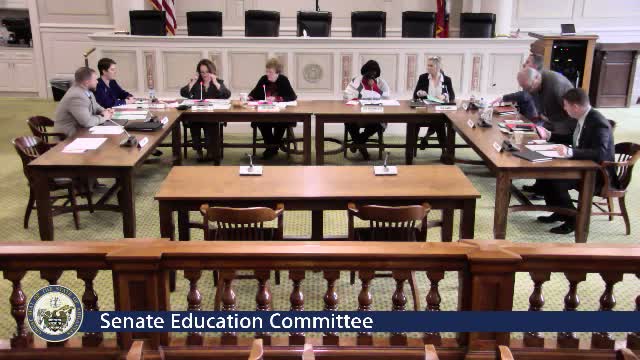
The Senate Education Committee on Wednesday adopted a formal rule that bills related to K–12 education will not be taken up until a fiscal-impact statement is provided and placed on the committee agenda as “pending fiscal impact.” The committee also adopted a new provision implementing a 2021 law requiring joint House–Senate consideration of bills that create or affect higher-education scholarships funded by net lottery proceeds or the Higher Education Grants Fund; those bills will likewise be listed as pending until a fiscal statement is filed.
Martie Garrity of the Bureau of Legislative Research told the panel the measure memorializes the committee’s long-standing practice of delaying K–12 bills until fiscal impacts are available and explains the separate process for scholarship bills, which by law must be coordinated by the House and Senate education committee chairs. “Once the fiscal impact is received, the bill will be moved to the active agenda,” Garrity said.
Several senators warned that formally adopting the rule could slow routine, noncontroversial legislation. Senator Dodson noted that a bill on the committee’s agenda that day lacked a fiscal statement and said adoption of the rule could have postponed its consideration. Other members asked whether the chair’s discretion would be removed and whether amendments would require new fiscal statements; Garrity and senators said the rule’s scope is limited to K–12 items and scholarship-related higher-education bills and that suspension of the rule remains possible with sufficient votes.
The committee recorded an initial failed voice vote on the motion to adopt the rule before passing a subsequent motion; the rules as adopted include the requirement that a fiscal-impact statement be made available at least one day before a bill may be called up for final action by the committee. The chair said members may still suspend the rule if they secure the necessary votes to do so.
Martie Garrity of the Bureau of Legislative Research told the panel the measure memorializes the committee’s long-standing practice of delaying K–12 bills until fiscal impacts are available and explains the separate process for scholarship bills, which by law must be coordinated by the House and Senate education committee chairs. “Once the fiscal impact is received, the bill will be moved to the active agenda,” Garrity said.
Several senators warned that formally adopting the rule could slow routine, noncontroversial legislation. Senator Dodson noted that a bill on the committee’s agenda that day lacked a fiscal statement and said adoption of the rule could have postponed its consideration. Other members asked whether the chair’s discretion would be removed and whether amendments would require new fiscal statements; Garrity and senators said the rule’s scope is limited to K–12 items and scholarship-related higher-education bills and that suspension of the rule remains possible with sufficient votes.
The committee recorded an initial failed voice vote on the motion to adopt the rule before passing a subsequent motion; the rules as adopted include the requirement that a fiscal-impact statement be made available at least one day before a bill may be called up for final action by the committee. The chair said members may still suspend the rule if they secure the necessary votes to do so.
Don't Miss a Word: See the Full Meeting!
Go beyond summaries. Unlock every video, transcript, and key insight with a Founder Membership.
✓
Get instant access to full meeting videos
✓
Search and clip any phrase from complete transcripts
✓
Receive AI-powered summaries & custom alerts
✓
Enjoy lifetime, unrestricted access to government data
30-day money-back guarantee
