Senate committee hears plan to double recommended pay boost for classified school staff; motion to table carried
February 15, 2023 | EDUCATION COMMITTEE - SENATE, Senate, Committees, Legislative, Arkansas
This article was created by AI summarizing key points discussed. AI makes mistakes, so for full details and context, please refer to the video of the full meeting. Please report any errors so we can fix them. Report an error »
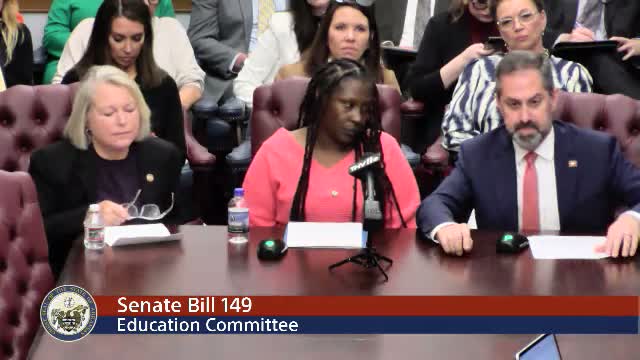
Senators spent a prolonged portion of the meeting debating a proposal to increase pay for classified school employees — bus drivers, custodians, cafeteria staff, nurses and paraprofessionals. Sponsor remarks emphasized that conversations about education have focused on teacher pay but have left out the support staff who "keep our schools running."
Sen. Greg Ledding (District 30) summarized the bill and how it would be funded: the measure would double a House adequacy recommendation, raising the suggested increase from $2 to $4 per hour. "SB 49 ... simply doubles that recommendation from $2 to $4 an hour," he said, and the bill uses foundation funding adjustments and temporary language directing the Department of Education to issue a commissioner's memo intended to ensure the funds reach classified staff. The sponsor and staff told the committee the cost of the $4 increase is $43,000,000.
Multiple witnesses and educators testified in support. Keisha Dunn, who said she works at Jefferson Elementary in the Little Rock School District, asked the committee to pass the pay increase to retain staff: "The school wouldn't run without the bus drivers, custodians, child nutrition, nurses, parapro," she said, describing employees leaving for jobs that pay more and the difficulty of making ends meet on current wages. Natalie Dodson, a special education supervisor in Monticello, described paraprofessionals who manage students with high needs and said, "That's a tough job to live through and to make $11 an hour to do."
Committee members pressed sponsors on details. One senator observed that the temporary language "says the Department of Education shall advise all public school districts to pay a minimum rate for all classified employees of $15 per hour" beginning in fiscal 2023‑24, but noted the bill's language advises rather than requires districts to pay such a minimum. A sponsor and staff said that the Department planned to issue guidance to districts and that the committee had worked with the Bureau of Legislative Research and the Department of Education to refine the language. Several members remained concerned about enforcement and whether foundation funding would be used as intended.
After extended debate and questions about fiscal impact and enforcement, Sen. Davis moved to table the bill so it can be taken up within the forthcoming omnibus education bill. The motion was seconded and carried by voice vote; the chair announced the ayes had it and the bill was tabled.
Sen. Greg Ledding (District 30) summarized the bill and how it would be funded: the measure would double a House adequacy recommendation, raising the suggested increase from $2 to $4 per hour. "SB 49 ... simply doubles that recommendation from $2 to $4 an hour," he said, and the bill uses foundation funding adjustments and temporary language directing the Department of Education to issue a commissioner's memo intended to ensure the funds reach classified staff. The sponsor and staff told the committee the cost of the $4 increase is $43,000,000.
Multiple witnesses and educators testified in support. Keisha Dunn, who said she works at Jefferson Elementary in the Little Rock School District, asked the committee to pass the pay increase to retain staff: "The school wouldn't run without the bus drivers, custodians, child nutrition, nurses, parapro," she said, describing employees leaving for jobs that pay more and the difficulty of making ends meet on current wages. Natalie Dodson, a special education supervisor in Monticello, described paraprofessionals who manage students with high needs and said, "That's a tough job to live through and to make $11 an hour to do."
Committee members pressed sponsors on details. One senator observed that the temporary language "says the Department of Education shall advise all public school districts to pay a minimum rate for all classified employees of $15 per hour" beginning in fiscal 2023‑24, but noted the bill's language advises rather than requires districts to pay such a minimum. A sponsor and staff said that the Department planned to issue guidance to districts and that the committee had worked with the Bureau of Legislative Research and the Department of Education to refine the language. Several members remained concerned about enforcement and whether foundation funding would be used as intended.
After extended debate and questions about fiscal impact and enforcement, Sen. Davis moved to table the bill so it can be taken up within the forthcoming omnibus education bill. The motion was seconded and carried by voice vote; the chair announced the ayes had it and the bill was tabled.
Don't Miss a Word: See the Full Meeting!
Go beyond summaries. Unlock every video, transcript, and key insight with a Founder Membership.
✓
Get instant access to full meeting videos
✓
Search and clip any phrase from complete transcripts
✓
Receive AI-powered summaries & custom alerts
✓
Enjoy lifetime, unrestricted access to government data
30-day money-back guarantee
