Heated debate over measure to allow indoor expressive activity at campuses ends with sponsor withdrawing bill
February 01, 2023 | EDUCATION COMMITTEE - SENATE, Senate, Committees, Legislative, Arkansas
This article was created by AI summarizing key points discussed. AI makes mistakes, so for full details and context, please refer to the video of the full meeting. Please report any errors so we can fix them. Report an error »
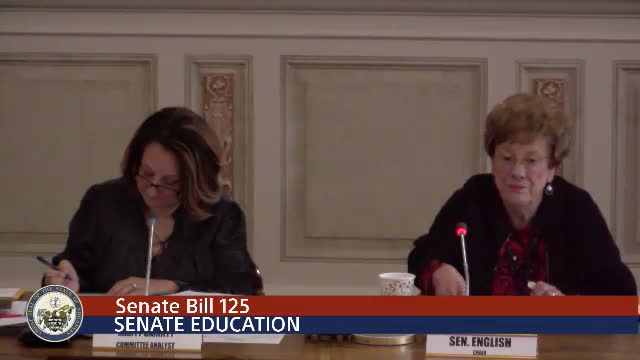
A proposal to allow expressive activity inside state-supported university buildings prompted extended questioning and was withdrawn by its sponsor after members raised concerns about definitions, enforcement and legal risk.
Senator Sullivan, who framed the measure as moving ‘‘what’s allowable outside to what’s allowable inside’’ and renaming the statute to emphasize free thought in higher education, said the bill preserves the universities’ ability to impose reasonable time, place and manner restrictions and excludes conduct already illegal under state or federal law. "We are just trying to simplify and describe what the First Amendment allows," Sullivan said while explaining the draft.
Several senators pushed back. Senator Hammer and others asked why explicit First Amendment language was struck from multiple sections; Sullivan responded that the bill does not remove constitutional rights but clarifies what ‘‘expressive activity’’ encompasses. Senators raised repeated concerns about who would determine what is ‘‘disruptive’’ in classrooms and hallways, whether universities could designate entire buildings as unavailable because classes occur there, how nondisclosure agreements and contract-protected information would be treated, and the potential for litigation if university policies are overridden.
Senator Chesterfield questioned whether the change would allow expressive conduct that interferes with instruction; Sullivan said the bill specifically prohibits disruption and leaves administrators and campus police with authority to respond. Multiple members voiced concern that narrowing or striking First Amendment language and adding explicit enumerations (including a reference to pronouns) could have unintended consequences. After more than an hour of discussion, Sullivan told the committee he would pull the bill to allow revisions and improvements.
The sponsor said he would work with stakeholders on changes and the committee agreed to move on to other business.
Senator Sullivan, who framed the measure as moving ‘‘what’s allowable outside to what’s allowable inside’’ and renaming the statute to emphasize free thought in higher education, said the bill preserves the universities’ ability to impose reasonable time, place and manner restrictions and excludes conduct already illegal under state or federal law. "We are just trying to simplify and describe what the First Amendment allows," Sullivan said while explaining the draft.
Several senators pushed back. Senator Hammer and others asked why explicit First Amendment language was struck from multiple sections; Sullivan responded that the bill does not remove constitutional rights but clarifies what ‘‘expressive activity’’ encompasses. Senators raised repeated concerns about who would determine what is ‘‘disruptive’’ in classrooms and hallways, whether universities could designate entire buildings as unavailable because classes occur there, how nondisclosure agreements and contract-protected information would be treated, and the potential for litigation if university policies are overridden.
Senator Chesterfield questioned whether the change would allow expressive conduct that interferes with instruction; Sullivan said the bill specifically prohibits disruption and leaves administrators and campus police with authority to respond. Multiple members voiced concern that narrowing or striking First Amendment language and adding explicit enumerations (including a reference to pronouns) could have unintended consequences. After more than an hour of discussion, Sullivan told the committee he would pull the bill to allow revisions and improvements.
The sponsor said he would work with stakeholders on changes and the committee agreed to move on to other business.
View the Full Meeting & All Its Details
This article offers just a summary. Unlock complete video, transcripts, and insights as a Founder Member.
✓
Watch full, unedited meeting videos
✓
Search every word spoken in unlimited transcripts
✓
AI summaries & real-time alerts (all government levels)
✓
Permanent access to expanding government content
30-day money-back guarantee
