Sen. Brianne Davis pitches LEARNS Act as Arkansas’ biggest K–12 investment; committee probes costs and implementation
February 22, 2023 | EDUCATION COMMITTEE - SENATE, Senate, Committees, Legislative, Arkansas
This article was created by AI summarizing key points discussed. AI makes mistakes, so for full details and context, please refer to the video of the full meeting. Please report any errors so we can fix them. Report an error »
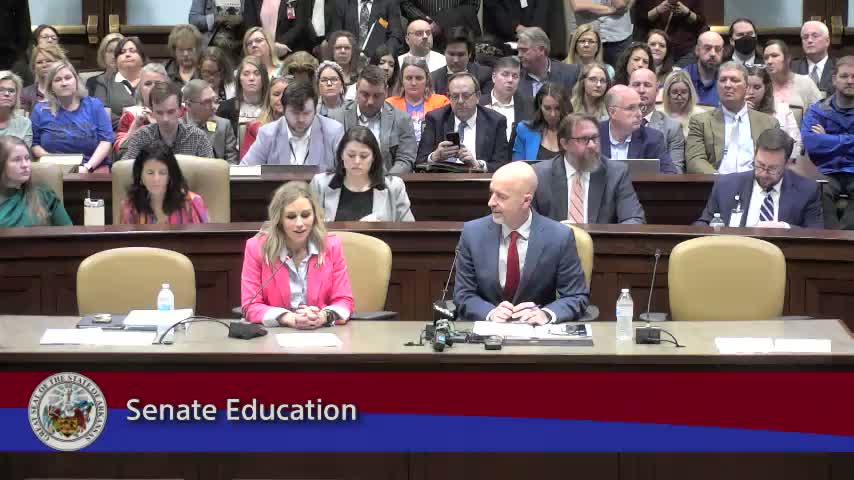
Senator Brianne Davis, sponsor of Senate Bill 294, told the Senate Education Committee that the LEARNS Act represents "the single largest investment in public schools that Arkansas has ever seen." She said the package guarantees a $50,000 minimum starting salary for teachers, a $2,000 guaranteed raise for every teacher, bonuses up to $10,000 for highly effective teachers and expanded loan‑repayment supports and scholarships for teachers in shortage areas.
The bill would also create an Office of Early Childhood inside the Department of Education, deploy literacy coaches statewide, fund high‑impact tutoring, and allow districts to opt into a paid maternity‑leave program the state will match 50/50. "Teachers have spoken and we have been listening," Davis said, adding the package is intended to lift Arkansas from its current national rankings in education.
Davis and Department of Education staff repeatedly framed the measure as supportive of public schools, saying many new resources are "separate" and intended to flow directly to teacher pay or targeted programs. "This is the largest investment in public schools in Arkansas's history," Davis said.
Committee members pressed for specificity on several financial and implementation points. Robert Breck of the budget office said the department calculated costs by listing current teacher salaries and estimating the cost of the proposed raises. He told senators the department expects some parts of the adequacy report and matrix to shape how other funding is allocated.
On timelines, the Educational Freedom Accounts (EFA) — the bill's choice‑funding mechanism for private schools and homeschools — are phased in: a tightly limited pilot in year 1 (capped at 1.5 percent of statewide enrollment), expanded in year 2 (3 percent), and opened in year 3 with proration and priority rules if funds are insufficient. Department staff said homeschool participation would be delayed to the 2024–25 school year to allow account setup and auditing systems.
Several senators requested clearer rule language to govern implementation. "A lot of these sections really have rule‑making process that will prescribe ... we would love to partner with you as we go through each one of those steps," the department told the committee. Sponsors said many operational details — audits, qualified providers, appeals and final eligibility definitions — will be set in the rule‑making process.
The committee recessed after many hours of technical questioning to allow public testimony; senators voted to give each signed‑up speaker five minutes.
What happens next: Committee members said they expect rule drafting and further budget analysis to follow. The bill remained under committee consideration at the end of the hearing, with a lengthy public comment period set to resume after a senate floor session.
The bill would also create an Office of Early Childhood inside the Department of Education, deploy literacy coaches statewide, fund high‑impact tutoring, and allow districts to opt into a paid maternity‑leave program the state will match 50/50. "Teachers have spoken and we have been listening," Davis said, adding the package is intended to lift Arkansas from its current national rankings in education.
Davis and Department of Education staff repeatedly framed the measure as supportive of public schools, saying many new resources are "separate" and intended to flow directly to teacher pay or targeted programs. "This is the largest investment in public schools in Arkansas's history," Davis said.
Committee members pressed for specificity on several financial and implementation points. Robert Breck of the budget office said the department calculated costs by listing current teacher salaries and estimating the cost of the proposed raises. He told senators the department expects some parts of the adequacy report and matrix to shape how other funding is allocated.
On timelines, the Educational Freedom Accounts (EFA) — the bill's choice‑funding mechanism for private schools and homeschools — are phased in: a tightly limited pilot in year 1 (capped at 1.5 percent of statewide enrollment), expanded in year 2 (3 percent), and opened in year 3 with proration and priority rules if funds are insufficient. Department staff said homeschool participation would be delayed to the 2024–25 school year to allow account setup and auditing systems.
Several senators requested clearer rule language to govern implementation. "A lot of these sections really have rule‑making process that will prescribe ... we would love to partner with you as we go through each one of those steps," the department told the committee. Sponsors said many operational details — audits, qualified providers, appeals and final eligibility definitions — will be set in the rule‑making process.
The committee recessed after many hours of technical questioning to allow public testimony; senators voted to give each signed‑up speaker five minutes.
What happens next: Committee members said they expect rule drafting and further budget analysis to follow. The bill remained under committee consideration at the end of the hearing, with a lengthy public comment period set to resume after a senate floor session.
View the Full Meeting & All Its Details
This article offers just a summary. Unlock complete video, transcripts, and insights as a Founder Member.
✓
Watch full, unedited meeting videos
✓
Search every word spoken in unlimited transcripts
✓
AI summaries & real-time alerts (all government levels)
✓
Permanent access to expanding government content
30-day money-back guarantee
