Senate committee hears pleas from districts as school construction funding faces storm‑shelter costs
March 01, 2023 | EDUCATION COMMITTEE - SENATE, Senate, Committees, Legislative, Arkansas
This article was created by AI summarizing key points discussed. AI makes mistakes, so for full details and context, please refer to the video of the full meeting. Please report any errors so we can fix them. Report an error »
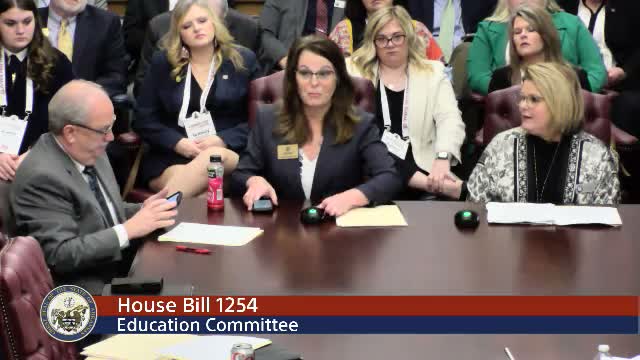
Superintendents, department staff and lawmakers spent the longest portion of the Senate Education Committee meeting on House Bill 1254, a proposal that would replace the state’s fixed per‑square‑foot funding cap for school construction with a funding factor tied to actual cost drivers.
Karen Walters, superintendent of Bryant Schools, told the committee that projects approved in past cycles that were estimated at $9–$10 million have risen to roughly $23 million after higher construction costs and a new requirement to include storm‑shelter construction took effect on Jan. 1. Walters provided recent construction figures she said show $367–$382 per square foot for projects built in 2022 prior to the new storm shelter requirement, and she said incorporating shelter standards into new classroom construction could drive those per‑square‑foot costs much higher.
Tim Kane, director of facilities and transportation at the Department of Education, told senators the safe‑room requirement stems from an Arkansas fire code update and was adopted to take effect Jan. 1; he said the cost for stand‑alone shelters has been averaging in the hundreds of dollars per square foot and "the safe room square footage cost right now ... averages around $5.25 or $5.30 a square foot" (transcript figures reflect speakers’ statements on cost ranges and estimates). Kane said the department reviews projects for "prudent use" of state funds and that tentative approvals are subject to commission review, which provides oversight if per‑square‑foot costs appear inflated.
Several senators raised concerns about removing caps completely, citing risks that cost spikes or weak procurement practices could increase public expenditures. Senator Davis asked whether a cap should be retained as an accountability metric; Walters and Kane said the proposal does not alter the state’s wealth‑index allocations but would allow cost factors to be considered when the commission approves projects. Senator Hammer suggested additional procedural safeguards could be added if the committee approved changes.
The committee heard from other administrators who said short notice about the fire‑marshal requirement created timing problems for districts that already had plans submitted or approved. Witnesses described efforts to value‑engineer projects and to pursue alternative financing such as millage or second‑lien bonds when state participation falls short of construction needs.
Senators debated a motion to report the bill favorably; the committee did not resolve all concerns and members said staff would return to the issue with more specific language and potential accountability measures.
Karen Walters, superintendent of Bryant Schools, told the committee that projects approved in past cycles that were estimated at $9–$10 million have risen to roughly $23 million after higher construction costs and a new requirement to include storm‑shelter construction took effect on Jan. 1. Walters provided recent construction figures she said show $367–$382 per square foot for projects built in 2022 prior to the new storm shelter requirement, and she said incorporating shelter standards into new classroom construction could drive those per‑square‑foot costs much higher.
Tim Kane, director of facilities and transportation at the Department of Education, told senators the safe‑room requirement stems from an Arkansas fire code update and was adopted to take effect Jan. 1; he said the cost for stand‑alone shelters has been averaging in the hundreds of dollars per square foot and "the safe room square footage cost right now ... averages around $5.25 or $5.30 a square foot" (transcript figures reflect speakers’ statements on cost ranges and estimates). Kane said the department reviews projects for "prudent use" of state funds and that tentative approvals are subject to commission review, which provides oversight if per‑square‑foot costs appear inflated.
Several senators raised concerns about removing caps completely, citing risks that cost spikes or weak procurement practices could increase public expenditures. Senator Davis asked whether a cap should be retained as an accountability metric; Walters and Kane said the proposal does not alter the state’s wealth‑index allocations but would allow cost factors to be considered when the commission approves projects. Senator Hammer suggested additional procedural safeguards could be added if the committee approved changes.
The committee heard from other administrators who said short notice about the fire‑marshal requirement created timing problems for districts that already had plans submitted or approved. Witnesses described efforts to value‑engineer projects and to pursue alternative financing such as millage or second‑lien bonds when state participation falls short of construction needs.
Senators debated a motion to report the bill favorably; the committee did not resolve all concerns and members said staff would return to the issue with more specific language and potential accountability measures.
View the Full Meeting & All Its Details
This article offers just a summary. Unlock complete video, transcripts, and insights as a Founder Member.
✓
Watch full, unedited meeting videos
✓
Search every word spoken in unlimited transcripts
✓
AI summaries & real-time alerts (all government levels)
✓
Permanent access to expanding government content
30-day money-back guarantee
