Bill to give cities first right to unused school properties sparks heated debate and fails to secure committee approval
March 15, 2023 | EDUCATION COMMITTEE - SENATE, Senate, Committees, Legislative, Arkansas
This article was created by AI summarizing key points discussed. AI makes mistakes, so for full details and context, please refer to the video of the full meeting. Please report any errors so we can fix them. Report an error »
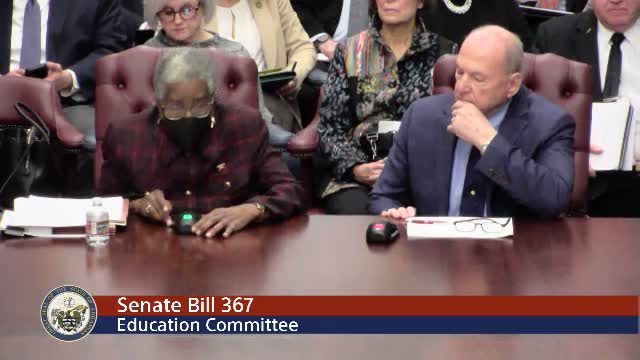
Sen. Stephanie Flowers presented SB 367 to change the priority for the disposition of unused or underutilized public school facilities so that cities or counties where the property sits would receive the first option to accept donations. The bill also would require independent third-party appraisals to establish fair market value for properties under a specified threshold.
Flowers described multiple local examples, particularly in Pine Bluff and the Dollarway consolidation, arguing that taxpayer-funded properties had been sold for what she characterized as far less than their worth and that communities lost opportunities to reuse facilities for public benefit. She said some properties were vandalized or stripped before deeds transferred.
Committee members raised concrete concerns: whether municipalities that accept donated property could resell it for profit without sharing proceeds with school districts, how debt service and millage obligations would be handled after a transfer, and whether charter schools would be unfairly displaced from first-refusal rights. Senators proposed safeguards such as time limits on charter responses and mechanisms to return sale proceeds to districts to cover debt service.
The item generated extensive debate about implementation, local control and historical examples of poorly valued sales. A procedural attempt to proceed and to record votes showed the committee did not have the five affirmative votes required at that moment and the measure failed to advance at that time. Sponsors indicated willingness to continue discussions and potential drafting changes.
Because the committee roll calls and discussion exposed technical and fiscal concerns, supporters and opponents asked for more detailed drafting to address how proceeds and debt service would be handled if municipalities later sold properties.
Flowers described multiple local examples, particularly in Pine Bluff and the Dollarway consolidation, arguing that taxpayer-funded properties had been sold for what she characterized as far less than their worth and that communities lost opportunities to reuse facilities for public benefit. She said some properties were vandalized or stripped before deeds transferred.
Committee members raised concrete concerns: whether municipalities that accept donated property could resell it for profit without sharing proceeds with school districts, how debt service and millage obligations would be handled after a transfer, and whether charter schools would be unfairly displaced from first-refusal rights. Senators proposed safeguards such as time limits on charter responses and mechanisms to return sale proceeds to districts to cover debt service.
The item generated extensive debate about implementation, local control and historical examples of poorly valued sales. A procedural attempt to proceed and to record votes showed the committee did not have the five affirmative votes required at that moment and the measure failed to advance at that time. Sponsors indicated willingness to continue discussions and potential drafting changes.
Because the committee roll calls and discussion exposed technical and fiscal concerns, supporters and opponents asked for more detailed drafting to address how proceeds and debt service would be handled if municipalities later sold properties.
Don't Miss a Word: See the Full Meeting!
Go beyond summaries. Unlock every video, transcript, and key insight with a Founder Membership.
✓
Get instant access to full meeting videos
✓
Search and clip any phrase from complete transcripts
✓
Receive AI-powered summaries & custom alerts
✓
Enjoy lifetime, unrestricted access to government data
30-day money-back guarantee
