DESE outlines early‑childhood literacy push, 12 Local Leads awarded in first cohort
November 06, 2023 | EDUCATION COMMITTEE - SENATE, Senate, Committees, Legislative, Arkansas
This article was created by AI summarizing key points discussed. AI makes mistakes, so for full details and context, please refer to the video of the full meeting. Please report any errors so we can fix them. Report an error »
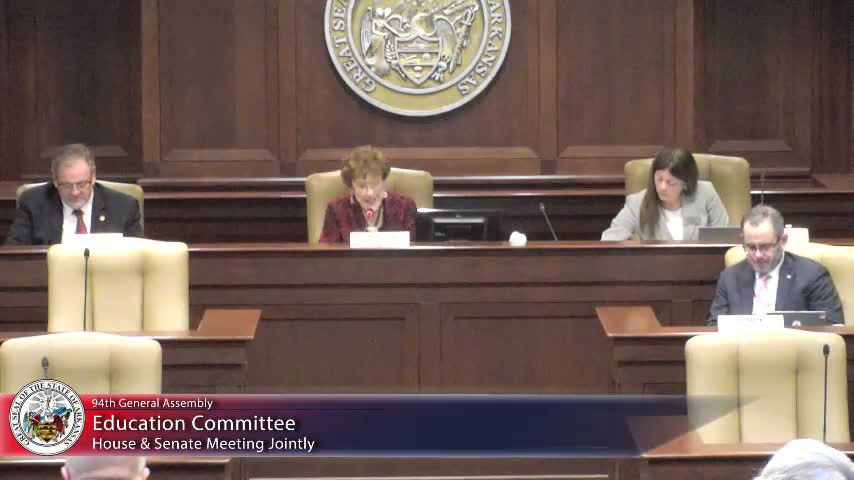
Tanya Williams, assistant commissioner for the Office of Early Childhood at the Department of Education, told the Senate Education Committee that early childhood interventions and local planning are central to meeting the state’s K–3 literacy goals.
Williams emphasized early brain development and research linking daily reading to later language outcomes. "1 short book per day to a young child can increase their vocabulary by 300,000 words," she said, using the figure to underline efforts to improve kindergarten readiness.
She described the Local Leads element of LEARNS as a locally driven model to unify early-childhood work, conduct needs assessments and coordinate resources across programs. Williams said two weeks earlier the Office had received 34 applications and funded 12 entities for cohort 1, with plans to fund another cohort in the spring and to attain statewide coverage by the 2627 school year.
Williams outlined administrative changes and 'quick wins' the office has implemented: a single background check for public‑school employees (implemented Oct. 1) to reduce duplication, aligning maltreatment checks across early‑childhood licensing, a common application and data system in development, and workforce supports including scholarships funded via American Rescue Plan Act dollars to increase early‑childhood credentials.
Committee members asked clarifying questions. Senator Chesterfield asked whether LEARNS transportation funds can be used to transport children to early‑childhood centers; Williams said her initial reading suggested that was possible and she would verify and follow up with committee staff. Representative Painter asked about timing for statewide coverage under Local Leads; Williams said the law envisions statewide coverage by the 2627 school year. Representative Brooks asked how many children currently access federal child‑care funds; Williams said about 14,000 children are served under the federal child‑care program.
Williams said selection for cohort 1 prioritized entities that demonstrated the ability to convene local partners and implement quality supports rather than a strict weighting based on current literacy scores; additional cohorts will expand geographic coverage. The committee requested follow‑up materials on transportation eligibility and the Local Leads map for constituent districts.
The presentation covered program design and operational steps rather than new rulemaking; Williams said the office and working groups are developing rules and tools required by LEARNS and will share updates with the committee as they are available.
Williams emphasized early brain development and research linking daily reading to later language outcomes. "1 short book per day to a young child can increase their vocabulary by 300,000 words," she said, using the figure to underline efforts to improve kindergarten readiness.
She described the Local Leads element of LEARNS as a locally driven model to unify early-childhood work, conduct needs assessments and coordinate resources across programs. Williams said two weeks earlier the Office had received 34 applications and funded 12 entities for cohort 1, with plans to fund another cohort in the spring and to attain statewide coverage by the 2627 school year.
Williams outlined administrative changes and 'quick wins' the office has implemented: a single background check for public‑school employees (implemented Oct. 1) to reduce duplication, aligning maltreatment checks across early‑childhood licensing, a common application and data system in development, and workforce supports including scholarships funded via American Rescue Plan Act dollars to increase early‑childhood credentials.
Committee members asked clarifying questions. Senator Chesterfield asked whether LEARNS transportation funds can be used to transport children to early‑childhood centers; Williams said her initial reading suggested that was possible and she would verify and follow up with committee staff. Representative Painter asked about timing for statewide coverage under Local Leads; Williams said the law envisions statewide coverage by the 2627 school year. Representative Brooks asked how many children currently access federal child‑care funds; Williams said about 14,000 children are served under the federal child‑care program.
Williams said selection for cohort 1 prioritized entities that demonstrated the ability to convene local partners and implement quality supports rather than a strict weighting based on current literacy scores; additional cohorts will expand geographic coverage. The committee requested follow‑up materials on transportation eligibility and the Local Leads map for constituent districts.
The presentation covered program design and operational steps rather than new rulemaking; Williams said the office and working groups are developing rules and tools required by LEARNS and will share updates with the committee as they are available.
Don't Miss a Word: See the Full Meeting!
Go beyond summaries. Unlock every video, transcript, and key insight with a Founder Membership.
✓
Get instant access to full meeting videos
✓
Search and clip any phrase from complete transcripts
✓
Receive AI-powered summaries & custom alerts
✓
Enjoy lifetime, unrestricted access to government data
30-day money-back guarantee
