Bureau of Legislative Research opens biennial adequacy study, reviews Lakeview/Dupree legal framework and matrix
January 08, 2024 | EDUCATION COMMITTEE - SENATE, Senate, Committees, Legislative, Arkansas
This article was created by AI summarizing key points discussed. AI makes mistakes, so for full details and context, please refer to the video of the full meeting. Please report any errors so we can fix them. Report an error »
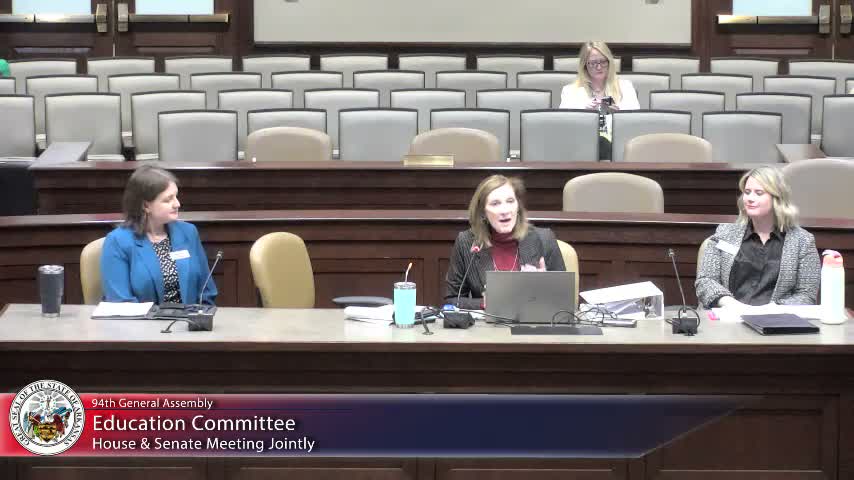
The Bureau of Legislative Research (BLR) opened the 2024 biennial educational adequacy study with a series of presentations explaining the study's process, legal basis and legislative history.
Julie Holt, administrator in BLR's Policy and Analysis Research section, told the Senate Education Committee that this is "the twelfth adequacy study that these committees have undertaken" and described how materials will be organized in binders and in a schedule of presentations leading to the committee's November 1 report. Holt said BLR will use state funding and expenditure data, achievement scores, peer-reviewed research, and input from Arkansas educators via superintendent, principal and teacher surveys and site visits.
Taylor Lloyd, a BLR legislative attorney, gave a legal overview, citing Arkansas Constitution Article 14 and case law. Lloyd summarized Dupree v. Alma School District (1983) and the Lakeview litigation as the legal context that required the General Assembly to define adequacy and monitor expenditures. "There is the constitutional aspect for both adequacy and equity," Lloyd said, and emphasized that "adequacy and equity really work in tandem," noting the court rulings require ongoing study and legislative response.
BLR also explained the "matrix" used to translate resources into per-pupil funding categories. Lloyd and other presenters said the matrix is a funding tool that has not had its lines changed since 2006, though amounts and some outside funding categories have been adjusted. Elizabeth Bynum (BLR) reviewed legislative responses since Dupree and Lakeview, including the creation of foundation funding, categorical funds for English learners and alternative-learning environments, facilities programs, and more recent salary equalization and enhanced transportation funding.
Lawmakers pressed staff on methodological and legal points. Senators and representatives asked for clarity on quintiles used to rank schools, the timing and anonymity of teacher surveys, and whether school board members should be surveyed; Holt confirmed survey anonymity for teachers and said BLR would consider changes to survey timing and possible future surveys of board members. Senator Johnson asked whether later case law (the "Andrews" decision) would alter Lakeview's force; Lloyd declined to render a hypothetical legal opinion, saying a court would have to decide that issue.
BLR said the study will present data visualizations, national comparisons where available, and site-visit findings from six cohort schools. The committee will continue presentations in subsequent meetings and will use the BLR research and consultant reports as evidence when making funding recommendations ahead of the legislative session.
Julie Holt, administrator in BLR's Policy and Analysis Research section, told the Senate Education Committee that this is "the twelfth adequacy study that these committees have undertaken" and described how materials will be organized in binders and in a schedule of presentations leading to the committee's November 1 report. Holt said BLR will use state funding and expenditure data, achievement scores, peer-reviewed research, and input from Arkansas educators via superintendent, principal and teacher surveys and site visits.
Taylor Lloyd, a BLR legislative attorney, gave a legal overview, citing Arkansas Constitution Article 14 and case law. Lloyd summarized Dupree v. Alma School District (1983) and the Lakeview litigation as the legal context that required the General Assembly to define adequacy and monitor expenditures. "There is the constitutional aspect for both adequacy and equity," Lloyd said, and emphasized that "adequacy and equity really work in tandem," noting the court rulings require ongoing study and legislative response.
BLR also explained the "matrix" used to translate resources into per-pupil funding categories. Lloyd and other presenters said the matrix is a funding tool that has not had its lines changed since 2006, though amounts and some outside funding categories have been adjusted. Elizabeth Bynum (BLR) reviewed legislative responses since Dupree and Lakeview, including the creation of foundation funding, categorical funds for English learners and alternative-learning environments, facilities programs, and more recent salary equalization and enhanced transportation funding.
Lawmakers pressed staff on methodological and legal points. Senators and representatives asked for clarity on quintiles used to rank schools, the timing and anonymity of teacher surveys, and whether school board members should be surveyed; Holt confirmed survey anonymity for teachers and said BLR would consider changes to survey timing and possible future surveys of board members. Senator Johnson asked whether later case law (the "Andrews" decision) would alter Lakeview's force; Lloyd declined to render a hypothetical legal opinion, saying a court would have to decide that issue.
BLR said the study will present data visualizations, national comparisons where available, and site-visit findings from six cohort schools. The committee will continue presentations in subsequent meetings and will use the BLR research and consultant reports as evidence when making funding recommendations ahead of the legislative session.
View the Full Meeting & All Its Details
This article offers just a summary. Unlock complete video, transcripts, and insights as a Founder Member.
✓
Watch full, unedited meeting videos
✓
Search every word spoken in unlimited transcripts
✓
AI summaries & real-time alerts (all government levels)
✓
Permanent access to expanding government content
30-day money-back guarantee
