Report: Arkansas has invested more than $1.4 billion in school facility projects; new Facility Wealth Index shifts local shares
February 05, 2024 | EDUCATION COMMITTEE - SENATE, Senate, Committees, Legislative, Arkansas
This article was created by AI summarizing key points discussed. AI makes mistakes, so for full details and context, please refer to the video of the full meeting. Please report any errors so we can fix them. Report an error »
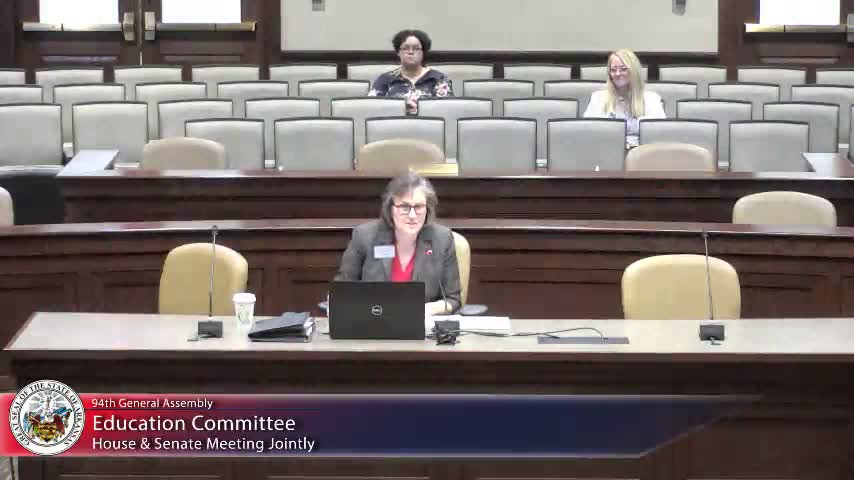
Laurie Bowen, a policy analyst with the Bureau of Legislative Research, told the Senate Education Committee that Arkansas has spent nearly $1.4 billion on Partnership Program–approved facility projects through the most recently completed fiscal year, with an average annual program funding near $90 million."The Arkansas statute does establish a duty for the state to provide all public school children with an adequate education which includes access to adequate academic facilities and equipment," Bowen said, summarizing the statutory foundation for state involvement.
Bowen described the Partnership Program, the state’s primary grant-and-assistance vehicle for school construction and repair, and the two project types it funds: Space Growth (new construction or conversions for districts experiencing growth) and Warm-Safe-Dry (replacement or systems work to address health, safety and structural problems). Projects are prioritized on a biennial cycle and ranked using a composite that allocates 30% weight to the Facility Wealth Index, 50% to a statewide needs list, and 20% to districts’ maintenance-expenditure rankings.
The report noted a recent recalculation of the Facility Wealth Index implemented for the 2023–25 funding cycle that added a median household income adjustment. Bowen said the new calculation produced decreases in the index for 209 districts and increases for 19, with declines ranging from roughly 0.5% up to a 64% drop in Lee County (index falling to 35.24). Bowen said the change affected how much local districts must contribute to approved project costs, because the index determines the percentage of qualified project cost districts are expected to match.
On dollar figures, Bowen reported that FY2020 general revenue for facilities was about $42 million and that total program funding that year (including bonded debt savings and transfers) was roughly $60 million. The program received about $91 million in total funding in FY2023. She gave cumulative figures through 2023 of about $1.4 billion in state payments and estimated the total would approach $1.8 billion with FY2024 estimates included.
Bowen also outlined how districts generate local matches (debt service mills and bonded debt), noting that all but three districts (Gosnell, Mountain View and Salem) have passed some level of debt service mills. A district debt ratio example was given: Southside School District’s debt ratio reported near 31.88.
Members pressed Bowen on distribution and equity. She said per-student Partnership payments averaged $3,904 statewide, with the Upper Delta region receiving the highest per-student average (~$5,337). Bowen said 56% of districts fall in the bottom quartile of total payments and 4% are in the top quintile receiving more than $26 million. She also noted 14 districts have approved projects but had not yet received payment.
Insurance costs and short-term responses drew attention. Bowen said property-insurance-related components of the foundation rate rose from an initial $581 (2008) to $741 in FY2023, a 27.6% increase. She estimated the foundation’s insurance allocation covered about $34 per student while districts actually spent roughly $60.43 per student (total district expenditures ~$28.5 million). In response to district concerns, the Arkansas Legislative Council approved a one-time $11.1 million allocation to offset 2023 rate increases and hired a consultant to redesign property insurance procurement for K–12 and higher-education institutions.
Bowen summarized other programs and eligibility thresholds: the Catastrophic Program (emergency supplemental funding; about $3.3 million distributed to 16 districts since inception) and the Extraordinary Circumstances Program (activated FY2023 with $24 million allocated across seven projects in three districts). She also explained the Facility Condition Index (FCI), used to measure building condition and set an FCI threshold (generally 65%) for Partnership eligibility.
Why it matters: committee members flagged the Facility Wealth Index recalculation and insurance cost shifts as items that change district fiscal responsibilities and could affect whether local districts can accept state-funded projects. Bowen and staff committed to provide committee members with the published Facility Wealth Index calculations and appendix listings for the districts affected. The committee asked for additional materials and follow-up data on regional differences, project lists, and the statutory/rule text for extraordinary-circumstances eligibility.
The committee moved from the funding presentation to an ALE briefing and did not take any additional formal votes on funding actions during the session.
Bowen described the Partnership Program, the state’s primary grant-and-assistance vehicle for school construction and repair, and the two project types it funds: Space Growth (new construction or conversions for districts experiencing growth) and Warm-Safe-Dry (replacement or systems work to address health, safety and structural problems). Projects are prioritized on a biennial cycle and ranked using a composite that allocates 30% weight to the Facility Wealth Index, 50% to a statewide needs list, and 20% to districts’ maintenance-expenditure rankings.
The report noted a recent recalculation of the Facility Wealth Index implemented for the 2023–25 funding cycle that added a median household income adjustment. Bowen said the new calculation produced decreases in the index for 209 districts and increases for 19, with declines ranging from roughly 0.5% up to a 64% drop in Lee County (index falling to 35.24). Bowen said the change affected how much local districts must contribute to approved project costs, because the index determines the percentage of qualified project cost districts are expected to match.
On dollar figures, Bowen reported that FY2020 general revenue for facilities was about $42 million and that total program funding that year (including bonded debt savings and transfers) was roughly $60 million. The program received about $91 million in total funding in FY2023. She gave cumulative figures through 2023 of about $1.4 billion in state payments and estimated the total would approach $1.8 billion with FY2024 estimates included.
Bowen also outlined how districts generate local matches (debt service mills and bonded debt), noting that all but three districts (Gosnell, Mountain View and Salem) have passed some level of debt service mills. A district debt ratio example was given: Southside School District’s debt ratio reported near 31.88.
Members pressed Bowen on distribution and equity. She said per-student Partnership payments averaged $3,904 statewide, with the Upper Delta region receiving the highest per-student average (~$5,337). Bowen said 56% of districts fall in the bottom quartile of total payments and 4% are in the top quintile receiving more than $26 million. She also noted 14 districts have approved projects but had not yet received payment.
Insurance costs and short-term responses drew attention. Bowen said property-insurance-related components of the foundation rate rose from an initial $581 (2008) to $741 in FY2023, a 27.6% increase. She estimated the foundation’s insurance allocation covered about $34 per student while districts actually spent roughly $60.43 per student (total district expenditures ~$28.5 million). In response to district concerns, the Arkansas Legislative Council approved a one-time $11.1 million allocation to offset 2023 rate increases and hired a consultant to redesign property insurance procurement for K–12 and higher-education institutions.
Bowen summarized other programs and eligibility thresholds: the Catastrophic Program (emergency supplemental funding; about $3.3 million distributed to 16 districts since inception) and the Extraordinary Circumstances Program (activated FY2023 with $24 million allocated across seven projects in three districts). She also explained the Facility Condition Index (FCI), used to measure building condition and set an FCI threshold (generally 65%) for Partnership eligibility.
Why it matters: committee members flagged the Facility Wealth Index recalculation and insurance cost shifts as items that change district fiscal responsibilities and could affect whether local districts can accept state-funded projects. Bowen and staff committed to provide committee members with the published Facility Wealth Index calculations and appendix listings for the districts affected. The committee asked for additional materials and follow-up data on regional differences, project lists, and the statutory/rule text for extraordinary-circumstances eligibility.
The committee moved from the funding presentation to an ALE briefing and did not take any additional formal votes on funding actions during the session.
View the Full Meeting & All Its Details
This article offers just a summary. Unlock complete video, transcripts, and insights as a Founder Member.
✓
Watch full, unedited meeting videos
✓
Search every word spoken in unlimited transcripts
✓
AI summaries & real-time alerts (all government levels)
✓
Permanent access to expanding government content
30-day money-back guarantee
