Committee advances trafficking bills; legal experts warn grooming language may be overbroad
April 14, 2021 | JUDICIARY COMMITTEE - SENATE, Senate, Committees, Legislative, Arkansas
This article was created by AI summarizing key points discussed. AI makes mistakes, so for full details and context, please refer to the video of the full meeting. Please report any errors so we can fix them. Report an error »
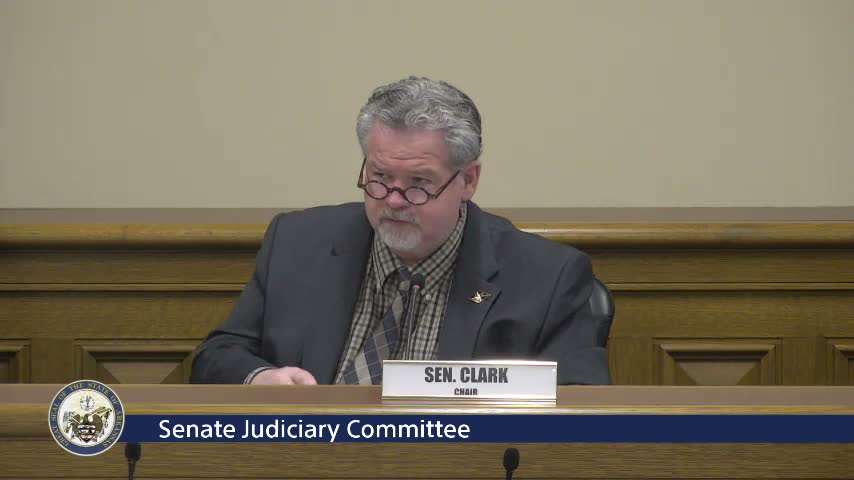
The Senate Judiciary Committee considered a three‑bill package addressing human‑trafficking‑related offenses and conditions of pretrial release.
Representative Lundstrom presented H.B. 17‑39 (expanding no‑contact orders to include terroristic threatening and false imprisonment tied to trafficking), H.B. 17‑40 (new grooming provisions tied to intent to traffic), and H.B. 17‑41 (allowing judges to impose certain bail conditions in trafficking cases, including ankle monitors, internet restrictions, and requiring up to 50% cash collateral where warranted).
Several prosecutors and law‑enforcement supporters described the bills' intent: to give courts additional tools to protect victims and limit defendants’ ability to reoffend while on release. "Anytime the government gives anyone the authority to issue a bond to an individual, we should at least have minimal transparency," one sponsor said about data collected for bonds and bail practices.
But Jeff Rosenzweig of the Arkansas Association of Criminal Defense Lawyers testified the grooming draft is overbroad and contains internal inconsistencies that could criminalize common juvenile behavior. Rosenzweig told the committee the grooming language, as drafted, could reach lawful sexual conduct and college‑age interactions and questioned how to prove travel "for the purpose" of unlawful acts. "This would...criminalize a college freshman who sends some explicit images to his kid brother," he said, summarizing drafting concerns. Committee counsel and the prosecutor coordinator identified points the sponsor could tighten: place the trafficking/intended‑offense language immediately next to the knowingly element, add a clear definition of the targeted trafficking offense, and align safe‑harbor age differentials with existing code.
After extended drafting discussion, Representative Lundstrom asked to pull H.B. 17‑40 to rework definitions and return quickly; the committee permitted the pull without objection. The other two bills in the package moved forward: H.B. 17‑39 and H.B. 17‑41 were advanced by voice vote.
What’s next: Sponsors said they will produce redrafted language to tighten the grooming elements and return it to the committee; the bail‑conditions and no‑contact provisions will continue toward floor consideration.
Representative Lundstrom presented H.B. 17‑39 (expanding no‑contact orders to include terroristic threatening and false imprisonment tied to trafficking), H.B. 17‑40 (new grooming provisions tied to intent to traffic), and H.B. 17‑41 (allowing judges to impose certain bail conditions in trafficking cases, including ankle monitors, internet restrictions, and requiring up to 50% cash collateral where warranted).
Several prosecutors and law‑enforcement supporters described the bills' intent: to give courts additional tools to protect victims and limit defendants’ ability to reoffend while on release. "Anytime the government gives anyone the authority to issue a bond to an individual, we should at least have minimal transparency," one sponsor said about data collected for bonds and bail practices.
But Jeff Rosenzweig of the Arkansas Association of Criminal Defense Lawyers testified the grooming draft is overbroad and contains internal inconsistencies that could criminalize common juvenile behavior. Rosenzweig told the committee the grooming language, as drafted, could reach lawful sexual conduct and college‑age interactions and questioned how to prove travel "for the purpose" of unlawful acts. "This would...criminalize a college freshman who sends some explicit images to his kid brother," he said, summarizing drafting concerns. Committee counsel and the prosecutor coordinator identified points the sponsor could tighten: place the trafficking/intended‑offense language immediately next to the knowingly element, add a clear definition of the targeted trafficking offense, and align safe‑harbor age differentials with existing code.
After extended drafting discussion, Representative Lundstrom asked to pull H.B. 17‑40 to rework definitions and return quickly; the committee permitted the pull without objection. The other two bills in the package moved forward: H.B. 17‑39 and H.B. 17‑41 were advanced by voice vote.
What’s next: Sponsors said they will produce redrafted language to tighten the grooming elements and return it to the committee; the bail‑conditions and no‑contact provisions will continue toward floor consideration.
View the Full Meeting & All Its Details
This article offers just a summary. Unlock complete video, transcripts, and insights as a Founder Member.
✓
Watch full, unedited meeting videos
✓
Search every word spoken in unlimited transcripts
✓
AI summaries & real-time alerts (all government levels)
✓
Permanent access to expanding government content
30-day money-back guarantee
