U. of Arkansas programs present evidence they are building teachers and principals for high‑need schools
November 07, 2023 | EDUCATION COMMITTEE - SENATE, Senate, Committees, Legislative, Arkansas
This article was created by AI summarizing key points discussed. AI makes mistakes, so for full details and context, please refer to the video of the full meeting. Please report any errors so we can fix them. Report an error »
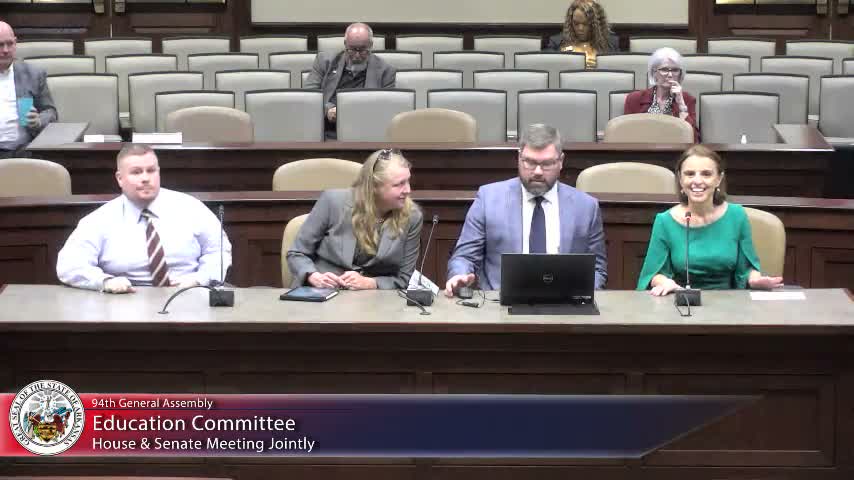
University of Arkansas officials presented the Arkansas Teacher Corps (ATC) and Impact Arkansas Principal Fellows program to the Senate Education Committee, saying both initiatives aim to place and retain educators in the state’s highest‑need schools.
Josh McGee of the university’s Office for Education Policy told lawmakers district maps show the highest shares of teachers on licensure waivers align with areas of concentrated childhood poverty and described that staffing shortages “feed into a vicious cycle of poverty.” He and other presenters framed program success around placing licensed teachers and leaders in those communities and tracking outcomes.
Sarah McKenzie, executive director of the Office for Education Policy, said ATC is a decade‑old, grow‑your‑own teacher corps designed to recruit Arkansans who remain in the state after completing training. She described a structure that pairs each fellow with an intensive six‑week summer training, year‑round coaching, paid practice exams and licensure supports. Brandon Lucius said ATC cohorts usually number roughly 30–35 fellows and that the program emphasizes wellness and in‑state retention, adding that most fellows teach in schools where more than 70% of students qualify for free or reduced‑price lunch.
Presenters offered outcome data: they said cohorts and alumni have produced licensed teachers and several alumni have advanced into instructional and school leadership roles within partner districts. The university’s presentation also highlighted schools served by ATC and Impact that received the office’s “Beating the Odds” award for high student growth, which organizers described as a growth‑focused recognition distinct from raw achievement scores.
Committee members pressed presenters on measurement and outreach. Senator Settleman asked how the university measures “caring” and whether program success is tracked beyond placement; Josh McGee replied the programs measure outcomes such as fellows placed and persistence in district schools. Representative Vaught asked why some legislators had not heard of the programs; presenters said recruitment is often word‑of‑mouth and that they are expanding outreach through superintendent meetings and co‑operative contacts.
Lawmakers also asked about principal turnover and whether exit interviews exist. Committee members cited a 21% annual principal turnover figure; presenters said they currently do not conduct systematic exit interviews for principals but that the university could add principal surveys and that legislative research might help investigate drivers of the turnover.
The presenters declined to answer a question about the university’s internal decisions on DEI programs and directed that to university leadership. The university team closed by offering to provide additional demographic breakdowns and to follow up with data requested by legislators. The committee did not take formal action on the programs during the meeting.
Josh McGee of the university’s Office for Education Policy told lawmakers district maps show the highest shares of teachers on licensure waivers align with areas of concentrated childhood poverty and described that staffing shortages “feed into a vicious cycle of poverty.” He and other presenters framed program success around placing licensed teachers and leaders in those communities and tracking outcomes.
Sarah McKenzie, executive director of the Office for Education Policy, said ATC is a decade‑old, grow‑your‑own teacher corps designed to recruit Arkansans who remain in the state after completing training. She described a structure that pairs each fellow with an intensive six‑week summer training, year‑round coaching, paid practice exams and licensure supports. Brandon Lucius said ATC cohorts usually number roughly 30–35 fellows and that the program emphasizes wellness and in‑state retention, adding that most fellows teach in schools where more than 70% of students qualify for free or reduced‑price lunch.
Presenters offered outcome data: they said cohorts and alumni have produced licensed teachers and several alumni have advanced into instructional and school leadership roles within partner districts. The university’s presentation also highlighted schools served by ATC and Impact that received the office’s “Beating the Odds” award for high student growth, which organizers described as a growth‑focused recognition distinct from raw achievement scores.
Committee members pressed presenters on measurement and outreach. Senator Settleman asked how the university measures “caring” and whether program success is tracked beyond placement; Josh McGee replied the programs measure outcomes such as fellows placed and persistence in district schools. Representative Vaught asked why some legislators had not heard of the programs; presenters said recruitment is often word‑of‑mouth and that they are expanding outreach through superintendent meetings and co‑operative contacts.
Lawmakers also asked about principal turnover and whether exit interviews exist. Committee members cited a 21% annual principal turnover figure; presenters said they currently do not conduct systematic exit interviews for principals but that the university could add principal surveys and that legislative research might help investigate drivers of the turnover.
The presenters declined to answer a question about the university’s internal decisions on DEI programs and directed that to university leadership. The university team closed by offering to provide additional demographic breakdowns and to follow up with data requested by legislators. The committee did not take formal action on the programs during the meeting.
View the Full Meeting & All Its Details
This article offers just a summary. Unlock complete video, transcripts, and insights as a Founder Member.
✓
Watch full, unedited meeting videos
✓
Search every word spoken in unlimited transcripts
✓
AI summaries & real-time alerts (all government levels)
✓
Permanent access to expanding government content
30-day money-back guarantee
