Vendor pitches tablet-based mail, email and reentry platform to Arkansas Judiciary Committee
January 10, 2022 | JUDICIARY COMMITTEE - SENATE, Senate, Committees, Legislative, Arkansas
This article was created by AI summarizing key points discussed. AI makes mistakes, so for full details and context, please refer to the video of the full meeting. Please report any errors so we can fix them. Report an error »
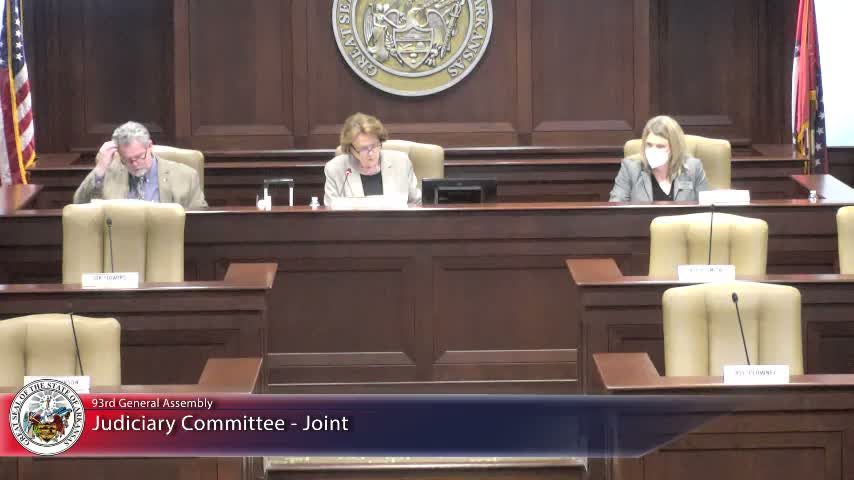
John Logan, CEO of Smart Communications, told the Arkansas Senate Judiciary Committee that his company could replace physical inmate mail with an off‑site, scanned mail service, provide two free controlled electronic messages per inmate each week and deliver rehabilitative and educational content to inmates at no cost to the state. "We have a plan to eliminate that basically overnight," Logan said, describing what he called a nationwide problem of drugs — including fentanyl — entering facilities through postal mail.
Logan said Smart Communications processes postal mail at a central facility in Tampa, Florida, converts approved mail to encrypted PDF files and delivers them to inmate tablets in a system he called the "smart ecosystem." For legal mail, he described a product called "MailGuard Legal," a Wi‑Fi cart that processes legal mail in the inmate's presence, shreds the original and emails an encrypted copy while preserving claimed privilege. "So the inmate is still getting their mail, however there's no possibility of drugs reaching the inmate and the original is shredded," Logan said.
Why it matters: Committee members said the proposal could affect staff safety, inmate access to counsel and long‑standing vendor contracts for phone, video and commissary services. Several members asked whether the system truly would be free to the state and to indigent inmates.
Cost model and user fees: Logan said the company aims to make the platform cost‑neutral to agencies by pairing free services with optional paid communications. He said inmates or their correspondents typically buy credits on a public website; Logan described a 50‑cent per‑email charge and said the company often charges a $1.50 fee to load credits to an account (a merchant‑processing pass‑through). "If the inmates choose to use our email system … that generates enough revenue through the email platform that we use that revenue and then provide all these free services," he said.
Board questions and clarifications: Committee members pressed Logan on several operational details: whether Smart Communications would replace existing phone or video vendors; how attorney privilege would be protected; how the company engines flagged suspect content; and what Arkansas jurisdictions already use the system. Logan said the company operates in 26 states, serves roughly 10 Arkansas county jails and provides services to the Pennsylvania Department of Corrections and some federal facilities. He described software features such as keyword flags, voice biometrics for video visits, and an attorney 'privileged profile' process that agencies would verify by collecting bar numbers and government IDs.
Privilege and legal risk: On attorney communications, Logan said agencies—not his company—would vet privileged attorneys and that his firm’s legal mail process had been challenged in court but was dismissed, according to his account. "We have never had a breach. We have never had anyone have anything privileged become unprivileged," he said.
Contract length and infrastructure: Logan said typical contracts run five years because the company installs facility Wi‑Fi and hardware; he asserted that providing tablets and infrastructure to inmates has been standard for his firm and that hardware would be provided at no cost to the state.
Committee follow‑up: Chair Senator Clark asked the company to provide supporting materials and a list of Arkansas clients. Members asked for additional data about labor savings, current inmate costs for tablets and mail handling, and any court rulings related to legal‑mail processing. The committee did not take a formal vote on the presentation; Logan thanked the committee and left contact information for follow‑up.
Logan said Smart Communications processes postal mail at a central facility in Tampa, Florida, converts approved mail to encrypted PDF files and delivers them to inmate tablets in a system he called the "smart ecosystem." For legal mail, he described a product called "MailGuard Legal," a Wi‑Fi cart that processes legal mail in the inmate's presence, shreds the original and emails an encrypted copy while preserving claimed privilege. "So the inmate is still getting their mail, however there's no possibility of drugs reaching the inmate and the original is shredded," Logan said.
Why it matters: Committee members said the proposal could affect staff safety, inmate access to counsel and long‑standing vendor contracts for phone, video and commissary services. Several members asked whether the system truly would be free to the state and to indigent inmates.
Cost model and user fees: Logan said the company aims to make the platform cost‑neutral to agencies by pairing free services with optional paid communications. He said inmates or their correspondents typically buy credits on a public website; Logan described a 50‑cent per‑email charge and said the company often charges a $1.50 fee to load credits to an account (a merchant‑processing pass‑through). "If the inmates choose to use our email system … that generates enough revenue through the email platform that we use that revenue and then provide all these free services," he said.
Board questions and clarifications: Committee members pressed Logan on several operational details: whether Smart Communications would replace existing phone or video vendors; how attorney privilege would be protected; how the company engines flagged suspect content; and what Arkansas jurisdictions already use the system. Logan said the company operates in 26 states, serves roughly 10 Arkansas county jails and provides services to the Pennsylvania Department of Corrections and some federal facilities. He described software features such as keyword flags, voice biometrics for video visits, and an attorney 'privileged profile' process that agencies would verify by collecting bar numbers and government IDs.
Privilege and legal risk: On attorney communications, Logan said agencies—not his company—would vet privileged attorneys and that his firm’s legal mail process had been challenged in court but was dismissed, according to his account. "We have never had a breach. We have never had anyone have anything privileged become unprivileged," he said.
Contract length and infrastructure: Logan said typical contracts run five years because the company installs facility Wi‑Fi and hardware; he asserted that providing tablets and infrastructure to inmates has been standard for his firm and that hardware would be provided at no cost to the state.
Committee follow‑up: Chair Senator Clark asked the company to provide supporting materials and a list of Arkansas clients. Members asked for additional data about labor savings, current inmate costs for tablets and mail handling, and any court rulings related to legal‑mail processing. The committee did not take a formal vote on the presentation; Logan thanked the committee and left contact information for follow‑up.
Don't Miss a Word: See the Full Meeting!
Go beyond summaries. Unlock every video, transcript, and key insight with a Founder Membership.
✓
Get instant access to full meeting videos
✓
Search and clip any phrase from complete transcripts
✓
Receive AI-powered summaries & custom alerts
✓
Enjoy lifetime, unrestricted access to government data
30-day money-back guarantee
