Sheriffs tell Judiciary Committee county jails strained by state backlog, urge higher reimbursement and capacity fixes
February 08, 2022 | JUDICIARY COMMITTEE - SENATE, Senate, Committees, Legislative, Arkansas
This article was created by AI summarizing key points discussed. AI makes mistakes, so for full details and context, please refer to the video of the full meeting. Please report any errors so we can fix them. Report an error »
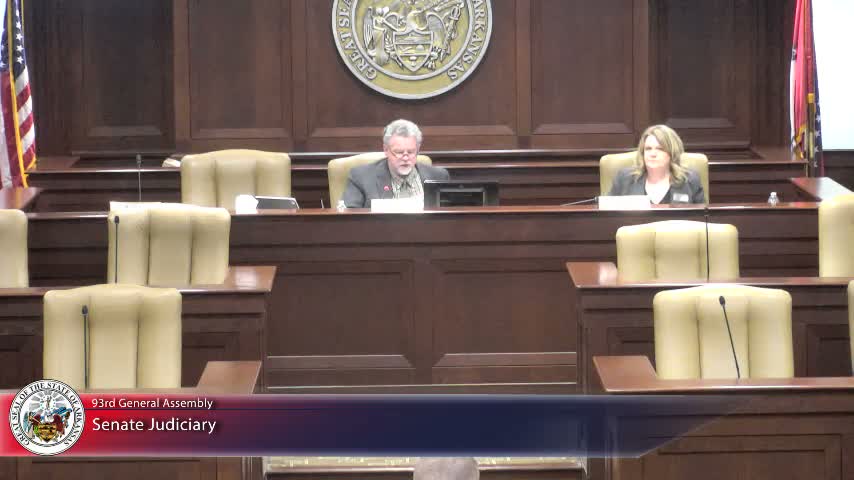
Sheriffs and county officials told the Senate Judiciary Committee the state's prison and intake backlog has shifted thousands of state prisoners into county jails, producing overcrowding, staffing shortages and heightened safety risks.
"The backup in our county jail statewide is as bad as I've ever seen it," Washington County Sheriff Tim Helder told the committee. He and other sheriffs said a substantial share of jail populations—reported in the hearing as roughly 25–36 percent in some counties—are people held for the state rather than local misdemeanors, and that COVID quarantine and transport requirements have worsened capacity problems.
Panelists and committee members discussed figures the panel described as about 2,300 state inmates currently held in county jails. Sheriffs asked lawmakers to consider raising the state reimbursement for housing state inmates; witnesses said the current statutory reimbursement is about $30–$32 per day while county-level cost estimates and a legislative audit put average per-inmate daily costs substantially higher.
"We're being paid $32 a day for state inmates," one sheriff said, and a legislative audit figure cited in testimony placed county per-inmate costs in the low $60s. County officials said the shortfall reduces funds available for staffing and facility upkeep and contributes to recruitment and retention problems among jail employees.
Sheriffs also warned that county jails are experiencing a different criminal profile than in previous years, including more organized and violent offenders, gang activity, and an increase in methamphetamine and fentanyl cases. Those changes, panelists said, increase the security burden on county detention facilities and the cost of care.
Committee members and sheriffs debated regional-jail proposals and whether privately financed or regional facilities could help. Witnesses said regional jails can address certain workforce and medium-security needs but do not substitute for additional maximum-security state prison capacity.
The committee heard calls for near-term funding relief—higher per-inmate reimbursements or retroactive payments to counties—to cover immediate budget shortfalls while longer-term planning for state capacity is pursued. Several legislators signaled willingness to explore budget options in the upcoming fiscal session.
The hearing did not produce immediate legislative action but generated follow-up requests for data, a plain-language summary of prior commission recommendations, and continued engagement between sheriffs and committee staff. The committee adjourned after thanking witnesses and encouraging continued communication on capacity, reimbursement and public-safety implications.
"The backup in our county jail statewide is as bad as I've ever seen it," Washington County Sheriff Tim Helder told the committee. He and other sheriffs said a substantial share of jail populations—reported in the hearing as roughly 25–36 percent in some counties—are people held for the state rather than local misdemeanors, and that COVID quarantine and transport requirements have worsened capacity problems.
Panelists and committee members discussed figures the panel described as about 2,300 state inmates currently held in county jails. Sheriffs asked lawmakers to consider raising the state reimbursement for housing state inmates; witnesses said the current statutory reimbursement is about $30–$32 per day while county-level cost estimates and a legislative audit put average per-inmate daily costs substantially higher.
"We're being paid $32 a day for state inmates," one sheriff said, and a legislative audit figure cited in testimony placed county per-inmate costs in the low $60s. County officials said the shortfall reduces funds available for staffing and facility upkeep and contributes to recruitment and retention problems among jail employees.
Sheriffs also warned that county jails are experiencing a different criminal profile than in previous years, including more organized and violent offenders, gang activity, and an increase in methamphetamine and fentanyl cases. Those changes, panelists said, increase the security burden on county detention facilities and the cost of care.
Committee members and sheriffs debated regional-jail proposals and whether privately financed or regional facilities could help. Witnesses said regional jails can address certain workforce and medium-security needs but do not substitute for additional maximum-security state prison capacity.
The committee heard calls for near-term funding relief—higher per-inmate reimbursements or retroactive payments to counties—to cover immediate budget shortfalls while longer-term planning for state capacity is pursued. Several legislators signaled willingness to explore budget options in the upcoming fiscal session.
The hearing did not produce immediate legislative action but generated follow-up requests for data, a plain-language summary of prior commission recommendations, and continued engagement between sheriffs and committee staff. The committee adjourned after thanking witnesses and encouraging continued communication on capacity, reimbursement and public-safety implications.
Don't Miss a Word: See the Full Meeting!
Go beyond summaries. Unlock every video, transcript, and key insight with a Founder Membership.
✓
Get instant access to full meeting videos
✓
Search and clip any phrase from complete transcripts
✓
Receive AI-powered summaries & custom alerts
✓
Enjoy lifetime, unrestricted access to government data
30-day money-back guarantee
