Panel approves bill barring certain high‑risk registry members from owning drones; 5–1–1 roll call
January 30, 2023 | JUDICIARY COMMITTEE - SENATE, Senate, Committees, Legislative, Arkansas
This article was created by AI summarizing key points discussed. AI makes mistakes, so for full details and context, please refer to the video of the full meeting. Please report any errors so we can fix them. Report an error »
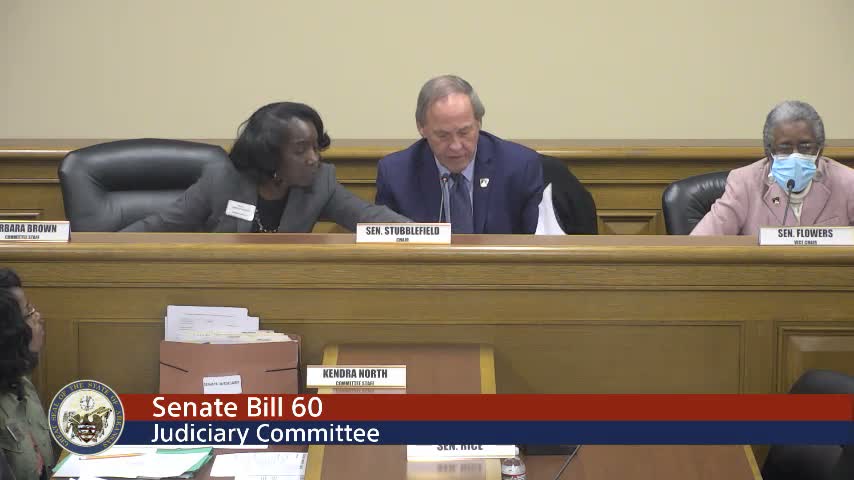
The Senate Judiciary Committee voted to advance H.B.1125 after sponsors described a case in which a drone repeatedly hovered over private property, later crashed and was traced to a person on the sex‑offender registry.
Representative Evans, presenting the house bill, told the committee a constituent in Cabot discovered a drone over her backyard. When the aircraft later crashed and was turned in to law enforcement, the deputy identified the operator but said current law was vague and offered limited remedies for that conduct. "The laws are just a little bit vague on this," Evans said, arguing the bill would close a loophole by prohibiting level‑3 or level‑4 registrants from owning or operating an unmanned aircraft.
Several senators supported the protection goal but raised drafting concerns. Senator Tucker said the underlying voyeurism statute already criminalizes nonconsensual spying with an unmanned vehicle when it is for voyeuristic purposes and suggested amending that statute instead of broadly criminalizing drone ownership by registry level. He also warned against creating seller liability that would require commercial dealers to check registries at point of sale; sponsors said language about vendor liability had been considered and later removed after legal review.
Committee members also questioned whether a registrant reassessed or removed from a level should be able to resume ownership; a witness with the Central Arkansas Reentry Coalition explained that level‑4 assessments are permanent while level‑3 registrants may seek reassessment after statutory periods. After debate the committee moved, seconded and approved the bill. A roll call recorded five "yes" votes, one "no" (Senator Stephanie Flowers) and one member not voting (Senator Alan Clark); the chair announced passage, 5–1–1.
The committee record shows the bill passed with a roll‑call tally recorded in committee minutes; sponsors indicated they removed commercial‑seller liability language to avoid unintended criminal exposure for vendors.
Representative Evans, presenting the house bill, told the committee a constituent in Cabot discovered a drone over her backyard. When the aircraft later crashed and was turned in to law enforcement, the deputy identified the operator but said current law was vague and offered limited remedies for that conduct. "The laws are just a little bit vague on this," Evans said, arguing the bill would close a loophole by prohibiting level‑3 or level‑4 registrants from owning or operating an unmanned aircraft.
Several senators supported the protection goal but raised drafting concerns. Senator Tucker said the underlying voyeurism statute already criminalizes nonconsensual spying with an unmanned vehicle when it is for voyeuristic purposes and suggested amending that statute instead of broadly criminalizing drone ownership by registry level. He also warned against creating seller liability that would require commercial dealers to check registries at point of sale; sponsors said language about vendor liability had been considered and later removed after legal review.
Committee members also questioned whether a registrant reassessed or removed from a level should be able to resume ownership; a witness with the Central Arkansas Reentry Coalition explained that level‑4 assessments are permanent while level‑3 registrants may seek reassessment after statutory periods. After debate the committee moved, seconded and approved the bill. A roll call recorded five "yes" votes, one "no" (Senator Stephanie Flowers) and one member not voting (Senator Alan Clark); the chair announced passage, 5–1–1.
The committee record shows the bill passed with a roll‑call tally recorded in committee minutes; sponsors indicated they removed commercial‑seller liability language to avoid unintended criminal exposure for vendors.
Don't Miss a Word: See the Full Meeting!
Go beyond summaries. Unlock every video, transcript, and key insight with a Founder Membership.
✓
Get instant access to full meeting videos
✓
Search and clip any phrase from complete transcripts
✓
Receive AI-powered summaries & custom alerts
✓
Enjoy lifetime, unrestricted access to government data
30-day money-back guarantee
