Judiciary committee advances SB81 after lengthy public testimony on library materials and obscenity
February 20, 2023 | JUDICIARY COMMITTEE - SENATE, Senate, Committees, Legislative, Arkansas
This article was created by AI summarizing key points discussed. AI makes mistakes, so for full details and context, please refer to the video of the full meeting. Please report any errors so we can fix them. Report an error »
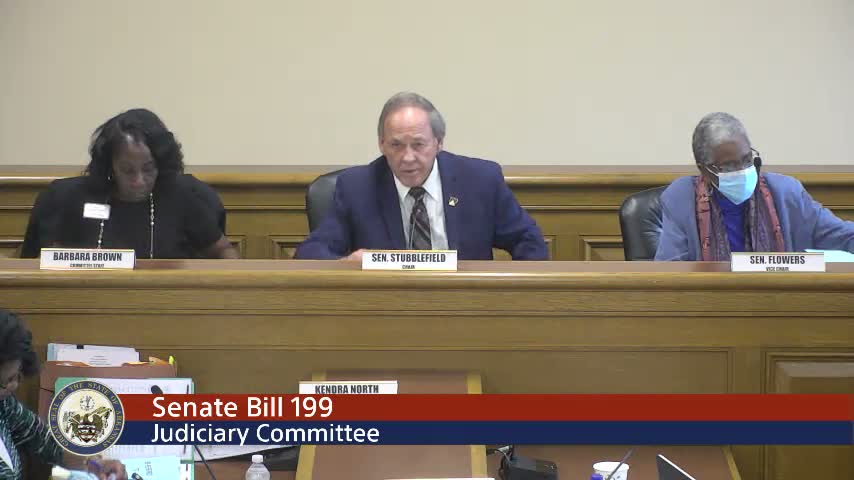
The Senate Judiciary Committee voted to advance Senate Bill 81, as amended, after a full day of questions from members and more than 20 one‑minute public comments for and against the bill. Sponsor Senator Dan Sullivan (Senate District 20) said the bill codifies an appeal process for challenges to school and public library material so disputes can be resolved locally and, if needed, appealed to elected officials rather than remain with administrative committees.
Sullivan explained amendments that remove fixed numbers for review committees (leaving committee size to local discretion), replace lower culpability language with a "knowingly" standard in some sections, and change language from "claimed" to "determined" so liability would attach only after a committee has determined material violated statute. "We are not trying to micromanage what libraries are doing now," Sullivan said when defending the changes and the decision to route appeals to elected bodies.
Public comment reflected stark disagreement. Supporters, including parents and groups such as Moms for Liberty, described graphic excerpts from certain books and urged accountability; Gloria Morton testified that several titles are "objectionable" in school libraries. Opponents — including librarians and library advocates — warned the bill creates constitutional risks and could chill access to materials. Adam Webb, representing advocates for Arkansas libraries, told the committee: "Books shall be reviewed in their entirety and shall not have selected portions taken out of context," and John McGraw (Faulkner County Library) warned of a "huge constitutional hole" in the bill.
Key substantive points recorded in committee discussion:
- Committee adopted an amendment that removes numeric committee-size requirements and modifies culpability language to 'knowingly' in some provisions.
- The bill would remove an exemption that had excluded librarians and certain school/public entities from obscenity law, applying obscenity statutes to librarians in those settings while keeping the substantive legal definitions unchanged.
- The bill requires an appeal avenue to elected officials (school boards, quorum courts, city boards) and adds an open‑meetings requirement for review proceedings; sponsor said prosecutors (and courts) would remain the vehicle for criminal obscenity cases where applicable.
Procedural notes and vote: The committee limited public testimony to one minute per speaker, heard 23 signed witnesses, adopted the sponsor's amendments, moved for immediate consideration, and by voice vote recommended SB81 "due pass as amended." The transcript records voice votes and committee rulings but does not include a roll‑call tally with names.
Sullivan explained amendments that remove fixed numbers for review committees (leaving committee size to local discretion), replace lower culpability language with a "knowingly" standard in some sections, and change language from "claimed" to "determined" so liability would attach only after a committee has determined material violated statute. "We are not trying to micromanage what libraries are doing now," Sullivan said when defending the changes and the decision to route appeals to elected bodies.
Public comment reflected stark disagreement. Supporters, including parents and groups such as Moms for Liberty, described graphic excerpts from certain books and urged accountability; Gloria Morton testified that several titles are "objectionable" in school libraries. Opponents — including librarians and library advocates — warned the bill creates constitutional risks and could chill access to materials. Adam Webb, representing advocates for Arkansas libraries, told the committee: "Books shall be reviewed in their entirety and shall not have selected portions taken out of context," and John McGraw (Faulkner County Library) warned of a "huge constitutional hole" in the bill.
Key substantive points recorded in committee discussion:
- Committee adopted an amendment that removes numeric committee-size requirements and modifies culpability language to 'knowingly' in some provisions.
- The bill would remove an exemption that had excluded librarians and certain school/public entities from obscenity law, applying obscenity statutes to librarians in those settings while keeping the substantive legal definitions unchanged.
- The bill requires an appeal avenue to elected officials (school boards, quorum courts, city boards) and adds an open‑meetings requirement for review proceedings; sponsor said prosecutors (and courts) would remain the vehicle for criminal obscenity cases where applicable.
Procedural notes and vote: The committee limited public testimony to one minute per speaker, heard 23 signed witnesses, adopted the sponsor's amendments, moved for immediate consideration, and by voice vote recommended SB81 "due pass as amended." The transcript records voice votes and committee rulings but does not include a roll‑call tally with names.
View the Full Meeting & All Its Details
This article offers just a summary. Unlock complete video, transcripts, and insights as a Founder Member.
✓
Watch full, unedited meeting videos
✓
Search every word spoken in unlimited transcripts
✓
AI summaries & real-time alerts (all government levels)
✓
Permanent access to expanding government content
30-day money-back guarantee
