Senate committee advances bill to allow rapid DNA testing pilot at booking stations
March 13, 2023 | JUDICIARY COMMITTEE - SENATE, Senate, Committees, Legislative, Arkansas
This article was created by AI summarizing key points discussed. AI makes mistakes, so for full details and context, please refer to the video of the full meeting. Please report any errors so we can fix them. Report an error »
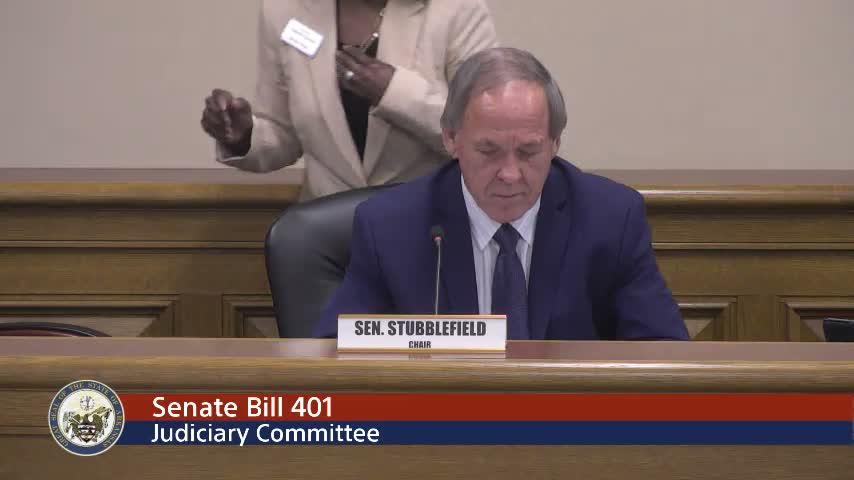
The Senate Judiciary Committee voted to pass Senate Bill 401, which would allow Arkansas to pilot rapid DNA testing at qualifying booking stations.
Senator Greg Lettigan, the bill sponsor, said the measure would put Arkansas among more than 30 states that permit rapid DNA use in limited circumstances. Proponents told the committee rapid DNA can return a qualifying profile in roughly 90 minutes and be used to search CODIS and other databases to identify links to unsolved cases. "Every minute counts," victim advocate Ashley Spence told the committee, recounting her own case and saying rapid DNA helped connect an offender to crimes years later.
Kermit Channel and Cindy Moran of the Arkansas State Crime Lab described how the technology would be used: booking staff would take a qualifying cheek swab, the rapid instrument would generate a profile that is searched against a subset of databases, and a confirmed hit would prompt additional laboratory testing and normal evidentiary procedures. Channel said a recommended pilot of two booking stations processing approximately 2,000 arrestee samples per year would cost roughly $1.8 million to operate for two years.
Committee members asked whether rapid DNA results could disadvantage future prosecutions or raise admissibility questions; lab staff said confirmatory testing in an accredited crime lab would follow any booking‑station hit and that standard laboratory protocols and federal guidelines would guide the program. Members also asked about funding sources; lab staff said the state could fund the pilot and also pursue federal grants.
The committee voted to pass SB 401. The sponsor said the measure enables—rather than mandates—deployment and contemplates pilot implementation and training safeguards.
Ending: The bill moves to the next stage; if enacted, implementation would require training, internal lab policies and funding decisions for pilot sites.
Senator Greg Lettigan, the bill sponsor, said the measure would put Arkansas among more than 30 states that permit rapid DNA use in limited circumstances. Proponents told the committee rapid DNA can return a qualifying profile in roughly 90 minutes and be used to search CODIS and other databases to identify links to unsolved cases. "Every minute counts," victim advocate Ashley Spence told the committee, recounting her own case and saying rapid DNA helped connect an offender to crimes years later.
Kermit Channel and Cindy Moran of the Arkansas State Crime Lab described how the technology would be used: booking staff would take a qualifying cheek swab, the rapid instrument would generate a profile that is searched against a subset of databases, and a confirmed hit would prompt additional laboratory testing and normal evidentiary procedures. Channel said a recommended pilot of two booking stations processing approximately 2,000 arrestee samples per year would cost roughly $1.8 million to operate for two years.
Committee members asked whether rapid DNA results could disadvantage future prosecutions or raise admissibility questions; lab staff said confirmatory testing in an accredited crime lab would follow any booking‑station hit and that standard laboratory protocols and federal guidelines would guide the program. Members also asked about funding sources; lab staff said the state could fund the pilot and also pursue federal grants.
The committee voted to pass SB 401. The sponsor said the measure enables—rather than mandates—deployment and contemplates pilot implementation and training safeguards.
Ending: The bill moves to the next stage; if enacted, implementation would require training, internal lab policies and funding decisions for pilot sites.
Don't Miss a Word: See the Full Meeting!
Go beyond summaries. Unlock every video, transcript, and key insight with a Founder Membership.
✓
Get instant access to full meeting videos
✓
Search and clip any phrase from complete transcripts
✓
Receive AI-powered summaries & custom alerts
✓
Enjoy lifetime, unrestricted access to government data
30-day money-back guarantee
